The kitchen countertop depth is one of the most important measurements in any kitchen design. Standard countertop depth typically ranges from 25 to 30 inches, while kitchen island depth often goes up to 36 inches for extra workspace and seating. Choosing the right countertop depth affects everything from appliance fit to daily workflow, making it essential to get this measurement correct before you start your remodel.
When you are planning a kitchen remodel, one detail that often gets overlooked is kitchen countertop depth. It might seem like a small measurement, but it can make or break your entire kitchen layout. The right depth gives you enough workspace, keeps appliances fitting properly, and makes your kitchen feel balanced and functional.
Most standard countertops sit at about 25 to 30 inches deep, but the ideal measurement depends on your kitchen size, your cooking habits, and the appliances you use. Whether you are designing a compact galley kitchen or a spacious open-plan layout, understanding countertop depth is essential. This guide walks you through everything you need to know about kitchen countertop depth so you can make confident design decisions.
We will cover standard sizes, island depths, how depth affects your workflow, and common mistakes to avoid. By the end, you will have a clear picture of what works best for your space. Let us dive in and explore the world of countertop depth together.
Key Takeaways
- Standard depth is 25 inches: This is the most common countertop depth and works for most base cabinets.
- Island depth can go up to 36 inches: Kitchen islands often use deeper countertops for extra prep space and seating.
- Appliance compatibility matters: Your chosen depth must fit your stove, sink, and refrigerator properly.
- Small kitchens benefit from standard depth: Going deeper in a small space can make the kitchen feel cramped.
- Custom depths are available: If standard sizes do not work, many manufacturers offer tailored countertop depths.
- Overhang affects seating: A 1 to 1.5 inch overhang beyond the cabinet is standard for comfortable seating.
- Workflow depends on depth: The right depth creates a smooth kitchen work triangle and efficient meal prep.
📑 Table of Contents
- What Is the Standard Kitchen Countertop Depth?
- Common Kitchen Countertop Depth Sizes
- Comparison: Common Countertop Depth Sizes
- How Countertop Depth Affects Your Kitchen Design
- Kitchen Island Depth: Finding the Sweet Spot
- How to Choose the Right Countertop Depth for Your Space
- Common Mistakes When Selecting Countertop Depth
- Conclusion
What Is the Standard Kitchen Countertop Depth?
The standard kitchen countertop depth is 25 inches. This measurement has been the industry norm for decades and works with most base cabinets, which are typically 24 inches deep. The extra inch of countertop overhang beyond the cabinet face is intentional. It gives you a clean edge and a small lip that prevents items from sliding off the counter.
But why exactly 25 inches? The answer lies in kitchen ergonomics. A 25-inch depth provides enough surface area for chopping, mixing, and placing appliances without forcing you to reach too far. It keeps your kitchen workspace comfortable for most people, regardless of height or cooking style.
Understanding Standard Measurements
Here is a quick breakdown of the most common countertop depth measurements you will encounter:
- 24 inches: The base cabinet depth. Some countertops sit flush with the cabinet front.
- 25 inches: The standard countertop depth with a 1-inch overhang.
- 26 inches: A slightly deeper option popular for extra prep space.
- 30 inches: Often used for countertops supporting heavy appliances.
- 36 inches: Common for kitchen islands and peninsulas.
Each of these measurements serves a different purpose. The standard countertop dimensions are built around years of ergonomic research and practical kitchen design. When in doubt, 25 inches is a safe and reliable choice for most households.
Why 25 Inches Is the Most Common Choice
The 25-inch depth has remained popular for good reason. It strikes the perfect balance between functionality and space efficiency. You get enough room to chop vegetables, roll out dough, and place a cutting board without eating into your kitchen floor space.
Most kitchen cabinet depth is 24 inches, so a 25-inch countertop gives you a clean 1-inch overhang. This small but important detail prevents the countertop from looking like it is sitting inside the cabinet box. It also makes cleaning easier because there are no gaps where crumbs can collect.
Expert Insight: Interior designers often recommend sticking with the 25-inch standard unless you have a specific reason to go deeper. Deviating too far from the norm can cause compatibility issues with off-the-shelf appliances and sinks.
Quick Tip
Before finalizing your countertop depth, measure your base cabinets carefully. Even a half-inch difference can affect how your countertop sits and how appliances fit.
Common Kitchen Countertop Depth Sizes
Not all kitchens are the same, and neither should their countertops be. While 25 inches is the standard, several other depths are available depending on your needs. Let us look at the most common options and when each one makes sense.
25-Inch Depth: The All-Purpose Standard
The 25-inch depth is the go-to choice for most residential kitchens. It works beautifully with standard base cabinets and fits most sinks, stovetops, and dishwashers without any issues. If you are building a new kitchen or doing a simple remodel, this depth will serve you well.
This measurement is ideal for everyday cooking tasks. You have enough room for a cutting board, a mixing bowl, and a coffee maker all at once. It keeps your kitchen counter space organized without feeling crowded.
30-Inch Depth: Extra Space for Heavy Appliances
A 30-inch countertop depth is common in kitchens that need to accommodate larger appliances. This depth works well when you have a bulky oven, a wide refrigerator, or a double sink that needs more counter support. It gives you extra room to work and keeps heavy appliances stable.
However, 30-inch depth is not for every kitchen. It works best in larger kitchens where the extra inches do not eat into your walking space. In a small kitchen, a 30-inch countertop can make the room feel tight and hard to navigate.
36-Inch Depth: The Kitchen Island Standard
Kitchen islands often use a 36-inch countertop depth. This measurement provides plenty of workspace for food preparation and also allows for bar-style seating on one side. Many homeowners love the extra depth because it turns the island into a true multi-functional hub.
A 36-inch island depth can serve as a breakfast bar, a homework station, and a prep area all at once. It is one of the most popular choices for open-concept kitchens where the island is the centerpiece of the room.
Custom Depths for Unique Kitchens
If standard sizes do not fit your needs, many countertop manufacturers offer custom countertop depth options. You can order a countertop at 27 inches, 28 inches, or even 32 inches deep. Custom depths are especially useful for kitchens with unusual layouts or when you are integrating specific appliances that need extra support.
Keep in mind that custom depths may cost more and take longer to produce. They also require careful planning to ensure they fit properly with your cabinets and appliances. Always work with a professional when opting for a custom measurement.
Comparison: Common Countertop Depth Sizes
| Depth | Best For | Typical Use | Space Requirement |
|---|---|---|---|
| 25 inches | Standard kitchens | Everyday cooking and prep | Minimal |
| 26-27 inches | Extra prep space | Home cooks who need more room | Slightly more |
| 30 inches | Heavy appliances | Large ovens, double sinks | Moderate |
| 36 inches | Kitchen islands | Seating, prep, multi-use | Significant |
As you can see from the table above, each depth serves a specific purpose. Your choice should depend on your kitchen size, your cooking habits, and the appliances you plan to use. The standard kitchen countertop depth of 25 inches remains the safest and most versatile option for most homeowners.
How Countertop Depth Affects Your Kitchen Design
The depth of your countertop has a direct impact on your kitchen design. It affects how you move through the space, where you place appliances, and how comfortable your cooking experience feels. Getting this measurement right is one of the most important decisions you will make during a kitchen remodel.
Countertop Depth and the Kitchen Work Triangle
The kitchen work triangle is the relationship between your sink, stove, and refrigerator. The countertop depth influences how these three key areas connect. If your countertop is too deep, it can create a long stretch between the stove and the sink, making meal prep inefficient.
On the other hand, a well-chosen depth keeps the work triangle compact and functional. You can move quickly between the stove, the sink, and the refrigerator without feeling cramped. This is why many kitchen designers recommend sticking close to the 25-inch standard when planning the layout.
Depth and Appliance Compatibility
Your countertop depth must match the footprint of your appliances. Most standard stoves and ranges are designed to fit a 25 to 30-inch deep countertop. If your countertop is too shallow, the stove may hang over the edge. If it is too deep, you may have a gap that is hard to fill.
Sinks also depend on proper depth. A single-basin sink typically needs a 25 to 26-inch deep countertop, while a double-basin sink may require 30 inches for comfortable use. Always check the appliance specifications before finalizing your countertop depth choice.
Quick Tip
Before purchasing a countertop, measure the depth of your stove, sink, and dishwasher. Make sure the countertop you choose matches or slightly exceeds these measurements for a clean, secure fit.
How Depth Impacts Kitchen Workflow
Think about how you use your kitchen every day. Do you prep most of your food on the counter? Do you need space to roll out pizza dough or assemble large baking sheets? If so, a slightly deeper countertop can make a big difference.
But depth is not just about prep space. It also affects how you store items underneath. Deeper countertops may limit the space inside base cabinets, making it harder to reach items at the back. A shallower countertop, on the other hand, gives you full access to cabinet interiors.
Expert Insight: The best kitchen countertop depth is one that balances your prep needs with your storage needs. Most homeowners find that 25 to 26 inches hits this balance perfectly.
Kitchen Island Depth: Finding the Sweet Spot
Kitchen islands have become a centerpiece of modern kitchen design, and their depth plays a huge role in how functional they are. Unlike standard countertops that run along walls, islands need enough depth to serve multiple purposes without feeling cramped.
Standard Kitchen Island Depth
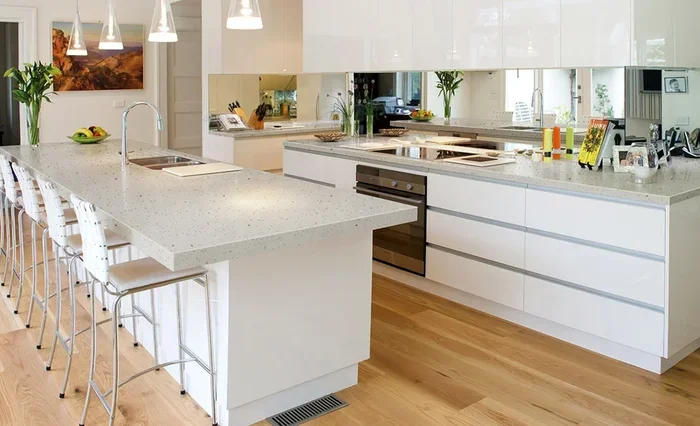
The most common kitchen island depth is 36 inches. This measurement provides a generous work surface on one side and enough room for bar stools on the other. A 36-inch island depth allows you to chop vegetables on one end and sit comfortably at the other end for breakfast or casual dining.
Some designers go as deep as 42 inches for islands that need to support heavy appliances like wine fridges or dishwashers. However, 42 inches is less common and works best in very large kitchens where the extra depth does not make the room feel crowded.
Double Islands and Peninsulas
If you are planning a double island or a peninsula, depth becomes even more important. A peninsula that connects to a countertop or a wall should typically match the standard 25-inch depth. This keeps the transition smooth and prevents the peninsula from sticking out too far into the kitchen.
For double islands, you can vary the depths. One island might be 36 inches deep for food prep, while the other is 25 inches deep for a clean eating surface. This variation adds visual interest and makes each island serve a distinct purpose.
Common Mistakes: One of the biggest mistakes homeowners make is making the island too deep for the room size. An oversized island can block traffic flow and make the kitchen feel claustrophobic. Always leave at least 36 to 42 inches of clearance around the island for comfortable movement.
How to Choose the Right Countertop Depth for Your Space
Choosing the right kitchen countertop depth comes down to understanding your space, your needs, and your budget. There is no one-size-fits-all answer, but following a few simple guidelines can help you make the best decision.
Step 1: Measure Your Kitchen
Start by measuring the total length and width of your kitchen. Note the location of windows, doors, and any fixed structures. Then measure the depth of your existing base cabinets. This gives you a clear picture of what depth will work and what will not.
If you have a small kitchen, stick with the 25-inch standard. A deeper countertop will eat into your floor space and make the room feel smaller. In a large kitchen, you have more flexibility to experiment with 30-inch or even 36-inch depths.
Step 2: Consider Your Cooking Habits
Think about how you use your kitchen. Do you cook elaborate meals every day? Do you need space for multiple cutting boards and appliances at once? If so, a deeper countertop might be worth the extra investment.
On the other hand, if you mostly heat up pre-made meals and do light cooking, a standard 25-inch depth is more than enough. There is no need to pay extra for depth you will not use.
Step 3: Match the Depth to Your Appliances
Check the dimensions of your stove, sink, and refrigerator. Make sure the countertop depth you choose accommodates all of them properly. A mismatched depth can lead to gaps, overhangs, and installation headaches.
If you are planning to install a dishwasher under the countertop, remember that dishwashers are typically 24 to 25 inches deep. A standard 25-inch countertop will cover the dishwasher perfectly and leave a small overhang for a clean look.
Quick Tip
Create a simple floor plan before you shop for countertops. Mark the exact locations of your appliances, sink, and cabinets. This visual guide will help you choose the right depth with confidence.
Common Mistakes When Selecting Countertop Depth
Even with the best intentions, many homeowners make mistakes when choosing their countertop depth. These errors can lead to costly repairs, poor functionality, and an uncomfortable kitchen layout. Here are the most common pitfalls to avoid.
Choosing Depth Based on Looks Alone
It is easy to fall in love with a deeper countertop because it looks impressive in a magazine photo or a showroom. But looks are not everything. A deep countertop that does not fit your kitchen layout or your appliances will cause problems every day.
Always prioritize function over appearance. Choose a depth that works with your kitchen layout, fits your appliances, and supports your daily cooking routine. You can always add style through countertop edge profiles and material choices.
Ignoring the Overhang
The overhang is the part of the countertop that extends beyond the cabinet face. A standard overhang of 1 to 1.5 inches is ideal. Too much overhang can make the countertop feel unstable, while too little overhang can make it look like the countertop is sunk into the cabinet.
For kitchen islands, the overhang for seating is typically 12 to 15 inches on the bar side. This allows enough legroom for comfortable seating. Make sure you plan this overhang when choosing your island depth.
Forgetting About Backsplash Depth
The backsplash is the vertical panel that sits between the countertop and the wall. While it does not change the countertop depth, it does add to the overall profile of the countertop. A thick backsplash can make the kitchen feel narrower, especially in small spaces.
Choose a backsplash that complements your countertop depth without overwhelming the space. A slim, streamlined backsplash works well with standard-depth countertops, while a more decorative backsplash can add character to a deeper island countertop.
Not Consulting a Professional
One of the biggest mistakes is choosing countertop depth without professional input. A kitchen designer or contractor can spot issues you might miss. They can ensure your chosen depth works with your cabinets, appliances, and overall layout.
Expert Insight: Many countertop installation problems arise from incorrect depth measurements taken at the planning stage. Investing in a professional consultation can save you time, money, and frustration in the long run.
Conclusion
Choosing the right kitchen countertop depth is one of the most impactful decisions you will make during a kitchen remodel. The standard 25-inch depth works for most kitchens, but deeper options like 30 and 36 inches offer unique benefits for islands, heavy appliances, and extra prep space.
Remember to measure your kitchen carefully, consider your cooking habits, and match the depth to your appliances and cabinets. Avoid common mistakes like ignoring the overhang or choosing depth based on looks alone. With the right countertop depth, your kitchen will feel balanced, functional, and a joy to cook in every single day.
Take your time, do your research, and do not be afraid to ask for professional advice. The perfect kitchen countertop depth is out there, and with the right guidance, you can find it with confidence.
Frequently Asked Questions
What is the standard kitchen countertop depth?
The standard kitchen countertop depth is 25 inches. This measurement works with most base cabinets, which are typically 24 inches deep, and provides a 1-inch overhang for a clean finished look. It is the most common and versatile depth for residential kitchens.
Can I go deeper than 30 inches for my countertop?
Yes, you can go deeper than 30 inches, but it is most common for kitchen islands and peninsulas. Depths of 36 inches or more are typical for islands that double as eating bars. For standard wall-run countertops, depths beyond 30 inches are less common and may require custom ordering.
What is the ideal kitchen island depth?
The ideal kitchen island depth is 36 inches. This measurement provides ample workspace on one side and enough room for bar stools on the other. For islands that need to support heavy appliances, a depth of 42 inches may be used in larger kitchen designs.
Does countertop depth affect installation costs?
Yes, countertop depth can affect installation costs. Deeper countertops require more material and may need additional support, especially for overhangs. Custom depths also tend to cost more than standard sizes. However, the price difference is usually modest compared to the overall kitchen remodel budget.
How do I choose the right depth for a small kitchen?
For small kitchens, stick with the standard 25-inch depth. Going deeper will reduce your floor space and make the kitchen feel cramped. Focus on maximizing countertop space through smart layout choices rather than adding depth that the room cannot support.
Can I mix different countertop depths in one kitchen?
Yes, mixing countertop depths is possible and can add visual interest. A common approach is using a standard 25-inch depth along the walls and a deeper 36-inch depth for the island. Just make sure the transitions between different depths are clean and well-planned to maintain a cohesive look.
=== CONCLUSION ===
This kitchen countertop depth guide covers everything you need to know to make the right choice for your kitchen. From the standard 25-inch depth to the spacious 36-inch island depth, each option has its own strengths. The key is to match the depth to your kitchen size, your cooking habits, and your appliance needs.
Take the time to measure your space, consider your workflow, and avoid the common mistakes outlined in this guide. With the right planning, your new countertop depth will enhance your kitchen for years to come. Start your kitchen design journey today with confidence and clarity.