
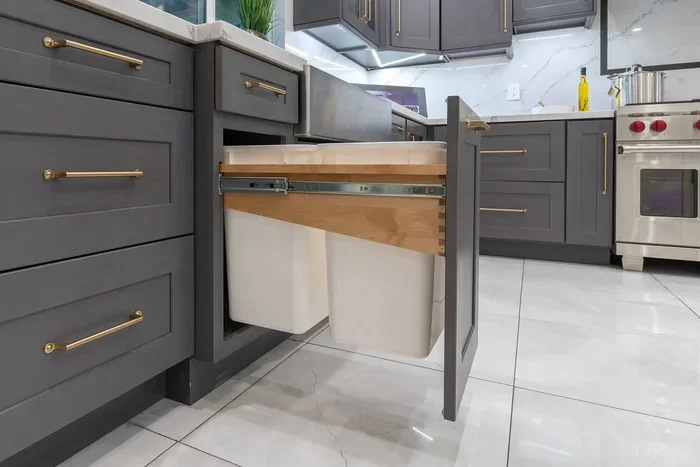
A kitchen garbage can cabinet keeps trash hidden and your counters clutter-free. Whether you choose a pull-out design, under-sink model, or DIY build, the right cabinet transforms how your kitchen looks and feels. These smart storage solutions make cleanup faster and your home more organized.
A messy kitchen trash area can ruin the look of an otherwise beautiful space. Food wrappers, recycling bins, and odor linger right where you prepare meals. The solution? A kitchen garbage can cabinet that hides everything from view.
More homeowners are discovering how a kitchen garbage can cabinet changes the entire feel of their cooking area. Instead of a plastic bin sitting on the floor, you get a sleek, built-in design that blends with your decor. It is one of the simplest upgrades that makes the biggest difference.
In this guide, we will walk you through every option available. You will learn about different styles, how to pick the right one, and even how to build your own. Whether you have a small apartment kitchen or a large open-plan space, there is a kitchen garbage can cabinet that fits your needs.
Key Takeaways
- Hidden trash storage: A kitchen garbage can cabinet keeps bins out of sight and your kitchen looking tidy.
- Multiple styles to choose from: Pull-out, under-sink, and motorized options fit every kitchen layout and budget.
- Easy to install: Many designs work with standard cabinets and basic hardware.
- Odor control is built in: The right cabinet seals in smells and keeps your kitchen fresh.
- Saves counter space: Moving trash into a cabinet frees up valuable workspace.
- Customizable to your needs: You can build or buy a solution that fits your exact kitchen size.
📑 Table of Contents
- Why a Kitchen Garbage Can Cabinet Changes Everything
- Types of Kitchen Garbage Can Cabinets
- How to Choose the Right Kitchen Garbage Can Cabinet for Your Space
- DIY Kitchen Garbage Can Cabinet Projects
- Best Cabinet Hardware and Accessories for Trash Storage
- Keeping Your Kitchen Garbage Can Cabinet Clean and Odor-Free
- Expert Insights on Kitchen Trash Cabinet Design
- Key Takeaways
- Frequently Asked Questions
- Final Thoughts
Why a Kitchen Garbage Can Cabinet Changes Everything
Most people do not think about their trash storage until it becomes a problem. A kitchen garbage can cabinet solves this before it ever becomes one. Here is why so many homeowners are making the switch.
First, it removes the eyesore. Nobody wants to see a overflowing trash bin while they are cooking dinner. A cabinet hides the mess completely. Second, it improves airflow in your kitchen. Open trash cans collect odors that spread throughout the room. A sealed cabinet keeps smells contained.
Third, it frees up floor space. When trash lives inside a cabinet, you gain back square footage that you can use for other things. This is especially important in smaller kitchens where every inch counts. A kitchen garbage can cabinet also makes cleaning easier because there are no hard-to-reach corners around a standalone bin.
The Psychology of a Clean Kitchen
Studies show that a clutter-free environment reduces stress and improves focus. When your trash is hidden, your brain registers the kitchen as cleaner and more organized. This small change can make meal prep feel more enjoyable. A kitchen garbage can cabinet contributes to this sense of order without requiring a full kitchen renovation.
Types of Kitchen Garbage Can Cabinets
Not all trash cabinets are the same. Different designs work better for different kitchens, budgets, and lifestyles. Let us explore the most popular options.
Pull-Out Trash Can Cabinets
A pull-out design slides your trash can right out at countertop level. You push a door, and the bin rolls out on smooth rollers. This is one of the most popular kitchen garbage can cabinet styles because it is so convenient.
Most pull-out systems fit inside standard base cabinets. You simply remove the shelf, install the roller rail, and drop in your bin. Some models hold one can, while others fit two bins for recycling and trash side by side.
Best for: Kitchens with standard base cabinets and limited floor space.
Under-Sink Garbage Can Cabinets
The under-sink area is prime real estate in any kitchen. An under-sink kitchen garbage can cabinet uses this space efficiently. Specialized cabinets fit around your plumbing and provide dedicated trash and recycling storage.
Many under-sink organizers include adjustable shelves and pull-out trays. This makes it easy to access bins even in tight spaces. Some models come with built-in odor filters to keep things fresh.
Best for: Homes where the trash area is already under the sink and you want to maximize that space.
Roll-Out Cabinet Trash Solutions
Similar to pull-out designs, roll-out cabinets use a full-extension drawer mechanism. The entire cabinet front swings open, and the trash bin slides out on heavy-duty tracks. These systems feel smoother and more premium than basic roller setups.
Roll-out trash cabinets often include soft-close hinges and locking mechanisms. This prevents the bin from sliding out unexpectedly. They also tend to hold larger cans, making them great for families.
Best for: Larger kitchens where you want a smooth, high-end feel.
Motorized and Touchless Garbage Can Cabinets
For a truly modern kitchen, motorized kitchen garbage can cabinet options are worth considering. These use a foot pedal or sensor to open the cabinet door automatically. Some even include a built-in touchless trash can inside.
The convenience is hard to beat. You never have to touch a dirty cabinet handle with hands full of food scraps. These systems do cost more, but they add real value to your daily routine.
Best for: Tech-savvy homeowners and anyone who wants maximum convenience.
Lazy Susan Style Trash Cabinets
A lazy Susan trash cabinet rotates to give you access to multiple bins from one spot. You simply spin the cabinet to reach your trash, recycling, or compost bin. This design works well in corner cabinets that are otherwise hard to use.
Best for: Kitchens with corner base cabinets that waste space otherwise.
How to Choose the Right Kitchen Garbage Can Cabinet for Your Space
With so many options, picking the right one can feel overwhelming. Use these guidelines to narrow down your choices.
Measure Your Available Space
Start by measuring the cabinet where you plan to install the system. Note the height, width, and depth. Standard base cabinets are typically 24 inches deep and 36 inches tall. But sizes vary, so always double-check before purchasing.
Also measure your trash can dimensions. The cabinet should accommodate your bin with room to slide or roll out smoothly. A tight fit causes jams and frustration.
Consider Your Kitchen Layout
Where does your trash currently live? Under the sink? In a corner? Against a wall? Your current setup influences which cabinet type works best.
- Under-sink cabinets: Choose under-sink organizers or specialized under-sink trash cabinets.
- Base cabinets away from the sink: Pull-out or roll-out systems work great here.
- Corner cabinets: Lazy Susan or diagonal pull-out designs unlock wasted space.
- Pantry cabinets: Large roll-out systems can turn a pantry cabinet into a trash station.
Think About Your Household Size
A family of five generates more trash than a couple living alone. Choose a cabinet that fits multiple bins if needed. Look for systems that accommodate 13-gallon cans or larger. Some designs even allow you to store compost bins alongside trash and recycling.
Budget Considerations
Kitchen garbage can cabinet prices range widely. Basic roller kits start around $30 to $50. Mid-range pull-out systems run $100 to $300. High-end motorized cabinets can cost $500 or more. Set a budget before shopping so you can focus on options that fit your price range.
Match Your Kitchen Style
Your trash cabinet should look like it belongs in your kitchen. Many manufacturers offer cabinets in popular finishes like white, maple, walnut, and gray. You can also paint or stain a DIY cabinet to match your existing cabinetry. A kitchen garbage can cabinet that blends seamlessly keeps the whole room looking cohesive.
DIY Kitchen Garbage Can Cabinet Projects
Not ready to buy a pre-made system? Building your own kitchen garbage can cabinet is a rewarding weekend project. It saves money and lets you customize every detail.
Simple Roller Kit Installation
The easiest DIY approach uses a basic roller kit. These kits include mounting rails, rollers, and instructions. You attach the rails inside an existing cabinet, place your bin on the rollers, and done.
Tools you will need:
- Screwdriver or drill
- Measuring tape
- Level
- The roller kit itself
This project takes about 30 minutes and requires no woodworking skills. It is the perfect starting point if you are new to kitchen upgrades.
Building a Custom Pull-Out Trash Cabinet
For a more advanced project, build a custom pull-out cabinet from scratch. Start with a plywood box that fits inside your base cabinet. Attach full-extension drawer slides to the bottom. Mount a cabinet door on the front using European hinges.
Steps:
- Measure and cut plywood to size.
- Assemble the box using wood screws and wood glue.
- Attach drawer slides to the bottom of the box.
- Mount the box inside the base cabinet.
- Attach a cabinet door to the front.
- Test the slide-out motion and adjust as needed.
This approach gives you complete control over size, finish, and functionality. You can add dividers, lids, or odor-proof lining to suit your needs.
Quick Tips for DIY Success
- Always pre-drill holes to prevent wood splitting.
- Use soft-close hinges for a premium feel.
- Line the cabinet interior with waterproof material to protect against spills.
- Test the mechanism with your actual trash can before finalizing the build.
- Sand and finish all wood surfaces to match your kitchen cabinets.
Best Cabinet Hardware and Accessories for Trash Storage
The right hardware makes all the difference in how well your kitchen garbage can cabinet performs. Here are the essentials to look for.
Soft-Close Hinges
Nothing ruins the experience of a nice cabinet slamming shut. Soft-close hinges prevent this by slowing the door as it reaches the closed position. They are affordable and easy to install. Most quality cabinets now include them as standard.
Full-Extension Drawer Slides
For pull-out and roll-out designs, full-extension slides are a must. They allow the entire bin to slide out completely, giving you full access to the bottom of the can. Partial-extension slides leave a gap that is hard to reach.
Odor Control Solutions
Even inside a cabinet, trash can produce odors. Consider adding an activated charcoal filter to the cabinet interior. Some cabinets come with built-in ventilation that routes smells through a carbon filter. You can also place a small bowl of baking soda inside the cabinet to absorb odors naturally.
Liner Systems and Mats
Protect the inside of your cabinet with a waterproof liner. Spills happen, and you do not want moisture damaging your wood or paint. Silicone mats on the bottom of the cabinet catch drips and make cleaning a breeze.
Comparison Table: Cabinet Hardware Options
| Hardware Type | Average Cost | Best For | Ease of Install |
|---|---|---|---|
| Soft-Close Hinges | $5-$15 per pair | All cabinet types | Easy |
| Full-Extension Slides | $10-$30 per pair | Pull-out and roll-out cabinets | Moderate |
| Roller Kits | $15-$40 per set | Basic pull-out bins | Very Easy |
| Activated Charcoal Filters | $8-$20 per pack | Odor control | Very Easy |
| Waterproof Liners | $10-$25 per sheet | Interior protection | Very Easy |
| Motorized Lift Systems | $200-$600 | Touchless, modern kitchens | Difficult |
Keeping Your Kitchen Garbage Can Cabinet Clean and Odor-Free
Installing a kitchen garbage can cabinet is only half the battle. Regular maintenance keeps it working well and smelling fresh.
Weekly Cleaning Routine
Wipe down the interior of the cabinet once a week. Use a mixture of warm water and white vinegar to disinfect surfaces. This kills bacteria and neutralizes odors at the source. Do not forget to clean the rollers or slides, as food residue can build up there too.
When to Replace Your Trash Bag
A good rule of thumb is to change your trash bag every one to two days, depending on household size. Fresh bags reduce odor buildup inside the cabinet. If you notice smells lingering, it may be time to switch to odor-blocking trash bags or liners.
Deep Cleaning Schedule
Once a month, remove the trash can entirely and deep clean the cabinet. Scrub all surfaces with a mild detergent. Let the cabinet air dry completely before putting the bin back. This prevents mold and mildew from developing in hidden corners.
Common Mistakes to Avoid
- Overfilling the cabinet: Leave room for the bin to slide or roll out smoothly.
- Ignoring ventilation: Without airflow, moisture and odors get trapped inside.
- Using the wrong size bin: A bin that is too large or too small causes operational problems.
- Skipping regular cleaning: Even the best cabinet will smell if not maintained.
- Forgetting to check hardware: Tighten screws and replace worn rollers before they cause issues.
Expert Insights on Kitchen Trash Cabinet Design
We spoke with kitchen designers about the latest trends in kitchen garbage can cabinet design. Their insights confirm that hidden trash storage is no longer a luxury, it is an expectation in modern kitchen design.
“Homebuyers now look for built-in trash solutions as a standard feature,” says one interior designer. “It signals that the kitchen is well-planned and functional.” Another expert notes that the trend toward open-concept living makes hidden storage even more important. “When your kitchen flows into the dining and living areas, visible trash is a design flaw,” she explains.
The professionals also emphasize choosing quality hardware. “The slides and hinges make or break the experience,” one designer says. “Invest in smooth, durable mechanisms and your kitchen garbage can cabinet will feel premium for years.”
Key Takeaways
- Hidden trash storage: A kitchen garbage can cabinet keeps bins out of sight and your kitchen looking tidy.
- Multiple styles to choose from: Pull-out, under-sink, roll-out, and motorized options fit every kitchen layout and budget.
- Easy to install: Many designs work with standard cabinets and basic hardware, even for DIY beginners.
- Odor control is built in: The right cabinet seals in smells and keeps your kitchen fresh all day long.
- Saves counter space: Moving trash into a cabinet frees up valuable workspace for meal prep.
- Customizable to your needs: You can buy pre-made systems or build a solution that fits your exact kitchen size.
- Increases home value: Hidden trash storage is a desirable feature that appeals to potential buyers.
Frequently Asked Questions
What is the best type of kitchen garbage can cabinet for small kitchens?
A pull-out roller kit is the best option for small kitchens. It fits inside an existing base cabinet and takes up no extra space. The bin slides out at countertop level, making it easy to access while keeping everything hidden. These kits are affordable and simple to install, making them ideal for apartments and compact homes.
Can I install a kitchen garbage can cabinet myself?
Yes, most kitchen garbage can cabinet systems are designed for DIY installation. Basic roller kits require only a screwdriver and about 30 minutes. More complex pull-out or motorized systems may need additional tools and some woodworking experience. Always follow the manufacturer’s instructions and measure your space carefully before starting.
How do I prevent odors from building up inside the cabinet?
Use a combination of odor-blocking trash bags, activated charcoal filters, and regular cleaning. Ventilation is also key, so make sure your cabinet allows some airflow. Placing a small bowl of baking soda inside the cabinet absorbs lingering smells. Keeping the trash bag fresh and changing it frequently makes a big difference too.
What size trash can fits in a standard kitchen garbage can cabinet?
Standard base cabinets are 24 inches deep and 34 to 36 inches tall. Most systems accommodate 13-gallon trash cans, which are the most common size. Some larger cabinets can hold 15-gallon or even 20-gallon bins. Always measure both your cabinet and your trash can before purchasing a system to ensure a proper fit.
Are motorized kitchen garbage can cabinets worth the extra cost?
Motorized cabinets offer excellent convenience, especially for busy households. The automatic open-and-close feature means you never touch a dirty handle. They are particularly useful when your hands are full of food or cooking supplies. However, they cost significantly more than manual systems and require electrical installation. Consider your budget and how much you value that extra convenience before deciding.
How do I clean a kitchen garbage can cabinet?
Wipe the interior with warm water and white vinegar weekly. For deeper cleaning, remove the trash bin and scrub all surfaces with mild detergent. Let the cabinet dry completely before replacing the bin. Also clean the rollers or slides regularly to prevent food buildup. Using a waterproof liner on the cabinet floor makes cleanup even faster and protects the wood or paint.
Final Thoughts
A kitchen garbage can cabinet is one of the most impactful upgrades you can make to your home. It hides clutter, controls odors, and frees up valuable space. Whether you choose a simple roller kit or invest in a motorized system, the results speak for themselves.
The beauty of these cabinets is their simplicity. They solve a daily frustration with an elegant, built-in solution. Your kitchen becomes a more pleasant place to cook, clean, and gather with family and friends.
Start by measuring your available space and deciding which style fits your lifestyle. From there, the options are endless. A cleaner, more organized kitchen begins with where you store your trash. Make the smart choice today and experience the difference a kitchen garbage can cabinet can make.

