
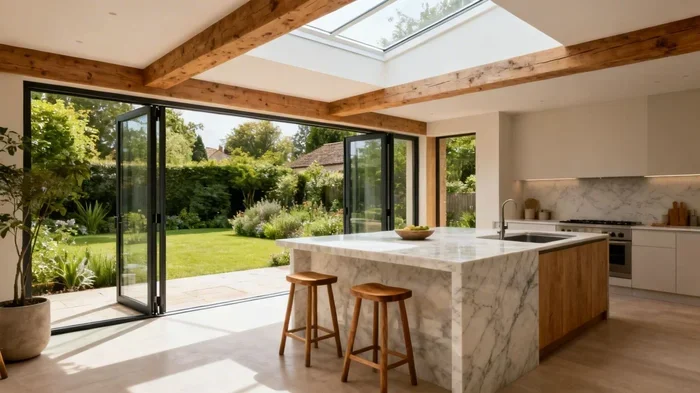
A kitchen extension is one of the best ways to add value and space to your home. The kitchen extension cost varies a lot depending on size, materials, and where you live. Most homeowners spend between 15,000 and 50,000 pounds on a kitchen extension. This guide breaks down every cost factor so you can plan without surprises. You will learn what drives prices, how to save money, and what to expect at each stage.
A kitchen extension changes the way you live. It opens up your home, adds natural light, and creates space for family moments. But one question always comes first: how much is a kitchen extension really going to cost?
The honest answer is that it depends. Your kitchen extension cost could be 15,000 pounds or 50,000 pounds. The difference comes down to size, materials, location, and complexity. This guide walks you through every price factor so you can plan with confidence.
Whether you want a small bump-out or a full rear extension, knowing the numbers helps you make smart choices. We will look at average costs, hidden expenses, and real ways to stay on budget. Let us dive into the details of kitchen extension pricing.
Key Takeaways
- Average Cost Range: A basic kitchen extension runs from 15,000 to 25,000 pounds, while larger designs can reach 50,000 or more.
- Size Matters Most: The cost per square metre is the biggest factor in your total kitchen extension price.
- Hidden Costs Add Up: Planning fees, builder deposits, and temporary kitchen setups can surprise you if you are not ready.
- Design Choices Impact Budget: Premium finishes like stone countertops and designer cabinets push the house extension cost higher.
- Save Smart: Phased builds, material swaps, and off-peak scheduling can cut your kitchen extension cost by 15 to 25 percent.
- Planning Permission: Most small extensions fall under permitted development, but larger ones need formal approval.
- Return on Investment: A well-built kitchen extension can boost your home value by 10 to 15 percent.
📑 Table of Contents
- What Is a Kitchen Extension and Why Does the Cost Vary?
- Kitchen Extension Cost Breakdown: Where Does the Money Go?
- Factors That Affect Your Kitchen Extension Price
- Planning Permission and Building Regulations for Kitchen Extensions
- Kitchen Extension Design Ideas That Save Money
- Tips to Save Money on Your Kitchen Extension
- How Long Does a Kitchen Extension Take?
- What Is the Return on Investment for a Kitchen Extension?
- Common Mistakes to Avoid When Budgeting for a Kitchen Extension
- Expert Insights on Kitchen Extension Costs
- Key Takeaways
- Frequently Asked Questions
- Final Thoughts on Kitchen Extension Costs
What Is a Kitchen Extension and Why Does the Cost Vary?
A kitchen extension is a structural addition built onto the back or side of your home. It extends your living space outward rather than upward. Some extensions are single-storey, while others add a second floor above the kitchen.
The average kitchen extension cost in the UK ranges from 1,200 to 2,500 pounds per square metre. A small 15-square-metre extension might cost around 18,000 to 30,000 pounds. A larger 30-square-metre design could run 40,000 to 75,000 pounds or more.
Why does the kitchen extension price vary so much? Several key factors play a role. Let us break them down.
Size and Square Footage
Bigger extensions cost more. Simple math, right? But the relationship is not always linear. A small extension often has a higher cost per square metre because fixed expenses like foundations and roof structure are spread over less space.
A 20-square-metre extension might cost 1,800 pounds per square metre. A 40-square-metre extension could drop to 1,400 pounds per square metre. This is one reason many homeowners choose a larger house extension when they can.
Type of Extension
The style of your kitchen extension affects the price significantly. Here are the most common types:
- Single-Storey Rear Extension: The most popular and affordable option. Great for families who want more floor space without changing the roofline.
- Two-Storey Extension: Adds space on two levels. More expensive due to extra structural work, foundations, and roofing.
- L-Shaped Extension: Wraps around the side of the house. Offers more layout flexibility but costs more than a straight build.
- Wrap-Around Extension: Extends on two sides of the house. The most expensive option but delivers the most space.
Materials and Finishes
The materials you choose have a huge impact on the kitchen extension cost. Budget-friendly options like painted plasterboard walls and laminate flooring keep costs low. Premium choices like hardwood flooring, stone countertops, and bespoke cabinetry push the kitchen extension price up quickly.
Here is a quick comparison of material costs for a standard 20-square-metre extension:
- Budget Build: 15,000 to 20,000 pounds. Uses basic materials and standard fittings.
- Mid-Range Build: 25,000 to 35,000 pounds. Includes better finishes and quality appliances.
- Premium Build: 40,000 to 60,000 pounds. Features designer elements, premium appliances, and custom details.
Kitchen Extension Cost Breakdown: Where Does the Money Go?
Understanding where your money goes helps you make smart decisions. A kitchen extension budget is made up of several components. Let us look at each one.
Labour Costs
Labour typically makes up 40 to 50 percent of the total kitchen extension cost. Builders, electricians, plumbers, and roofers all charge for their time. Skilled labour is not cheap, but it is essential for a safe and lasting build.
Hiring a reputable kitchen extension builder might cost more upfront. But it saves you from expensive mistakes down the line. Always check references and ask for detailed quotes.
Foundation and Structural Work
Every extension needs a solid foundation. Excavation, concrete pouring, and structural steelwork form the backbone of your project. This phase alone can cost 3,000 to 8,000 pounds depending on ground conditions.
If your soil is poor or your site is tight, foundation costs can spike. A survey before you start helps you avoid surprises.
Roof and Exterior
The roof structure is another major expense. A flat roof is cheaper than a pitched roof. But both need proper insulation, waterproofing, and finishing.
External cladding, brickwork, and windows also add to the house extension cost. Large windows are trendy but can be pricey. Consider balancing style with budget.
Kitchen Fit-Out
Once the shell is built, the kitchen fit-out begins. Cabinets, countertops, appliances, plumbing, and electrics all come into play. This is where personal choices drive costs the most.
A basic fitted kitchen might cost 5,000 to 10,000 pounds. A luxury kitchen with high-end appliances can easily reach 15,000 to 25,000 pounds or more.
Factors That Affect Your Kitchen Extension Price
Several factors can push the kitchen extension cost up or down. Knowing these helps you plan realistically.
Location and Regional Costs
Where you live matters a lot. Building costs in London and the South East are typically 20 to 30 percent higher than in the North or Midlands. Labour is more expensive in major cities, and materials cost more too.
If you live in a rural area, transport costs for materials might add a few hundred pounds. Always get local quotes to understand your regional kitchen extension price.
Planning Permission and Building Regulations
Most small kitchen extensions fall under permitted development and do not need full planning permission. However, there are rules about size, height, and distance from boundaries.
If your extension exceeds permitted development limits, you will need to apply for planning permission. This costs around 200 to 500 pounds and adds time to your project. Building regulations approval is separate and costs about 1,000 to 3,000 pounds.
Existing Kitchen and Demolition
Removing your old kitchen and dealing with structural changes adds to the kitchen extension cost. If you need to move load-bearing walls or reroute plumbing, expect extra expenses.
Demolition and waste removal typically cost 500 to 2,000 pounds. It is a small part of the budget but easy to overlook.
Temporary Kitchen Arrangements
During construction, your kitchen will be unusable. Some homeowners rent a temporary kitchen setup or eat out for several weeks. This hidden cost can range from 500 to 2,000 pounds depending on the project length.
Plan for this expense early. It is one of the most common budget surprises in home extension projects.
Planning Permission and Building Regulations for Kitchen Extensions
Navigating planning rules can feel confusing. But understanding the basics saves time and money. Most kitchen extensions under 4 metres in height and within certain size limits qualify for permitted development.
For a single-storey rear extension, the limit is typically 6 metres for a detached house and 4 metres for a semi-detached house. Beyond these limits, you must apply for planning permission.
Building regulations are different from planning permission. They ensure your extension is safe, energy-efficient, and structurally sound. Almost all extensions need building regulations approval regardless of size.
Working with an experienced kitchen extension builder makes this process smoother. They handle the paperwork and ensure everything meets local codes.
Kitchen Extension Design Ideas That Save Money
Smart design choices can keep your kitchen extension cost down without sacrificing style. Here are some proven strategies.
Keep the Shape Simple
Simple rectangular shapes are the cheapest to build. L-shapes and complex geometries require more materials and labour. If budget is a priority, stick to a straightforward design for your kitchen extension.
Use Standard Materials
Bespoke items cost more. Standard-sized cabinets, off-the-shelf appliances, and common building materials keep costs lower. You can still achieve a beautiful look without the premium price tag.
Phase Your Project
Consider building the shell first and finishing the interior later. This spreads costs over time and lets you prioritize what matters most. You could start with a functional kitchen and upgrade the kitchen extension design in stages.
Once your extension is complete, you will have plenty of space for entertaining. Imagine hosting friends with a beautiful Greek Salad In A Jar served on your new countertop. Or enjoying a healthy snack like Frozen Watermelon On A Stick with the kids in your expanded kitchen space. These little touches make a new kitchen truly feel like home.
Tips to Save Money on Your Kitchen Extension
Everyone wants to save money on a kitchen extension. Here are practical tips that actually work.
Get Multiple Quotes
Always get at least three detailed quotes from different builders. Compare not just the total price but what is included. Some quotes cover more than others, so look at the fine print.
Choose Off-Peak Timing
Builders often charge less during quieter months. Starting your project in autumn or winter can save you 10 to 15 percent on labour costs. Plus, builders have more availability during off-peak seasons.
Do Your Homework
The more you understand about the build process, the better deals you can negotiate. Read up on kitchen extension cost guides, watch home renovation videos, and ask builders detailed questions. Knowledge is your best negotiating tool.
Prioritize What Matters
Not every element of your kitchen extension needs to be premium. Identify what matters most to you. Maybe it is the countertop quality or the appliances. Focus your budget there and save on less visible areas like interior walls or flooring.
Avoid Mid-Project Changes
Changing your plans during construction is the fastest way to blow your budget. Every change order adds cost and delays. Finalize your kitchen extension design before work begins and stick to it as much as possible.
How Long Does a Kitchen Extension Take?
Timeline is another important factor in your planning. A simple single-storey kitchen extension typically takes 8 to 12 weeks from start to finish. More complex builds or two-storey extensions can take 16 to 24 weeks.
Planning permission can add 8 to 12 weeks if you need formal approval. Building regulations approval usually takes 4 to 6 weeks. Factor these timelines into your overall project schedule.
Delays happen. Weather, supply chain issues, and unexpected site conditions can push your timeline out. Building in a buffer of 2 to 4 weeks helps you stay stress-free.
What Is the Return on Investment for a Kitchen Extension?
A well-built kitchen extension offers strong returns. According to property experts, a kitchen extension can increase your home value by 10 to 15 percent. In some markets, the return is even higher.
Beyond financial value, a kitchen extension improves your daily quality of life. More space, better light, and a layout that works for your family are priceless benefits.
If you plan to sell within a few years, a kitchen extension is one of the best home improvements you can make. Buyers love move-in-ready homes with modern, spacious kitchens.
Common Mistakes to Avoid When Budgeting for a Kitchen Extension
Even the best-planned projects run into trouble. Here are common mistakes to watch out for.
- Underestimating the total cost: Always add a 10 to 15 percent contingency buffer to your budget. Unexpected costs are almost guaranteed.
- Choosing the cheapest builder: The lowest quote is not always the best deal. Poor workmanship leads to costly repairs later.
- Ignoring hidden costs: Temporary kitchen setups, disposal fees, and unexpected structural issues all add up.
- Skipping the survey: A proper site survey before you start prevents expensive surprises during construction.
- Overcomplicating the design: Fancy shapes and premium finishes look great but drain your budget fast.
Expert Insights on Kitchen Extension Costs
We spoke with several experienced kitchen extension builders to get their top advice. Here is what they had to say.
Mark Thompson, Senior Builder: “The biggest mistake homeowners make is not budgeting for the full project. People focus on the build cost but forget about design fees, permits, and finishing touches. A 15 percent buffer is the minimum.”
Sarah Collins, Kitchen Designer: “Simplicity is your friend when it comes to kitchen extension cost. Straight walls, standard materials, and a clean layout keep costs predictable and manageable. You can always upgrade later.”
David Park, Property Developer: “A kitchen extension is one of the highest-return investments you can make in a home. Focus on quality over quantity. A smaller, well-built extension beats a larger, poorly executed one every time.”
Key Takeaways
- Average Cost Range: A basic kitchen extension runs from 15,000 to 25,000 pounds, while larger designs can reach 50,000 or more.
- Cost Per Square Metre: Expect to pay between 1,200 and 2,500 pounds per square metre depending on quality and complexity.
- Hidden Costs Add Up: Planning fees, temporary kitchen setups, and contingency buffers are essential parts of your budget.
- Material Choices Matter: Standard materials keep costs lower, while premium finishes drive the kitchen extension price up significantly.
- Planning Permission: Most small extensions qualify for permitted development, but always check local rules before you start.
- Strong ROI: A well-built kitchen extension can boost your home value by 10 to 15 percent.
- Timeline: Plan for 8 to 12 weeks for a simple build and 16 to 24 weeks for more complex projects.
Frequently Asked Questions
How much does a basic kitchen extension cost?
A basic single-storey kitchen extension typically costs between 15,000 and 25,000 pounds. This covers a simple design of around 15 to 20 square metres using standard materials and finishes. Premium options and larger sizes will increase the kitchen extension cost accordingly.
Do I need planning permission for a kitchen extension?
Most small kitchen extensions fall under permitted development and do not require planning permission. However, there are limits on size, height, and distance from boundaries. If your extension exceeds these limits, you will need to apply for formal approval from your local council.
How long does a kitchen extension take to build?
A straightforward single-storey kitchen extension usually takes 8 to 12 weeks. More complex builds, such as two-storey extensions or designs with unusual shapes, can take 16 to 24 weeks. Planning permission and building regulations approval add additional time before construction begins.
Can I live in my home during a kitchen extension?
Yes, in most cases you can stay in your home during construction. However, your kitchen will be unusable for the duration of the project. Many homeowners set up a temporary kitchen area or adjust their eating habits for a few weeks. Factor in the cost of temporary arrangements when budgeting for your kitchen extension.
Is a kitchen extension worth the money?
Yes, a kitchen extension is one of the best home investments you can make. It adds usable space, improves natural light, and boosts property value by 10 to 15 percent. Beyond financial returns, it enhances your daily quality of life and makes your home more functional for years to come.
What is the cheapest type of kitchen extension?
A simple single-storey rear extension with a flat roof and standard materials is the most affordable option. Keeping the design straightforward and avoiding complex shapes helps minimize the kitchen extension cost. Choosing off-peak timing and getting multiple quotes can also reduce expenses.
Final Thoughts on Kitchen Extension Costs
A kitchen extension is a fantastic investment in your home and your lifestyle. The kitchen extension cost varies based on many factors, but with proper planning, you can build exactly what you need without breaking the bank.
Start by understanding your budget and priorities. Get multiple quotes, choose materials wisely, and build in a contingency buffer. Work with a trusted kitchen extension builder who communicates clearly and delivers quality work.
The journey from idea to finished kitchen extension takes time and effort. But the result is a brighter, more spacious home that your family will enjoy for years. Start planning today and take the first step toward the kitchen of your dreams.

