
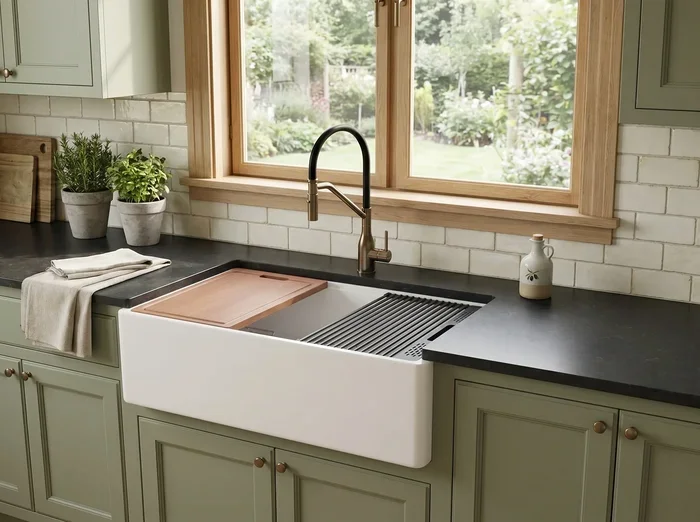
A fireclay kitchen sink is a premium kitchen fixture made from a blend of clay and ceramic fired at extreme temperatures. It offers outstanding durability, heat resistance, and a timeless look that fits any kitchen style. This guide covers everything you need to know before buying one.
A fireclay kitchen sink can transform the heart of your home. Whether you are remodeling or building from scratch, choosing the right sink matters more than most people realize. Your sink sees daily use, handles hot pots, and takes the brunt of kitchen messes. That is why picking a material that lasts is so important.
Fireclay has been a favorite among homeowners and designers for over a century. It combines natural clay with ceramic finishes and fires the mixture at incredibly high temperatures. The result is a sink that looks beautiful and performs remarkably well. In this guide, we will walk you through everything you need to know about fireclay kitchen sinks. From benefits and drawbacks to buying tips and maintenance, we have you covered.
By the end of this article, you will feel confident making the right choice for your kitchen. Let us dive in.
Key Takeaways
- Fireclay sinks are incredibly durable: They resist scratches, stains, and heat better than most sink materials.
- They come in many styles: From farmhouse to undermount, there is a fireclay sink for every kitchen design.
- Maintenance is simple: Regular cleaning with mild soap keeps a fireclay sink looking new for decades.
- They are heavier than other sinks: Plan for proper support and professional installation if needed.
- Price varies widely: Budget options start around $300, while premium models can exceed $1,500.
- Warranty matters: Top brands offer lifetime warranties that protect your investment.
- Fireclay is eco-friendly: Made from natural materials, it is a sustainable choice for green kitchens.
📑 Table of Contents
- What Is a Fireclay Kitchen Sink?
- Why Choose a Fireclay Kitchen Sink?
- Fireclay Kitchen Sink Pros and Cons
- How to Choose the Right Fireclay Kitchen Sink
- Fireclay Kitchen Sink Installation Tips
- Maintaining and Cleaning Your Fireclay Kitchen Sink
- Fireclay Kitchen Sink vs Other Sink Materials
- Common Mistakes to Avoid When Buying a Fireclay Kitchen Sink
- Expert Insights on Fireclay Kitchen Sinks
- Key Takeaways
- Conclusion
What Is a Fireclay Kitchen Sink?
A fireclay sink is made from a mixture of clay, feldspar, and silica. Manufacturers shape this mixture into a sink form and then fire it in a kiln at temperatures above 2,000 degrees Fahrenheit. This intense heat creates a dense, non-porous material that is incredibly tough.
Unlike stainless steel or plastic sinks, fireclay has a natural ceramic glaze on the surface. This glaze gives the sink its smooth, glossy finish. It also makes the surface resistant to stains and bacteria. Many people love the classic, timeless look of fireclay kitchen sinks. They come in colors like white, cream, black, and even shades of gray.
The manufacturing process is what sets fireclay apart. Each sink is essentially a piece of ceramic cookware, just scaled up to sink size. This is why fireclay sinks are so heavy and so durable. You are getting a solid piece of fired material, not a thin layer of something else.
How Fireclay Sinks Are Made
The process starts with raw clay and mineral powders. Workers mix these ingredients with water to create a thick paste. This paste gets poured into a mold shaped like a sink. Excess moisture is removed, and the cast sink dries slowly to prevent cracking.
Once dry, the sink goes into a kiln. The firing process can take several days. During this time, the material vitrifies, meaning the particles fuse together into a solid mass. After firing, the sink receives a ceramic glaze. The glaze adds color and a protective layer. Finally, the sink is inspected for quality and sent out for sale.
Why Choose a Fireclay Kitchen Sink?
There are many reasons homeowners choose fireclay kitchen sinks over other options. Let us look at the biggest advantages that make fireclay stand out.
Exceptional Durability
Fireclay sinks are built to last. They can handle heavy use without showing signs of wear. Unlike stainless steel, fireclay does not dent easily. Unlike acrylic, it does not scratch or fade over time. A quality fireclay kitchen sink can last 50 years or more with proper care.
The dense material resists chips and cracks better than you might expect. Of course, dropping a heavy object directly onto the sink edge can cause damage. But everyday use? A fireclay sink handles it without flinching.
Heat Resistance
One of the best features of a fireclay kitchen sink is its heat tolerance. You can place a hot skillet or boiling pot directly into the sink without worrying about damage. Stainless steel sinks can dent from sudden temperature changes. Porcelain sinks can crack. Fireclay handles extreme heat with ease.
This makes fireclay ideal for busy kitchens where hot pots and pans need quick rinsing. You do not need to wait for water to cool before cleaning up.
Stain and Scratch Resistance
The ceramic glaze on a fireclay sink creates a non-porous surface. This means liquids, acids, and dyes cannot seep into the material. Coffee spills, tomato sauce, and turmeric stains wipe away easily. The surface also resists scratches from utensils and scrubbers.
Over time, some sink materials develop dull spots or discoloration. A well-maintained fireclay sink keeps its original finish for decades. This is a huge selling point for homeowners who want a long-term solution.
Classic Aesthetic Appeal
Fireclay kitchen sinks have a timeless beauty that fits any kitchen style. Whether your kitchen is modern, traditional, farmhouse, or rustic, a fireclay sink blends in perfectly. The smooth, glossy surface adds a touch of elegance without being flashy.
White fireclay sinks are especially popular. They give kitchens a clean, fresh look. But you can also find fireclay sinks in other colors to match your design vision. The material has a richness and depth that cheaper materials simply cannot replicate.
Fireclay Kitchen Sink Pros and Cons
Every material has its trade-offs. Let us look at both sides of fireclay kitchen sinks honestly so you can make an informed decision.
The Pros
- Extremely durable: Lasts decades without showing wear.
- Heat resistant: Handles hot pots and pans with no problem.
- Stain resistant: Non-porous surface repels most spills.
- Scratch resistant: Ceramic glaze protects the surface.
- Classic look: Timeless design that never goes out of style.
- Easy to clean: Smooth surface requires minimal effort.
- Eco-friendly: Made from natural, sustainable materials.
- Quiet operation: Heavier construction reduces noise from running water.
The Cons
- Heavy weight: Installation requires strong cabinetry and support.
- Higher cost: Fireclay sinks cost more than stainless steel or plastic options.
- Can chip on impact: A hard blow can cause a chip or crack.
- Limited sink styles: Fireclay works best for traditional and farmhouse designs.
- Glaze can wear over time: Though rare, aggressive scrubbing can damage the finish.
Overall, the benefits of a fireclay kitchen sink far outweigh the drawbacks for most homeowners. The key is understanding what you are getting into before you buy.
How to Choose the Right Fireclay Kitchen Sink
Not all fireclay sinks are created equal. There are several factors to consider when shopping for the perfect one. Let us break down what matters most.
Sink Style
Fireclay kitchen sinks come in several popular styles. The most common options include:
- Farmhouse sinks: These are the classic front-panel sinks that protrude slightly beyond the countertop. They make a bold statement and are very popular in rustic and farmhouse kitchens.
- Undermount sinks: These mount underneath the countertop for a sleek, seamless look. They are great for modern and contemporary kitchens.
- Drop-in sinks: These sit on top of the countertop and are the easiest to install. They work well in budget-conscious projects.
- Apron-front sinks: Similar to farmhouse sinks but with a more refined profile. They combine the classic look with a polished finish.
Your kitchen style should guide your choice. A farmhouse fireclay kitchen sink works beautifully in country kitchens. An undermount fireclay sink suits modern, minimalist spaces.
Size and Depth
Measure your available space before shopping. Standard single-bowl fireclay sinks range from 22 to 36 inches wide. Double-bowl options are also available. Depth matters too. Deeper sinks, around 8 to 10 inches, hold more water and reduce splashing.
Think about how you use your sink. Do you wash large pots? Go for a bigger, deeper bowl. Do you prefer a compact setup? A smaller sink will work fine.
Color and Finish
White is the most popular color for fireclay sinks, but you have other options. Cream, off-white, black, and charcoal are common choices. Some brands offer custom colors at a premium price.
Matte finishes are gaining popularity. They hide water spots and fingerprints better than glossy finishes. Glossy finishes, on the other hand, give a brighter, more polished look. Choose based on your kitchen aesthetic and how much maintenance you want.
Brand and Warranty
Several brands specialize in fireclay kitchen sinks. Look for reputable manufacturers that offer strong warranties. Top brands often provide lifetime warranties against defects. This gives you peace of mind and protects your investment.
Some well-known brands in the fireclay sink market include Kraus, Elkay, Blanco, and Rohl. Do your research, read reviews, and compare features before making a final decision.
Price Range
Fireclay sinks range in price from around $300 for budget models to over $1,500 for premium options. Your budget will influence which features and brands you can afford. Remember that a higher price often means better glaze quality, thicker material, and a longer warranty.
Here is a quick comparison of what you can expect at different price points:
- Budget ($300-$500): Basic single-bowl sinks with standard glaze. Good for rental properties or secondary kitchens.
- Mid-range ($500-$900): Better build quality, more style options, and improved glaze durability. Ideal for most homeowners.
- Premium ($900-$1,500+): Top brands, custom colors, enhanced durability, and lifetime warranties. Perfect for high-end kitchen renovations.
Fireclay Kitchen Sink Installation Tips
Installing a fireclay kitchen sink requires some planning because of the weight. Here are practical tips to ensure a smooth installation.
Check Cabinet Support
Fireclay sinks are heavy. A single bowl can weigh 30 to 50 pounds or more. Before installation, make sure your cabinets can support the weight. You may need to reinforce the cabinet bottoms or add extra support brackets.
If you are replacing an existing sink, compare the weight of the old sink with the new one. Sometimes the difference is significant enough to require structural adjustments.
Use the Right Mounting Method
The mounting method depends on your sink style. Undermount sinks need adhesive and mechanical clips to secure them to the countertop. Drop-in sinks use clips and sealant from above. Farmhouse sinks often require additional front mounting brackets.
Follow the manufacturer’s instructions carefully. Improper mounting can lead to leaks, cracking, or the sink pulling away from the countertop over time.
Seal All Connections Properly
Use high-quality silicone sealant around the edges where the sink meets the countertop. This prevents water from seeping underneath and causing damage. Make sure the plumbing connections are tight and secure.
If you are not comfortable with plumbing, hire a professional. A proper installation protects your investment and prevents costly repairs down the road.
Consider Professional Installation
While some homeowners handle sink installation themselves, a fireclay kitchen sink is best installed by a professional. The weight, the precision required, and the need for proper sealing all make professional installation worthwhile. A pro will also ensure the sink is level and properly aligned with your plumbing.
Maintaining and Cleaning Your Fireclay Kitchen Sink
One of the best things about a fireclay sink is how easy it is to maintain. With simple care, your sink will look great for years.
Daily Cleaning Routine
Wipe down your sink after each use with a soft cloth and mild dish soap. This removes food residue and prevents stains from setting in. Avoid abrasive cleaners or steel wool pads. These can scratch the ceramic glaze over time.
For stubborn stains, make a paste of baking soda and water. Apply it gently, let it sit for a few minutes, and rinse away. This natural method cleans effectively without damaging the surface.
Dealing with Hard Water Stains
Hard water can leave white mineral deposits on your sink. To remove these, soak a cloth in white vinegar and place it over the affected area for 15 to 30 minutes. Then wipe clean and rinse. Vinegar is safe for fireclay and will not damage the glaze.
Preventing Damage
While fireclay is tough, you can take steps to prevent unnecessary damage. Avoid dropping heavy objects directly into the sink. Use a sink mat or dish rack to cushion dishes and utensils. These small precautions go a long way in preserving the finish.
Also, avoid using bleach or harsh chemical cleaners regularly. These can dull the glaze over time. Stick to mild, non-abrasive cleaners for routine maintenance.
Repairing Minor Chips
If your fireclay kitchen sink develops a small chip, do not panic. Many manufacturers offer touch-up repair kits that match your sink color. Clean the area, apply the repair compound, and let it cure. For larger chips or cracks, contact a professional repair service.
Fireclay Kitchen Sink vs Other Sink Materials
How does a fireclay sink compare to other popular kitchen sink materials? Let us look at the most common alternatives.
Fireclay vs Stainless Steel
Stainless steel sinks are the most popular option in America. They are affordable, lightweight, and come in many styles. However, they dent easily, show water spots, and can be noisy. A fireclay kitchen sink is quieter, more scratch resistant, and has a more premium look. The trade-off is the higher price and heavier weight.
Fireclay vs Granite Composite
Granite composite sinks are another popular choice. They are durable, heat resistant, and have a matte finish that hides scratches. However, granite composite sinks are not as heat resistant as fireclay. They also contain resin, which can discolor over time with exposure to strong chemicals. Fireclay sinks are purely natural materials, making them a more eco-friendly choice.
Fireclay vs Porcelain
Porcelain sinks look similar to fireclay but are made differently. Porcelain is thinner and less dense than fireclay. It chips more easily and is less heat resistant. A fireclay kitchen sink is a clear upgrade in durability and longevity over standard porcelain.
Fireclay vs Cast Iron
Cast iron sinks are coated with enamel and are very durable. However, the enamel can chip and the sink can rust if the coating is damaged. Fireclay sinks do not have this problem. The material is consistent throughout, so a chip does not expose a vulnerable core.
Quick Comparison Table
- Fireclay: Very durable, heat resistant, scratch resistant, heavy, premium price.
- Stainless Steel: Affordable, lightweight, dents easily, noisy, wide availability.
- Granite Composite: Durable, scratch resistant, contains resin, moderate heat resistance.
- Porcelain: Classic look, thin, chips easily, less heat resistant.
- Cast Iron: Durable, enamel can chip, can rust, very heavy.
When you compare all the options, fireclay kitchen sinks offer a unique combination of durability, beauty, and longevity that is hard to beat.
Common Mistakes to Avoid When Buying a Fireclay Kitchen Sink
Buying a fireclay sink is a significant investment. Avoid these common mistakes to ensure you get the best value.
Skipping the Measurements
Not measuring your cabinet space and countertop cutout is the number one mistake. A sink that is too large will not fit. Always measure twice before ordering. Consider the depth, width, and mounting requirements.
Ignoring the Weight
Some homeowners buy a beautiful fireclay sink without checking if their cabinets can support it. The weight of a fireclay sink is substantial. Make sure your kitchen infrastructure can handle it before purchase.
Choosing the Wrong Style
Not all fireclay sinks suit every kitchen. A farmhouse fireclay sink may look out of place in a ultra-modern kitchen. Choose a style that complements your overall design.
Overlooking Warranty Details
Not all warranties are equal. Some cover only manufacturing defects, while others cover damage from normal use. Read the warranty terms carefully before buying. A strong warranty adds significant value to your purchase.
Buying Based on Price Alone
The cheapest option is not always the best deal. A low-priced fireclay sink may have a thinner glaze or weaker construction. Invest in quality and you will enjoy your sink for decades.
Expert Insights on Fireclay Kitchen Sinks
We spoke with several kitchen designers and plumbers about fireclay kitchen sinks. Here is what the experts had to say.
Fireclay sinks are the gold standard for durability in kitchen fixtures. They outperform almost every other material in longevity and heat resistance. Homeowners who invest in a quality fireclay sink rarely regret the decision.
One thing to keep in mind: fireclay sinks pair best with solid surface countertops like quartz or granite. Avoid pairing them with laminate countertops, as the weight distribution can cause issues over time.
Experts also recommend choosing a sink with a sound-dampening pad underneath. This reduces noise from running water and protects the sink from accidental impacts.
Key Takeaways
- Fireclay sinks are incredibly durable: They resist scratches, stains, and heat better than most sink materials.
- They come in many styles: From farmhouse to undermount, there is a fireclay sink for every kitchen design.
- Maintenance is simple: Regular cleaning with mild soap keeps a fireclay sink looking new for decades.
- They are heavier than other sinks: Plan for proper support and professional installation if needed.
- Price varies widely: Budget options start around $300, while premium models can exceed $1,500.
- Warranty matters: Top brands offer lifetime warranties that protect your investment.
- Fireclay is eco-friendly: Made from natural materials, it is a sustainable choice for green kitchens.
Conclusion
A fireclay kitchen sink is one of the best investments you can make for your home. It combines durability, beauty, and practicality in a way that few other materials can match. Whether you are drawn to the classic farmhouse look or the sleek undermount design, a fireclay sink delivers lasting value.
The key is to choose the right size, style, and brand for your needs. Consider your budget, your kitchen design, and how you use your sink every day. With proper installation and simple maintenance, a fireclay sink will serve you beautifully for decades.
Take your time shopping, compare options, and do not rush the decision. The right fireclay kitchen sink will elevate your entire kitchen experience. Start your search today and enjoy the difference that quality makes.
Frequently Asked Questions
How long does a fireclay kitchen sink last?
A well-maintained fireclay kitchen sink can last 50 years or more. The material is fired at extremely high temperatures, making it incredibly dense and resistant to everyday wear. Many manufacturers offer lifetime warranties, which reflects the long lifespan of these sinks.
Are fireclay sinks heavy?
Yes, fireclay sinks are significantly heavier than stainless steel or plastic sinks. A single bowl fireclay sink typically weighs between 30 and 50 pounds. This is why you need sturdy cabinetry and proper support during installation. The weight also contributes to the sink’s durability and noise reduction.
Can fireclay sinks be repaired?
Minor chips and scratches on a fireclay kitchen sink can often be repaired using manufacturer-provided touch-up kits. These kits contain enamel and color matching compounds. For larger damage, a professional sink repair specialist can restore the surface. However, prevention through careful use is always the best approach.
Are fireclay sinks heat resistant?
Absolutely. Fireclay sinks are highly heat resistant. You can place a hot pot, skillet, or boiling water directly into the sink without causing any damage. This is one of the biggest advantages of fireclay over materials like stainless steel or acrylic, which can be damaged by sudden temperature changes.
What is the price range for a fireclay kitchen sink?
The price of a fireclay sink typically ranges from $300 to $1,500 or more. Budget models offer basic functionality at lower prices, while premium sinks from top brands include better glazes, custom colors, and lifetime warranties. Your choice depends on your budget and the features you value most.
Can I install a fireclay sink myself?
While it is possible to install a fireclay kitchen sink yourself, professional installation is recommended. The weight of the sink requires careful handling and proper support. A professional installer will also ensure correct sealing and plumbing connections. This reduces the risk of leaks, damage, and future repair costs.

