
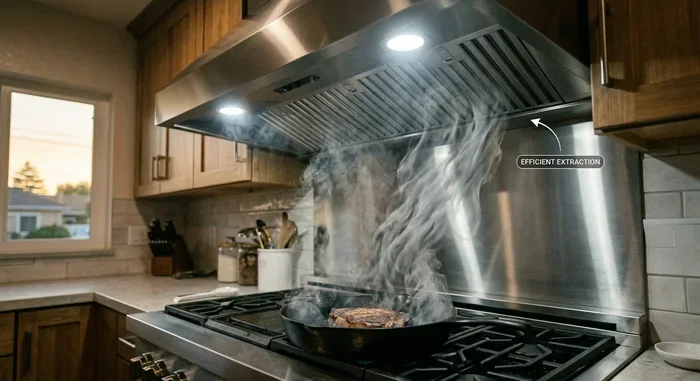
Clearing smoke from your kitchen is easier than most people think. With the right ventilation and a few simple tricks, you can eliminate cooking smoke and odors in minutes. This guide covers fast, effective methods that work every time.
Nothing ruins a cooking mood faster than a kitchen filled with smoke. Whether you are searing meat, stir-frying vegetables, or simply forgetting about that pot on the stove, kitchen smoke can fill your home fast. It leaves behind a greasy film, stubborn odors, and sometimes even sets off your smoke detector.
But here is the good news. You do not need expensive equipment or a deep clean every time smoke takes over. There are plenty of simple, effective ways to clear smoke from kitchen spaces quickly. In this guide, we will walk you through everything from immediate fixes to long-term solutions. You will learn how to eliminate cooking smoke, improve your kitchen air quality, and keep your home smelling fresh.
Whether you deal with stovetop smoke every day or just want to be prepared for the next time, this article has you covered. Let us dive in and explore the best methods for kitchen smoke removal that actually work.
Key Takeaways
- Ventilation is key: Open windows, use exhaust fans, and run your range hood to remove smoke fast.
- Natural remedies work wonders: Vinegar, baking soda, and lemon can neutralize cooking odors effectively.
- Prevention beats cleanup: Simple habits like using lids and controlling heat stop smoke before it starts.
- Air purifiers help long-term: A quality unit with HEPA and activated carbon filters tackles smoke particles and lingering odors.
- Act quickly: The faster you address smoke, the easier it is to clear and prevent stains or odors from setting in.
- Know when to call a pro: Persistent smoke, grease buildup, or damaged vents need professional attention.
📑 Table of Contents
Why Does Kitchen Smoke Happen?
Understanding why smoke appears in your kitchen is the first step toward preventing it. When you cook at high temperatures, fats and oils release tiny particles into the air. These smoke particles float around and settle on surfaces, creating that familiar greasy residue and strong smell.
Common Causes of Kitchen Smoke
- High-heat cooking: Frying, searing, and broiling produce the most smoke, especially with oils that have low smoke points.
- Overheated oil: When oil gets too hot, it starts to break down and release smoke. This is called the smoke point, and every oil has one.
- Burnt food: Forgetting about something on the stove or in the oven can lead to burnt food, which creates heavy smoke and strong odors.
- Grease buildup: Over time, grease accumulates on stovetops, backsplashes, and range hoods. When you cook, this old grease can smoke and add to the problem.
- Poor ventilation: If your kitchen ventilation is not working properly, smoke has nowhere to go and just fills the room.
Knowing what causes smoke helps you take targeted action. For example, if you often smoke up the kitchen when frying, switching to a higher smoke-point oil can make a big difference. Similarly, fixing a broken exhaust fan can transform your cooking experience.
Expert Insight: According to the EPA, indoor air pollution from cooking can be 2 to 5 times higher than outdoor levels. Proper ventilation for kitchen smoke is not a luxury, it is a health necessity.
How to Clear Smoke from Kitchen Fast
When smoke fills your kitchen, you need fast results. These methods work quickly and require items you likely already have at home. The key is to act right away before the smoke spreads to other rooms.
Step 1: Open Windows and Doors
The simplest and fastest way to start eliminating cooking smoke is to create cross ventilation. Open windows on opposite sides of your home if possible. This allows fresh air to flow in and push smoke out. If you only have one window, open it as wide as it goes and turn on a fan to help move the air.
Even opening a door to an adjacent room helps. Smoke spreads fast, and containing it to one area makes cleanup much easier. Fresh air circulation is your first line of defense against cooking fumes.
Step 2: Turn On Your Range Hood and Exhaust Fan
If you have a range hood, turn it on immediately. Make sure it vents to the outside, not just recirculates air through a filter. An exhaust fan that pulls air out of the kitchen is one of the most effective tools for kitchen smoke removal.
For best results, turn the fan on before you start cooking. This way, it is already running when smoke appears. Many people make the mistake of waiting until the kitchen is already filled with smoke before turning anything on.
Step 3: Use a Fan to Push Smoke Out
A simple box fan or portable fan placed near an open window can work wonders. Point the fan outward so it pushes smoke out of the room. If you do not have a window, point the fan toward the door to direct smoke into another area of the house.
This trick works especially well for stovetop smoke that lingers near the ceiling. The moving air helps break up smoke clouds and speeds up the clearing process.
Step 4: Light a Candle or Use Incense
This might sound old-fashioned, but burning a candle or incense stick can help mask and absorb smoke odors. The flame creates a small amount of negative charge in the air, which helps neutralize some smoke particles. It is not a substitute for proper ventilation, but it works well as a supplementary step.
Just be careful not to leave burning candles unattended, especially in a smoky environment. Safety always comes first.
Quick Tips:
- Keep a box fan near your kitchen window for quick smoke emergencies.
- Run your exhaust fan for at least 15 minutes after cooking to clear lingering smoke particles.
- If you do not have a range hood, a portable exhaust fan placed in the window works great.
- Open windows before you start cooking to prepare your fresh air circulation system.
Best Ventilation Solutions for Kitchen Smoke
Sometimes opening a window is not enough. You may need a more permanent solution to handle kitchen smoke regularly. The right ventilation setup makes a huge difference in air quality and odor control.
Range Hoods: Your First Line of Defense
A good range hood is the single most important investment for any kitchen. It captures smoke, grease, and cooking odors right at the source. There are two main types:
- Ducted range hoods: These vent air outside through a duct. They are much more effective at removing smoke and grease from the air.
- Ductless range hoods: These recirculate air through a filter and back into the kitchen. They are easier to install but less effective for heavy smoke.
If you cook frequently or do a lot of high-heat cooking, a ducted hood is the clear winner. Look for one with a high CFM (cubic feet per minute) rating. Higher CFM means more air is moved, which means better smoke removal.
Exhaust Fans and Their Placement
Not every kitchen has a range hood. In that case, a properly placed exhaust fan can still do a great job. Wall-mounted exhaust fans or ceiling-mounted models both work well. The key is to position the fan so it pulls air away from the cooking area and pushes it outside.
For best kitchen ventilation, make sure the fan is sized appropriately for your kitchen. A fan that is too small will not move enough air to clear smoke effectively.
Portable Air Purifiers for Smoke
An air purifier for smoke is an excellent addition to any kitchen. These devices use filters to capture smoke particles and absorb odors. Look for models with both HEPA filters and activated carbon filters.
HEPA filters trap tiny particles like smoke and grease droplets. Activated carbon filters absorb odors and gases. Together, they provide comprehensive smoke cleanup and keep your kitchen air fresh.
| Ventilation Method | Effectiveness | Cost | Best For |
|---|---|---|---|
| Open Windows | Moderate | Free | Light smoke, quick fixes |
| Range Hood (Ducted) | Very High | Medium to High | Regular cooking, heavy smoke |
| Exhaust Fan | High | Medium | Kitchens without range hoods |
| Portable Air Purifier | High | Medium | Ongoing odor and particle control |
| Box Fan in Window | Moderate to High | Low | Emergency smoke removal |
Common Mistakes:
- Using a ductless range hood for heavy frying. It just recirculates grease and smoke back into the kitchen.
- Ignventing your range hood filter. Grease buildup on filters reduces effectiveness over time.
- Running the exhaust fan only during cooking. Running it for 15 minutes after helps clear residual cooking odors.
Natural Remedies to Eliminate Cooking Smoke Odors
Even after the smoke clears, odors can linger for hours. Fortunately, there are several natural remedies that neutralize cooking smells without harsh chemicals. These methods are affordable, safe, and work surprisingly well.
Vinegar: The Natural Odor Eliminator
White vinegar is one of the most powerful natural odor absorbers. To use it, place a bowl of white vinegar on your countertop near the source of the smoke. Leave it for 30 minutes to an hour. The vinegar absorbs smoke particles and neutralizes odors naturally.
You can also simmer a mixture of vinegar and water on the stove. This creates a steam that helps capture smoke particles floating in the air. It is one of the best natural smoke remedies available.
Baking Soda for Smoke Absorption
Baking soda is another excellent odor absorber. Place open boxes of baking soda around the kitchen, or sprinkle it on surfaces where smoke has settled. Leave it for a few hours, then wipe clean.
For a more targeted approach, boil a pot of water with a cup of baking soda. The steam helps lift odors out of the air. This method is especially helpful for burnt smell removal after something has been accidentally scorched.
Lemon and Citrus Freshness
Citrus fruits like lemons and oranges have a natural deodorizing effect. Cut a lemon in half and simmer it in a pot of water on the stove. The citrus oils help mask and neutralize smoke odors with a fresh, clean scent.
You can also wipe down surfaces with a mixture of lemon juice and water. This not only helps with odors but also cuts through the greasy film that smoke leaves behind.
Essential Oils for a Fresh Kitchen
Tea tree oil, eucalyptus oil, and lavender oil all have natural deodorizing properties. Add a few drops to a spray bottle filled with water and mist the air in your kitchen. You can also use a diffuser to spread the scent throughout the space.
These oils do more than just mask odors. Many of them have antimicrobial properties that help clean the air. Eucalyptus oil, in particular, is known for its ability to help clear the respiratory system, making it a great choice after a smoky cooking session.
Quick Tips:
- Simmer vinegar or lemon water on the stove after cooking to clear lingering odors.
- Keep a small bowl of baking soda near the stove for quick odor absorption.
- Wipe down countertops and stovetop with a vinegar-water solution after heavy cooking sessions.
- Use essential oils in a diffuser for a pleasant, fresh-smelling kitchen.
How to Prevent Kitchen Smoke in the First Place
Prevention is always better than cure. With a few simple habits and adjustments, you can significantly reduce the amount of smoke your kitchen produces. These tips save you time and effort in the long run.
Use the Right Oil for the Job
Not all cooking oils are created equal when it comes to smoke. Oils with low smoke points, like extra virgin olive oil and butter, start smoking at lower temperatures. For high-heat cooking, choose oils with higher smoke points such as avocado oil, canola oil, or refined coconut oil.
Knowing the smoke point of your cooking fat is one of the simplest ways to prevent stovetop smoke. A little bit of knowledge goes a long way in keeping your kitchen smoke-free.
Control Your Heat
Many people cook at higher temperatures than necessary. Medium or medium-high heat is often sufficient for most cooking tasks. Cranking the burner to high is not always needed and is the primary cause of excessive smoke.
Learn to control your heat settings. A steady, moderate flame gives you better results and produces far less smoke than an out-of-control blaze.
Use Lids When Cooking
Putting a lid on your pan traps steam and reduces splattering. It also contains smoke and odors, keeping them from spreading throughout your kitchen. This simple habit is one of the most effective ways to prevent grease and smoke from taking over.
This works especially well when frying or sautéing foods that tend to splatter. A splatter screen is another great tool that keeps oil droplets contained while still allowing steam to escape.
Keep Your Cooking Area Clean
Grease and food residue on your stovetop, backsplash, and range hood can smoke when exposed to heat. Regular cleaning prevents this buildup and reduces the amount of smoke produced during cooking.
Wipe down surfaces after each cooking session. Deep clean your range hood filter monthly. These small habits add up and keep your kitchen fresher for longer.
Expert Insight: Professional chefs recommend cleaning your range hood filter every two weeks if you cook frequently. A clogged filter reduces airflow by up to 50%, making it much harder to clear smoke effectively.
Cook Smart with These Habits
- Preheat pans gradually: Avoid putting cold food into a scorching hot pan, which causes splattering and smoke.
- Dry your food before frying: Excess moisture causes oil to splatter and smoke. Pat ingredients dry with a paper towel before cooking.
- Do not overcrowd the pan: Too much food at once lowers the oil temperature and creates steam, leading to splattering and smoke.
- Use a splatter screen: This simple mesh cover prevents oil droplets from flying and creating smoke.
When to Call a Professional for Kitchen Smoke Issues
Most smoke problems can be handled with the methods described above. But sometimes, the issue goes deeper than a smoky cooking session. Knowing when to call a professional can save you time, money, and potential health risks.
Signs You Need Professional Help
Pay attention to these warning signs that indicate a deeper problem with kitchen smoke and ventilation:
- Persistent smoke despite good ventilation: If you have followed all the tips and still experience heavy smoke, your range hood or exhaust system may be underpowered or improperly installed.
- Grease buildup in ducts: Over time, grease accumulates inside your ductwork. This buildup is a fire hazard and reduces the effectiveness of your ventilation system.
- Frequent smoke detector activations: If your smoke detector goes off every time you cook, it may be too sensitive or poorly positioned. An electrician or kitchen specialist can help reposition or adjust it.
- Visible damage to ventilation systems: Cracked ducts, broken fans, or disconnected vents need professional repair to function properly.
- Strong, lingering odors after cleanup: If odors persist for days after cleaning, smoke may have penetrated walls, ceilings, or carpets. Professional smoke cleanup services can address this.
A professional can also assess your entire kitchen ventilation system and recommend upgrades. They have the tools and expertise to identify problems that are not visible to the naked eye. Investing in professional help when needed protects both your home and your family’s health.
Quick Tips:
- Have your range hood and duct system inspected annually by a professional.
- If you renovate your kitchen, consider upgrading to a higher-CFM range hood.
- Do not ignore persistent smoke or odors. They can indicate a serious ventilation problem.
Conclusion
Clearing smoke from kitchen spaces does not have to be a frustrating experience. With the right approach, you can handle smoke quickly and effectively every single time. Start with immediate fixes like opening windows, turning on your exhaust fan, and using a portable fan. These steps provide fast relief and get the smoke moving out of your kitchen.
For lasting results, invest in proper kitchen ventilation with a quality range hood or exhaust fan. Add natural remedies like vinegar, baking soda, and lemon to your toolkit for eliminating stubborn cooking odors. And most importantly, build preventive habits that reduce smoke at the source.
Remember that every kitchen is different. What works best for you depends on your cooking style, kitchen layout, and ventilation setup. The key is to take action quickly and not let smoke linger. With the tips in this guide, you are well equipped to keep your kitchen fresh, clean, and smoke-free.
Start implementing these strategies today. Your kitchen and your family will thank you for the cleaner, fresher air. Clear smoke from kitchen spaces has never been easier, and now you have all the tools and knowledge to do it right.
Frequently Asked Questions
How long does it take for kitchen smoke to clear?
With proper ventilation, most kitchen smoke clears within 10 to 30 minutes. Opening windows, running your exhaust fan, and using a portable fan speeds up the process significantly. Heavier smoke from burning food may take longer and require additional steps like using vinegar or an air purifier.
Can kitchen smoke damage my health?
Yes, exposure to kitchen smoke and cooking fumes can irritate your eyes, throat, and lungs. Prolonged exposure to cooking fumes without proper ventilation has been linked to respiratory issues. People with asthma or allergies are especially vulnerable. Always ensure your kitchen air quality is good by using ventilation while cooking.
What is the best air purifier for kitchen smoke?
Look for an air purifier with both a HEPA filter and an activated carbon filter. HEPA filters capture smoke particles, while activated carbon absorbs odors. Brands like Dyson, Blueair, and Coway offer excellent models designed for smoke and odor removal. Place the purifier near your cooking area for the best results.
Does boiling vinegar really remove smoke odors?
Yes, boiling vinegar is a proven method for neutralizing smoke odors. The acetic acid in vinegar bonds with odor molecules and helps remove them from the air. Simply simmer a pot of white vinegar on the stove for 30 to 60 minutes after a smoky cooking session for noticeable results.
How often should I clean my range hood filter?
If you cook frequently, clean your range hood filter every two weeks. For occasional cooks, monthly cleaning is usually sufficient. A clogged filter reduces airflow and makes it harder for your hood to remove kitchen smoke effectively. Most filters are dishwasher-safe, making cleaning quick and easy.
Why does my smoke detector keep going off when I cook?
This usually happens because the detector is too close to the kitchen or is too sensitive. Try moving it a few feet away from the stove, or replace it with a photoelectric smoke detector, which is less likely to be triggered by cooking steam and smoke. Never disconnect your smoke detector, as it is a critical safety device.

