
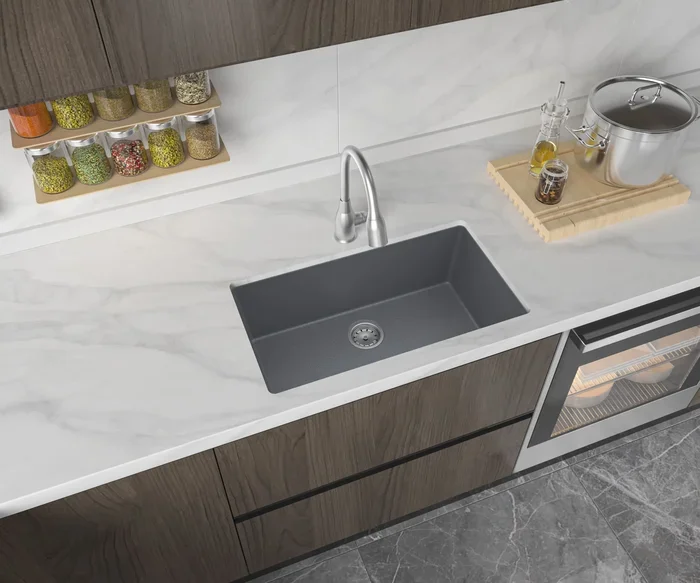
A granite composite kitchen sink combines natural stone and resin to create an incredibly durable, beautiful, and low-maintenance option for any kitchen. These sinks resist scratches, heat, and stains better than most other materials, making them a top choice for homeowners planning a kitchen renovation. Whether you want a sleek undermount look or a drop-in design, granite composite sinks deliver style and performance that last for decades.
Your kitchen sink takes more abuse than almost any other fixture in your home. You dump hot pots in it. You chop vegetables on the edge. You rinse sticky sauces and ground-in grime. And yet, most sinks show wear faster than we expect.
A granite composite kitchen sink changes all of that. This modern sink material combines natural granite stone with resin to create a surface that is tough, beautiful, and surprisingly affordable. Homeowners who upgrade to a granite composite sink often say they wish they had done it sooner.
In this guide, we will cover everything you need to know about composite granite sinks. We will look at what makes them different, their key benefits, how they compare to other sink materials, and tips for choosing and caring for one. By the end, you will understand why a granite composite sink is a smart upgrade for any kitchen.
Key Takeaways
- Exceptional Durability: Granite composite sinks are among the most impact-resistant options available, handling heavy pots and daily wear with ease.
- Heat and Scratch Resistance: Unlike stainless steel, these sinks resist high temperatures and scratches from knives and cookware.
- Non-Porous Surface: The sealed surface prevents stains, bacteria, and odors, making cleanup a breeze.
- Elegant Aesthetic: Available in multiple colors and finishes, granite composite sinks add a premium look to any kitchen.
- Noise Reduction: The stone composite material dampens sound, so running water is much quieter than with metal sinks.
- Easy Maintenance: A simple wipe with soap and water keeps the sink looking brand new.
- Long-Term Value: Investing in a granite composite sink boosts home value and saves money on replacements over time.
📑 Table of Contents
- What Is a Granite Composite Kitchen Sink?
- Why Are Granite Composite Sinks So Popular?
- Key Benefits of a Granite Composite Kitchen Sink
- Granite Composite vs Stainless Steel Sinks
- How to Choose the Right Granite Composite Kitchen Sink
- Maintenance and Care Tips for Your Granite Composite Sink
- Is a Granite Composite Sink Worth the Investment?
- Common Mistakes to Avoid When Buying a Granite Composite Sink
- Expert Insights on Granite Composite Sinks
- Quick Tips for Getting the Most Out of Your Granite Composite Sink
- Conclusion
What Is a Granite Composite Kitchen Sink?
A granite composite kitchen sink is made from a blend of natural granite stone and acrylic or polyester resin. The mixture is molded under high pressure and heat to create a solid, dense sink. The result is a material that looks like natural stone but performs even better in daily kitchen use.
These sinks typically contain about 80% natural granite and 20% resin. This high stone content gives them their signature hardness and durability. Unlike a standard stainless steel sink, a granite composite sink feels heavier and more substantial in your hands.
How Are They Made?
The manufacturing process is straightforward but effective. First, crushed granite stone is mixed with resin binders. The mixture is poured into a mold shaped like a sink basin. Then, it is pressed under extreme pressure and cured at high temperatures. This creates a tight, non-porous surface that resists water absorption and staining.
Most manufacturers use a vibration compression method. This removes air bubbles and ensures the material is uniform throughout. The result is a sink with consistent color, strength, and finish from edge to edge.
Common Colors and Styles
Granite composite sinks come in a wide range of colors. Black is the most popular choice because it hides stains well. White and gray options are also very common. Some brands offer speckled patterns that mimic natural granite stone.
You can find both undermount and topmount styles. An undermount granite composite sink mounts beneath the countertop for a clean, seamless look. A topmount or drop-in sink sits on top of the counter. Both styles work well with the composite material.
Why Are Granite Composite Sinks So Popular?
The popularity of composite granite sinks has grown fast in recent years. More homeowners are choosing them over traditional stainless steel and porcelain sinks. There are several clear reasons for this shift.
First, the look is hard to beat. A granite composite sink adds a touch of luxury to any kitchen. The stone-like surface looks expensive and polished. It pairs well with modern, minimalist, and traditional kitchen designs alike.
Second, the durability is outstanding. These sinks handle daily kitchen life with ease. They do not chip, crack, or dent easily. Even heavy pots and pans can be dropped in without leaving a mark.
Third, maintenance is simple. Unlike natural stone sinks that need regular sealing, granite composite sinks are practically maintenance-free. A quick wipe keeps them looking great for years.
Trends Driving the Popularity
Several kitchen design trends have boosted demand for granite composite sinks. Open-concept kitchens now feature sinks as a focal point. Homeowners want sinks that look good and function well.
The farmhouse sink trend has also helped. Many farmhouse-style sinks are now available in granite composite material. This gives the classic look with modern performance benefits.
Also, more people are investing in kitchen renovations. A new sink is one of the easiest ways to update a kitchen’s appearance. Granite composite sinks offer a high-end look at a mid-range price point.
Key Benefits of a Granite Composite Kitchen Sink
There are many reasons to consider a granite composite kitchen sink for your home. Let us break down the biggest advantages.
Durability and Impact Resistance
The biggest selling point of a granite composite sink is its durability. The high stone content makes the surface extremely hard. It resists dents, chips, and scratches much better than stainless steel or fireclay sinks.
You can drop a cast iron skillet into a granite composite sink without worrying about damage. The material absorbs the impact and stays intact. This makes it an ideal choice for busy kitchens where the sink takes a beating every day.
Heat Resistance
Granite composite sinks handle heat remarkably well. You can place a hot pot straight from the stove into the sink without fear of warping or discoloration. This is a major advantage over laminate or acrylic sinks.
However, it is still a good idea to use a trivet for extremely hot items. While the sink can handle normal cooking heat, extreme temperature changes over time can affect any material.
Non-Porous and Stain Resistant
The resin in the composite material creates a non-porous surface. This means liquids cannot seep into the sink. Coffee, wine, turmeric, and other staining agents sit on the surface and rinse away easily.
This non-porous quality also prevents bacteria and mold from penetrating the sink. Your kitchen sink stays hygienic with minimal effort. This is a huge plus for families who want a clean and safe food preparation area.
Noise Reduction
One complaint about stainless steel sinks is the noise. Clanking dishes and running water can echo through the kitchen. A granite composite sink dampens sound naturally.
The stone-based material absorbs vibrations and reduces noise. Many granite composite sinks come with built-in sound pads on the bottom. This makes your kitchen a quieter, more pleasant space to work in.
Easy to Clean
Cleaning a granite composite sink takes almost no effort. The smooth, sealed surface does not trap grime or grease. A sponge with mild soap is all you need for daily cleaning.
Unlike natural stone, you do not need to seal a granite composite sink. The material is sealed during manufacturing. This saves time and money on maintenance products over the life of the sink.
Aesthetic Appeal
Granite composite sinks look premium. The stone-like finish adds an upscale feel to any kitchen. They come in matte and glossy finishes to match different design styles.
Black granite composite sinks are especially popular. They hide water spots and fingerprints better than lighter colors. White options give a bright, clean look that works well in smaller kitchens.
Granite Composite vs Stainless Steel Sinks
When shopping for a new sink, most homeowners compare granite composite to stainless steel. Both are excellent choices, but they have clear differences. Understanding these helps you make the right decision for your kitchen.
Durability Comparison
A granite composite sink is harder than stainless steel. It resists scratches from knives, forks, and pots better. Stainless steel can dent if you drop something heavy on it. A composite sink handles the same impact without damage.
However, stainless steel is more flexible. If a heavy object hits a stainless steel sink, it may bend rather than crack. Granite composite is rigid and strong but can crack under extreme force.
Heat Resistance Comparison
Granite composite sinks win in heat resistance. You can place a hot pan directly into them without any issue. Stainless steel can discolor or warp if exposed to extreme heat repeatedly.
For kitchens where hot pots go directly into the sink, a granite composite material is the better choice.
Appearance and Style
Granite composite sinks have a premium, stone-like appearance. They look more expensive than stainless steel. Stainless steel has a classic, industrial look that suits certain kitchen styles.
Granite composite comes in more color options. You can find black, white, gray, brown, and speckled designs. Stainless steel is mostly limited to silver tones.
Maintenance and Cleaning
Both sink types are easy to clean. However, stainless steel can show water spots and fingerprints. A granite composite sink hides these marks much better, especially in darker colors.
Granite composite sinks do not need polishing. Stainless steel may need occasional polishing to maintain its shine.
Price Comparison
Granite composite sinks fall in the mid-range price category. They cost more than basic stainless steel sinks but less than premium fireclay or copper sinks.
For the price you pay, a granite composite sink offers excellent value. The durability and low maintenance save money over time.
| Feature | Granite Composite | Stainless Steel |
|---|---|---|
| Scratch Resistance | Excellent | Good |
| Impact Resistance | Excellent | Good |
| Heat Resistance | Excellent | Fair |
| Stain Resistance | Excellent | Fair |
| Noise Level | Low | High |
| Maintenance | Very Low | Low |
| Color Options | Many | Limited |
| Price Range | Mid to High | Low to Mid |
How to Choose the Right Granite Composite Kitchen Sink
Not all granite composite sinks are the same. Choosing the right one for your kitchen depends on several factors. Here is what to consider.
Size and Bowl Configuration
Measure your kitchen cabinet space before buying. Granite composite sinks are heavier than most other materials. Make sure your countertop and cabinets can support the weight.
Single-bowl sinks are great for large pots and pans. Double-bowl sinks let you wash and rinse at the same time. Choose the configuration that fits your cooking habits.
Mounting Style
Undermount sinks are the most popular choice for granite composite. They give a sleek, modern look and are easier to clean because there is no rim to trap debris.
Topmount or drop-in sinks are easier to install and work well with thicker countertops. Choose based on your kitchen style and budget.
Color Selection
Black is the most popular granite composite sink color. It hides stains, water spots, and scratches better than lighter colors.
White sinks brighten up dark kitchens. Gray and brown options offer a neutral, versatile look. Pick a color that matches your countertop and cabinet style.
Brand and Quality
Look for reputable brands that offer warranties. A good warranty signals confidence in the product quality. Check customer reviews for real-world performance feedback.
Higher-priced sinks often have thicker walls and better sound insulation. The extra cost is worth it for a sink that will last many years.
Sound Insulation
Check if the sink has sound pads or pads installed underneath. These reduce noise significantly. Some sinks come with built-in insulation as standard. Others offer it as an optional upgrade.
For a quieter kitchen, always choose a granite composite sink with sound dampening features.
Maintenance and Care Tips for Your Granite Composite Sink
One of the best things about a granite composite kitchen sink is how easy it is to maintain. A little basic care keeps it looking great for many years.
Daily Cleaning Routine
Rinse the sink after each use. Wipe it down with warm water and mild dish soap. Use a soft sponge or microfiber cloth. Avoid abrasive scrubbers that can scratch the surface over time.
For stubborn stains, make a paste of baking soda and water. Apply it to the stain, let it sit for a few minutes, then rinse. This natural cleaning method works well on composite surfaces.
What to Avoid
Do not use bleach or harsh chemical cleaners on your sink. These can damage the finish over time. Avoid abrasive powders like Comet or Bar Keepers Friend. They create fine scratches that dull the surface.
Also, avoid leaving acidic foods like lemon or vinegar on the sink for long periods. While the material is resistant, prolonged exposure to acids can affect the finish.
Dealing with Hard Water Stains
If you have hard water, mineral deposits may build up on your sink. Wipe the sink dry after each use to prevent this. For existing stains, a mixture of white vinegar and water works well.
Spray the solution on the affected area, let it sit for five minutes, then rinse and dry. This keeps your sink looking clean and shiny.
Protecting the Sink Surface
Use a sink mat or strainer to protect the bottom of the sink. This prevents scratches from dishes and utensils. It also reduces noise when you place items in the sink.
Do not use your sink as a cutting board. Even though granite composite is scratch-resistant, knives can still damage the surface over time. Always use a separate cutting board.
Long-Term Care
A well-maintained granite composite sink can last 15 to 25 years or more. The material does not fade or yellow over time. It retains its color and finish with minimal effort.
If you notice any minor scratches, a soft polishing compound can restore the shine. For deeper damage, contact the manufacturer or a professional for repair advice.
Is a Granite Composite Sink Worth the Investment?
The short answer is yes. A granite composite kitchen sink offers an excellent balance of beauty, durability, and value. It costs more than a basic stainless steel sink but delivers superior performance and aesthetics.
For homeowners planning a kitchen renovation, this sink material is a smart choice. It upgrades the look and function of your kitchen without breaking the bank. The long lifespan and low maintenance make it a cost-effective option over time.
Whether you are building a new home or updating an existing kitchen, a granite composite sink is a feature you will enjoy every day. It is one of those upgrades that makes a real difference in your daily routine.
Common Mistakes to Avoid When Buying a Granite Composite Sink
Avoiding these mistakes helps you get the best sink for your money and effort.
Skipping the Weight Check
Granite composite sinks are heavy. Before purchasing, confirm your cabinets and countertop can support the weight. Installing a sink that is too heavy for the structure can cause damage over time.
Choosing the Wrong Size
Measure your countertop cutout carefully. A sink that is too large or too small will not fit properly. Always check the dimensions before ordering.
Ignoring Sound Insulation
Not all granite composite sinks have sound pads. Skipping this feature means a noisier kitchen experience. Always check for built-in insulation before buying.
Buying the Cheapest Option
Very low-priced sinks may use less granite and more resin. This affects durability and quality. Invest in a reputable brand that offers a solid warranty.
Forgetting About the Drainboard
Some granite composite sinks come with an integrated drainboard. This adds functionality and protects your countertop from water damage. Consider this feature if you do not have a separate dish drying area.
Expert Insights on Granite Composite Sinks
Interior designers and kitchen contractors frequently recommend granite composite sinks. They love the combination of style and practicality these sinks offer.
According to kitchen design professionals, a granite composite kitchen sink is one of the most versatile sink options available. It works in modern, rustic, and transitional kitchen designs. The range of colors ensures there is a match for every kitchen style.
Plumbers also appreciate these sinks. The material is easy to cut and install. It resists the heat from dishwashers and hot water lines. This makes installation smoother and reduces callbacks.
Home inspectors note that granite composite sinks hold their value well. Homes with upgraded sinks tend to sell faster and at better prices. This makes a granite composite sink a smart investment for homeowners planning to sell in the future.
Quick Tips for Getting the Most Out of Your Granite Composite Sink
- Always use a cutting board. Do not chop directly on the sink surface.
- Wipe the sink dry after washing dishes to prevent water spots.
- Use a soft sponge for daily cleaning. Avoid steel wool or abrasive pads.
- Install a sink mat to reduce noise and protect the bottom surface.
- Check the manufacturer’s warranty before purchasing.
- Choose a darker color if you want the most forgiving stain resistance.
- Run warm water and mild soap after each use for best results.
Conclusion
A granite composite kitchen sink is truly a game changer for modern homes. It offers the perfect blend of durability, beauty, and practicality. The material resists scratches, heat, stains, and noise better than most alternatives. Maintenance is simple and the aesthetic appeal is unmatched.
Whether you are renovating your kitchen or building a new home, a granite composite sink is a smart investment. It upgrades your kitchen’s look and function in one simple upgrade. The wide range of colors and styles ensures you can find the perfect match for your design.
Take the time to choose the right size, style, and brand. Follow the care tips in this guide, and your sink will look great for decades. A granite composite sink is one kitchen upgrade you will never regret.
Frequently Asked Questions
How long does a granite composite kitchen sink last?
With proper care, a granite composite sink can last 15 to 25 years or more. The material is highly durable and resists everyday wear. Its long lifespan makes it a worthwhile investment for any kitchen.
Can you put hot pans directly into a granite composite sink?
Yes, granite composite sinks handle heat very well. You can place hot pots and pans directly into the sink without causing damage. This is one of the material’s biggest advantages over stainless steel.
Are granite composite sinks hard to install?
Installation is similar to other undermount or drop-in sinks. The material is easier to cut than natural stone. Most professional installers are familiar with granite composite and can set it up quickly.
Do granite composite sinks stain easily?
No, the non-porous surface resists stains very well. Coffee, wine, and other common staining agents rinse away easily. Dark-colored sinks are especially good at hiding any minor marks.
How do you remove scratches from a granite composite sink?
Minor scratches can be buffed out with a soft polishing compound. Use a microfiber cloth and gentle circular motions. For deeper scratches, contact the manufacturer or a professional for repair advice.
Is a granite composite sink better than a stainless steel sink?
It depends on your priorities. Granite composite sinks are more scratch and heat resistant. Stainless steel sinks are more flexible and often more affordable. Both are excellent choices for different needs and budgets.

