
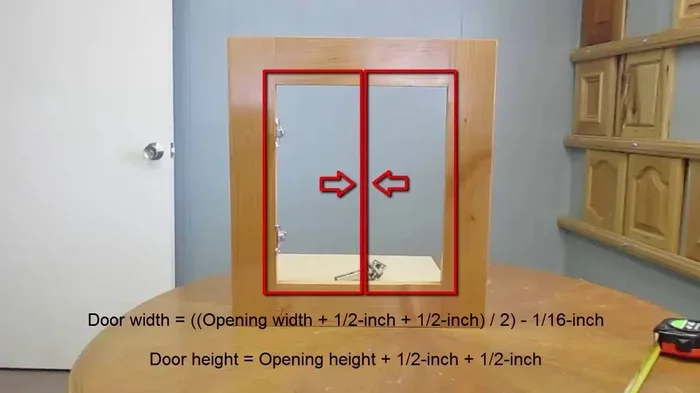
Measuring kitchen cabinet doors correctly saves time, money, and frustration. This guide walks you through every step, from understanding door types to taking precise measurements. You will learn how to measure cabinet doors for replacement, overlays, and inset installations with confidence.
Getting your kitchen cabinet doors measured correctly is one of the most important steps in any kitchen project. Whether you are replacing damaged doors, upgrading your look, or building new cabinets from scratch, accurate cabinet door measurements make all the difference. A door that is even a quarter-inch off will not sit right, and that small gap can drive you crazy every time you open the cabinet.
Measuring kitchen cabinet doors might seem intimidating at first, but it is actually quite straightforward once you know what to do. This guide breaks the entire process down into simple, easy-to-follow steps. You will learn how to measure different door types, avoid common mistakes, and get results that are spot-on every single time. No guesswork. No frustration. Just clear, practical advice you can use right away.
The good news is that you do not need any special skills or expensive tools to get started. A basic measuring tape and a little patience are all you need. By the time you finish reading this article, you will feel confident tackling your cabinet door replacement project head-on. Let us dive in and make sure your next set of doors fits perfectly.
Key Takeaways
- Always measure twice: Accuracy prevents costly mistakes and wasted money on wrong-sized doors.
- Know your door type first: Overlay, inset, and partial overlay doors each require different measurement approaches.
- Use the right tools: A steel measuring tape, level, and notepad make the process smooth and reliable.
- Measure width, height, and thickness: All three dimensions matter for a perfect fit.
- Avoid common pitfalls: Measuring from the wrong edge or ignoring the frame are the most frequent errors.
- Record everything clearly: Label each door with its measurements to avoid confusion during installation.
📑 Table of Contents
Why Accurate Measurements Matter
Accurate measurements are the foundation of any successful cabinet door project. When your kitchen cabinet doors fit correctly, they look clean, they close smoothly, and they last for years. But when the measurements are off, even slightly, the results can be frustrating and expensive to fix.
Think about it this way. A new set of cabinet doors can cost anywhere from 20 to 100 dollars per door, depending on the material and style. If you order the wrong size, you either eat the cost or go through the hassle of returning them and reordering. Neither option is fun. That is why taking the time to measure correctly from the start pays off big time.
Accurate cabinet door dimensions also affect how your kitchen looks and functions. Doors that are too small leave ugly gaps. Doors that are too big rub against the frame and stick. Proper measurements ensure everything lines up, closes flush, and gives your kitchen that polished, finished look you are going for.
What Happens When You Get It Wrong
Wrong measurements lead to real problems. Here are some of the most common issues people run into when they skip the careful measuring step:
- Doors that do not close properly: They stick, gap, or sit unevenly on the cabinet frame.
- Misaligned hinges: If the door is the wrong size, the hinges cannot line up correctly.
- Visible gaps between doors: This ruins the clean, uniform look of your kitchen.
- Damaged doors and frames: A too-big door can scrape against the cabinet frame and cause chips or scratches.
- Wasted money and time: Ordering replacements for incorrectly sized doors eats into your budget and your schedule.
The bottom line is simple. Taking accurate measuring cabinet doors measurements before you order or cut anything saves you from all of these headaches. It is the single most important thing you can do to ensure a great result.
Understanding Cabinet Door Types
Before you pick up your measuring tape, you need to know what kind of cabinet doors you have. Different door types require different measurement approaches. Getting this part right sets you up for success with every measurement you take afterward.
Overlay Doors
Overlay cabinet doors are the most common type found in modern kitchens. These doors sit on top of the cabinet frame and cover most or all of it. There are two main kinds of overlay doors you will encounter.
Full overlay doors cover nearly the entire cabinet frame. They sit very close to the edge and leave only a tiny gap between adjacent doors. This creates a sleek, seamless look that many homeowners love. Partial overlay doors leave more of the frame visible. They overlap the frame by about half an inch on each side, which gives a more traditional appearance.
Inset Doors
Inset cabinet doors fit inside the cabinet frame entirely. They sit flush with the face of the cabinet and are popular in classic and country-style kitchens. Measuring inset doors is a bit different because you need to account for the clearance gap inside the frame. The door must fit snugly but still open and close without rubbing against the wood.
Partial Overlay Doors
Partial overlay doors are a middle-ground option. They overlap the frame partially, usually by about one inch on each side. These are common in older kitchen designs and some budget-friendly cabinet setups. Knowing which type you have is essential before you start measuring, because each type has its own measurement rules.
Tools You Need for Measuring
You do not need a fancy workshop to measure your cabinet doors properly. A few basic tools are all it takes. Here is what you should gather before you start:
- A steel measuring tape: A retractable tape measure that shows both inches and millimeters works best. Cloth tapes can stretch and give inaccurate readings.
- A pencil or marker: You need something to write down your measurements quickly so you do not forget them.
- A notepad or phone: Keep a place to record each measurement as you go. Labeling them right away prevents confusion later.
- A level: This helps you check if the cabinet frame is straight. A crooked frame can throw off your measurements.
- A flashlight: Cabinets can be dark inside, and good lighting helps you see the edges clearly.
- A step stool: Upper cabinets can be hard to reach. A sturdy stool keeps you safe and steady while you measure.
Having these tools ready before you start makes the whole process faster and smoother. You will not have to stop midway to find something you need. Set yourself up for success by getting organized first.
Step-by-Step Guide to Measuring Cabinet Doors
Now that you know your door type and have your tools ready, it is time to take the actual measurements. Follow these steps carefully, and you will get results you can trust. Take your time and do not rush through this part.
Step 1: Measure the Width
Start with the width of the door. Place the end of your measuring tape at the left edge of the door and stretch it across to the right edge. Measure at the top, middle, and bottom of the door. Doors are rarely perfectly square, so the smallest measurement is the one you should use. Write this number down and label it as “width.”
For overlay cabinet doors, measure from edge to edge of the door itself. For inset cabinet doors, measure the full opening of the cabinet frame instead. This distinction matters a lot and is one of the first things people get wrong.
Step 2: Measure the Height
Next, measure the height of the door. Start from the top edge and measure down to the bottom edge. Again, take three measurements: left side, center, and right side. Use the smallest number you get. This accounts for any warping or unevenness in the door.
If you are measuring the cabinet opening instead of the door itself, measure from the top of the frame to the bottom. Make sure your tape is straight and level. A tape that hangs at an angle will give you a number that is too large, and that leads to problems later.
Step 3: Measure the Thickness
The thickness of the door is easy to overlook, but it matters a lot. Use your measuring tape to measure the edge of the door from front to back. Standard cabinet door thickness is usually 1/2 inch or 3/4 inch, but older cabinets or custom doors may differ.
Write down the thickness and double-check it. If you are ordering replacement doors, the thickness determines which hinges and hardware will work. Getting this wrong means your new doors will not attach properly to the existing hinges.
Step 4: Note the Overlay Type
Once you have the basic dimensions, note the overlay type. Is your door a full overlay, partial overlay, or inset? This information is critical when ordering replacement doors or new hardware. It tells the manufacturer exactly how the door needs to fit on the cabinet frame.
To confirm the overlay, check how much of the cabinet frame is visible around the edges of the door. For full overlay doors, almost no frame shows. For partial overlay doors, about half an inch to an inch of frame is visible on each side. Inset doors sit completely inside the frame with a small gap all around.
Step 5: Measure the Hinge Placement
If you are replacing doors but keeping the same hinges, measure the distance from the top and bottom edges of the door to where each hinge sits. This is called the hinge measurement or the mounting dimension. Note both the distance from the edge and the distance between multiple hinges.
This step is especially important for cabinet door replacement projects. Even if the door size is correct, wrong hinge placement means the door will not align with the other doors on the cabinet. Take a few extra minutes to get this right.
Common Mistakes to Avoid When Measuring
Even with the best intentions, people make mistakes when measuring kitchen cabinet doors. Knowing what goes wrong helps you avoid the same pitfalls. Here are the most common errors and how to steer clear of them.
Measuring Only Once
The number one mistake is measuring just one time and calling it good. Wood expands and contracts with changes in humidity and temperature. Cabinets that are perfectly square today might be slightly off tomorrow. Always measure at least twice, and ideally three times, for each dimension. If the numbers do not match, measure again until you get consistent results.
Confusing Width and Height
This sounds obvious, but it happens more often than you would think. Width is the horizontal measurement, and height is the vertical measurement. Write them down clearly and label them so there is no confusion when you order your doors or start cutting.
Ignoring the Cabinet Frame
When measuring for inset doors, the cabinet frame itself matters. If the frame is slightly warped or uneven, your door might not fit even if your measurements are perfect. Check the frame for squareness using a level or a diagonal measurement. If the frame is out of square, you may need to adjust your door size accordingly.
Forgetting to Account for Gaps
Doors need a small gap to open and close properly. For inset doors, a gap of about 1/8 inch on all sides is standard. For overlay doors, the overlay itself provides the clearance, but you still need to make sure adjacent doors have enough space. Forgetting to account for gaps leads to doors that stick or do not close all the way.
Using a Cloth Tape Measure
A cloth or flexible tape can stretch and bend, giving you inaccurate numbers. Always use a rigid steel measuring tape for cabinet door measurements. The metal blade stays straight and gives you precise readings every time. It is a small investment that makes a big difference.
Quick Tips for Perfect Cabinet Door Measurements
Here are some expert-backed tips that will help you get the best results every time you measure kitchen cabinet doors:
- Measure in inches and round to the nearest 1/8 inch: Most cabinet door manufacturers work in fractions of an inch. Rounding to the nearest 1/8 inch gives you a practical and accurate number.
- Measure the door, not just the opening: Unless you are measuring for an inset door, always measure the actual door dimensions, not the cabinet opening.
- Check for warping: Hold the door flat on a table and look for gaps underneath. A warped door will need to be replaced or shimmed.
- Take photos of your cabinets: Photos help you remember the layout and door types when you are shopping for replacements.
- Label every door: Use painter’s tape to label each door with its measurements before you remove it from the cabinet.
- Double-check your subtraction: If you need to calculate a clearance gap, double-check your math. A simple subtraction error can throw off the entire order.
- Consult the manufacturer’s guide: Different door brands may have specific measurement requirements. Always check their guidelines before placing an order.
When to Call a Professional
There is no shame in calling a professional if your cabinet door measurements feel overwhelming. Some situations are better left to experts. If your cabinets are very old, badly damaged, or oddly shaped, a professional can take accurate measurements and save you from costly mistakes.
Also, if you are planning a full kitchen remodel and need custom-sized doors, a cabinet specialist can help you navigate the options. They have the experience and tools to get precise measurements quickly. Sometimes paying for professional help is worth the peace of mind it brings.
That said, most standard cabinet door replacement projects are very doable on your own. As long as your cabinets are in good shape and you follow the steps in this guide, you should be able to measure your doors accurately and confidently. Trust the process, take your time, and you will get great results.
Measuring your kitchen cabinet doors does not have to be stressful. With the right tools, a clear plan, and a little patience, you can get accurate measurements that lead to a beautiful, functional kitchen. Start with understanding your door type, follow the step-by-step process, and avoid the common mistakes outlined above. Your kitchen deserves doors that fit perfectly, and now you have everything you need to make that happen.
Remember, the key to a successful kitchen cabinet door project starts with the measurements. Get them right, and everything else falls into place. Grab your tape measure, head to your kitchen, and get started today. You will be glad you did.
Frequently Asked Questions
What is the standard size for kitchen cabinet doors?
Standard kitchen cabinet doors typically range from 12 to 36 inches in width and 12 to 48 inches in height. However, sizes vary widely depending on your cabinet layout. Always measure your specific doors rather than assuming a standard size. Custom doors are also widely available if your cabinets are non-standard.
How do I measure for overlay cabinet doors?
For overlay doors, measure the door itself from edge to edge for both width and height. Do not measure the cabinet opening. Note how much of the frame is visible around the door to determine if it is a full or partial overlay. This information is essential when ordering replacement doors.
What is the difference between inset and overlay cabinet doors?
Inset cabinet doors sit flush inside the cabinet frame, while overlay doors sit on top of the frame and cover part or all of it. Inset doors require more precise measurements because you need to account for the clearance gap. Overlay doors are generally easier to measure and more forgiving with slight variations.
Can I measure kitchen cabinet doors while they are still attached?
Yes, you can measure doors while they are attached to the cabinet. In fact, this is often the easiest approach. Just make sure the door is closed and level. If you need to remove the door for a more detailed measurement, note the hinge positions first so you can reattach it correctly.
How much clearance gap should I leave for cabinet doors?
For inset doors, leave a gap of about 1/8 inch on all sides for smooth operation. For overlay doors, the overlay itself provides the necessary clearance, but adjacent doors should have about 1/16 to 1/8 inch between them. Always check the manufacturer’s recommendations for your specific door style.
What should I do if my cabinet frame is not square?
If your cabinet frame is not square, measure the opening at multiple points and use the smallest dimensions. You may need to adjust your door size slightly or have the frame repaired before installing new doors. In some cases, a professional cabinet maker can help you address frame issues.
=== SEO Title ===
How to Measure Kitchen Cabinet Doors the Right Way
=== Meta Title ===
How to Measure Kitchen Cabinet Doors the Right Way
=== URL Slug ===
how-to-measure-kitchen-cabinet-doors
=== META DESCRIPTION ===
Learn how to measure kitchen cabinet doors the right way with our simple step-by-step guide. Get accurate measurements for replacement, overlays, and insets.

