
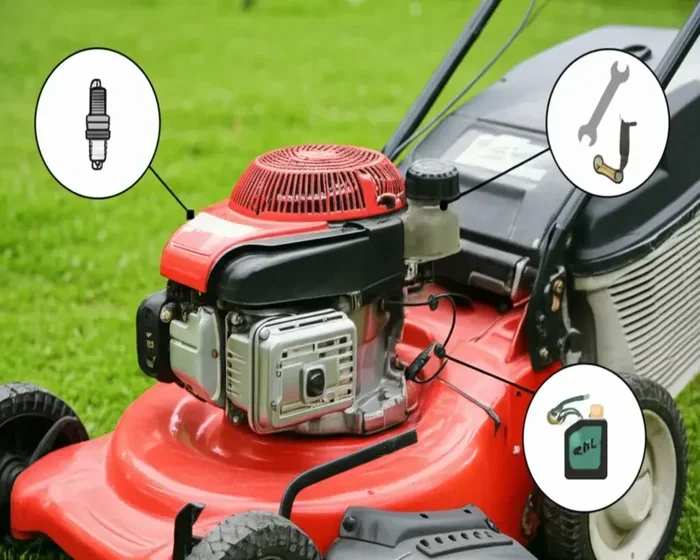
Is your lawn mower not starting? You’re not alone. This guide covers the most common reasons why your lawn mower won’t start and gives you clear, step-by-step fixes you can do yourself. From old fuel and dirty spark plugs to clogged air filters and ignition problems, we break down every cause so you can get back to mowing without calling a repair tech.
You grab the starter rope or turn the key, and nothing happens. Your lawn mower won’t start, and you’ve got a yard full of grass waiting to be cut. It’s frustrating, but here’s the good news — most of the time, the problem is simple and easy to fix.
Whether you own a push mower or a riding mower, why a lawn mower won’t start usually comes down to a handful of common causes. Fuel goes bad. Spark plugs get dirty. Air filters clog up. The good news is that you don’t need to be a mechanic to figure it out. With a little patience and the right guidance, you can troubleshoot the issue yourself and save time and money.
In this guide, we walk through every reason your small engine might refuse to fire up. We give you clear steps to check each part, fix the problem, and keep it from happening again. Let’s get your mower running.
Key Takeaways
- Stale fuel is the #1 reason a mower won’t start. Drain old gas and use fresh fuel every season.
- A dirty or fouled spark plug can stop ignition dead. Clean it or replace it for easy results.
- Clogged air filters and carburetors starve the engine of air and fuel mixture. Regular cleaning prevents this.
- Check the fuel cap vent, choke, and ignition coil before assuming the engine is broken.
- Regular maintenance saves you headaches and keeps your small engine running smoothly year after year.
- Some problems need a pro, especially internal engine damage or repeated electrical failures.
📑 Table of Contents
- Why Your Lawn Mower Won’t Start: The Most Common Culprits
- Check Your Fuel System First
- Spark Plug Problems That Stop Your Mower
- Air Filter and Carburetor Issues
- Electrical and Ignition System Troubles
- When to Call a Professional
- Preventive Maintenance to Avoid Future Starting Problems
- Final Thoughts
Why Your Lawn Mower Won’t Start: The Most Common Culprits
Before you start pulling apart parts, it helps to understand how a mower engine works. A small engine needs three things to run: fuel, air, and a spark. If any one of these is missing or blocked, your engine won’t start. That’s really it. The lawn mower ignition system depends on all three working together perfectly.
Most starting problems fall into a few basic categories. Let’s look at each one so you can narrow down what’s wrong with your mower.
No Fuel Getting to the Engine
This is the single most common reason a mower won’t start. Gas goes bad over time, especially if it’s been sitting in the tank for more than 30 days. Ethanol in modern gasoline attracts moisture, which leads to gum and varnish buildup in the fuel lines and carburetor.
Check the fuel tank first. Is there fresh gas in it? If the gas smells sour or looks darker than usual, drain it out. Then refill with clean, fresh fuel. Also check the fuel line for cracks or blockages. A kinked or clogged fuel line won’t let gas reach the engine, no matter how hard you pull the starter rope.
Weak or No Spark
The spark plug creates the tiny bolt of electricity that ignites the fuel. If the spark plug is dirty, wet, or worn out, you get weak spark or no spark at all. This is one of the top reasons push mower troubleshooting leads people to call a repair shop — but it’s usually a five-minute fix.
Pull the spark plug out and inspect it. Look for carbon buildup, oil residue, or a cracked porcelain insulator. You can clean a mildly dirty plug with a wire brush and a little sandpaper. But if it looks damaged or corroded, just replace it. New spark plugs are cheap and they make a huge difference in engine performance.
Not Enough Air Flow
An engine needs to breathe just as much as it needs fuel and spark. A clogged air filter chokes the engine and creates a rich fuel mixture that won’t ignite properly. This is something people overlook when they ask why won’t my lawn mower start.
Remove the air filter cover and take out the filter element. Hold it up to the light. If you can’t see through it, it’s time for a cleaning or a replacement. Foam filters can be washed with soap and water and dried completely before reinstalling. Paper filters should be replaced rather than cleaned.
Check Your Fuel System First
The fuel system is where most starting problems begin. Before you dive into electrical parts, go through these fuel-related checks first. They’re the easiest to fix and the most common cause of a mower that won’t start.
Old or Stale Gasoline
Gasoline starts to break down after about 30 days. The ethanol in the fuel pulls moisture from the air, which causes phase separation and gummy deposits. If your mower sat over winter with old gas in the tank, that old fuel is likely the reason your lawn mower not starting this spring.
Here’s what to do: drain the old fuel from the tank and the carburetor bowl. Use a siphon pump or tilt the mower carefully to let the gas drain out. Refill with fresh fuel and try starting again. You can also add a fuel stabilizer to fresh gas to keep it good for up to a year.
Clogged Fuel Filter
The fuel filter sits between the fuel tank and the carburetor. Its job is to catch dirt and debris before they reach the engine. Over time, the filter gets so clogged that fuel can barely pass through.
Locate your fuel filter — it’s usually a small cylindrical piece along the fuel line. If it looks dark or discolored, replace it. Fuel filters are inexpensive and easy to swap out. This simple fix solves many small engine problems that people think are major issues.
Carburetor Troubles
The carburetor mixes fuel and air in the right ratio before sending it into the engine. When the carburetor gets gummed up from old fuel, the engine can’t get the proper mixture and won’t start.
You can try cleaning the carburetor with a carburetor cleaner spray. Remove the bowl at the bottom, spray the passages and jets, and let the solvent dissolve the buildup. If cleaning doesn’t work, you may need to rebuild or replace the carburetor entirely. Rebuild kits are affordable and come with everything you need.
Spark Plug Problems That Stop Your Mower
The spark plug is the heart of the ignition system. Without a clean, strong spark, the fuel and air mixture will never ignite. When you’re trying to figure out why my lawn mower won’t start, the spark plug should be at the top of your checklist.
How to Inspect and Clean Your Spark Plug
Start by disconnecting the spark plug wire. Use a spark plug socket to remove the plug. Look at the electrode — the metal tip at the bottom. If it’s coated in black soot or carbon deposits, that’s a sign of a rich fuel mixture or fouling.
Use a wire brush or fine-grit sandpaper to clean the electrode gently. Check the gap between the electrode and the side electrode. Use a spark plug gap tool to set it to the manufacturer’s specification — usually about 0.020 to 0.030 inches. If the plug looks damaged or the porcelain is cracked, just replace it with a new one.
When to Replace the Spark Plug
Spark plugs don’t last forever. Even with good maintenance, they wear out over time. Most manufacturers recommend replacing the spark plug at least once a year or every 25 hours of use. A new spark plug costs just a few dollars and can transform how your mower starts.
Make sure you buy the right spark plug for your mower model. Check the owner’s manual for the correct part number. Using the wrong spark plug can cause starting problems and even damage the engine over time.
Moisture in the Spark Plug
If your spark plug is wet with fuel or oil, that’s a sign of a deeper problem. Fuel flooding can soak the plug and prevent spark. Let the plug dry out or replace it, then try starting again. If the plug keeps getting wet, you may have a carburetor issue or an engine problem that needs professional attention.
Air Filter and Carburetor Issues
A dirty air filter is one of the sneapest causes of mower starting problems. It restricts airflow to the engine, creating a fuel-rich mixture that won’t combust properly. This is especially common if you’ve been mowing in dusty or dry conditions.
Cleaning and Replacing the Air Filter
Remove the air filter cover and take out the filter. For foam filters, wash them with warm soapy water, rinse thoroughly, and let them dry completely. Squeeze out excess water and lightly oil the filter with clean engine oil before reinstalling. For paper filters, tap out loose dirt gently. If the filter is heavily clogged or damaged, replace it with a new one.
A clean air filter improves engine performance and fuel efficiency. It also helps your mower start more easily. This is one of the simplest lawn mower maintenance tips that makes a real difference.
Choke Adjustment Problems
The choke controls how much air enters the engine during starting. If the choke is stuck closed, the engine gets too little air and floods with fuel. If it’s stuck open, the engine gets too much air and can’t get the right fuel-air mixture to start.
Check your choke lever or knob. When starting a cold engine, the choke should be in the closed position. Once the engine warms up, move it to the open position. If the choke isn’t moving freely or is stuck, clean the linkage and make sure nothing is blocking its movement.
Electrical and Ignition System Troubles
Sometimes the problem isn’t fuel or air — it’s electricity. The ignition system includes several components that work together to create and deliver the spark that fires the engine.
Ignition Coil Failure
The ignition coil transforms the battery’s low voltage into the high voltage needed to create a spark at the plug. If the ignition coil is faulty, you’ll get weak or no spark even with a clean plug.
You can test the ignition coil with a multimeter. Check the resistance values against the manufacturer’s specifications. If the readings are outside the normal range, the coil needs to be replaced. Ignition coils are relatively affordable, but diagnosing them correctly is important so you don’t replace parts unnecessarily.
Safety Switches and Kill Wires
Most mowers have safety switches that prevent the engine from starting unless certain conditions are met. The seat switch on a riding mower, the blade engagement switch, and the brake lever all play a role. If any of these switches are faulty or a wire is loose, the engine won’t start.
Check that all safety switches are engaging properly. Wiggle wires and connectors to make sure nothing is loose or corroded. Sometimes a simple reconnection or cleaning of a switch contact solves the entire problem.
The Flywheel Key
This is a small but important part that many people overlook. The flywheel key is a tiny metal piece that sits between the flywheel and the crankshaft. If the mower hits a rock or hard object, the key can shear, which throws off the timing and prevents the engine from starting.
To check the flywheel key, you need to remove the flywheel cover. Inspect the key for damage or shearing. If it’s broken, replace it with a new one. This is a rare but important cause of riding mower starting problems that’s easy to miss.
Fuel Cap Vent Issues
Here’s a trick that surprises a lot of people. The fuel cap has a small vent hole that allows air into the tank as fuel is consumed. If that vent gets clogged, a vacuum builds up inside the tank and starves the engine of fuel.
Try loosening the fuel cap slightly and then attempt to start the mower. If it starts right up with the cap loose, the vent in the cap is blocked. You can clean the vent hole with a thin wire or simply replace the fuel cap. It’s a free fix that takes about 30 seconds.
When to Call a Professional
Most starting problems can be solved at home with basic tools and a little patience. But there are times when it’s smart to call in a small engine repair expert.
If you’ve checked the fuel, spark plug, air filter, and ignition system and the engine still won’t start, the problem might be internal. Low compression, damaged valves, or a broken connecting rod are serious issues that require professional diagnosis and repair.
Also, if your mower keeps flooding or the engine keeps cutting out after starting, there may be a deeper mechanical problem. A professional can run compression tests and inspect internal components that aren’t accessible to the average homeowner.
Don’t feel bad about calling for help. Even experienced homeowners run into problems they can’t solve. The important thing is that you’ve already done the basic troubleshooting, which saves the repair tech time and saves you money on diagnostic fees.
Preventive Maintenance to Avoid Future Starting Problems
The best way to deal with a mower that won’t start is to prevent the problem in the first place. A little regular maintenance goes a long way toward keeping your lawn mower engine running smoothly.
- Use fresh fuel. Always fill up with clean gasoline and add a fuel stabilizer if the mower will sit for more than two weeks.
- Replace the spark plug annually. It’s cheap and takes five minutes.
- Clean or replace the air filter regularly. Check it every few mowing sessions.
- Drain the fuel tank before winter storage. Run the mower until it stalls with the fuel valve off, or use a fuel stabilizer.
- Keep the carburetor clean. Use fresh fuel and consider a fuel filter to prevent debris from reaching the carb.
- Store the mower properly. Keep it in a dry, covered area to prevent moisture damage to electrical and fuel components.
Following these simple steps means you’ll spend less time troubleshooting and more time enjoying a well-kept lawn. Prevention really is the best cure when it comes to lawn mower maintenance and small engine care.
Final Thoughts
Figuring out why your lawn mower won’t start doesn’t have to be overwhelming. Start with the basics — fresh fuel, a clean spark plug, a good air filter, and a working ignition system. Nine times out of ten, one of those simple checks reveals the problem and gets your mower running again.
Take your time, work through the list we’ve laid out, and don’t skip the obvious fixes. Sometimes the solution is as simple as opening a clogged fuel cap vent or replacing a worn spark plug. With the right approach, you’ll be back to mowing in no time.
And remember — if you’ve tried everything and the engine still won’t fire, there’s no shame in calling a professional. You’ve already done the hard work of narrowing down the problem, which makes the repair faster and more affordable.
Frequently Asked Questions
Why does my lawn mower crank but not start?
If the engine cranks but won’t fire, the most likely causes are a fuel delivery problem, a weak spark, or a clogged air filter. Check the spark plug first, then inspect the fuel system for blockages or stale gas.
How do I know if my spark plug is bad?
Look for carbon buildup, a cracked porcelain insulator, or a wet, fouled electrode. If cleaning the plug doesn’t restore spark, or if the plug looks damaged, replace it with a new one that matches your mower’s specifications.
Can old gasoline really stop a mower from starting?
Absolutely. Gasoline breaks down within 30 days, and the ethanol component attracts moisture that creates gummy deposits in the fuel system. Always use fresh fuel and consider adding a stabilizer for long-term storage.
What should I do if my mower floods and won’t start?
Turn off the fuel supply and let the excess fuel evaporate for 15 to 20 minutes. Remove the spark plug and let it dry, or replace it with a dry one. Then try starting again with the choke in the open position.
Is it worth fixing an old mower that won’t start?
It depends on the repair cost and the mower’s age. If the repair is under $100 and the mower is less than 10 years old, fixing it is usually worth it. For older mowers with major internal damage, a replacement might be the smarter choice.
How often should I maintain my lawn mower to prevent starting issues?
Perform basic maintenance at the start of each season — check the fuel, spark plug, air filter, and oil. Also do a quick inspection after every 10 hours of use to keep everything in top shape and avoid surprise starting problems.
=== CONCLUSION ===
Why your lawn mower won’t start usually comes down to fuel, spark, or air — and the fix is almost always simpler than you think. By working through the fuel system, checking the spark plug, cleaning the air filter, and inspecting the ignition components, you can solve most starting problems yourself. Regular maintenance keeps all these parts working and prevents issues before they start. Now that you know the common causes and fixes, you’re ready to tackle the problem head-on and get back to enjoying a clean, well-maintained lawn.

