
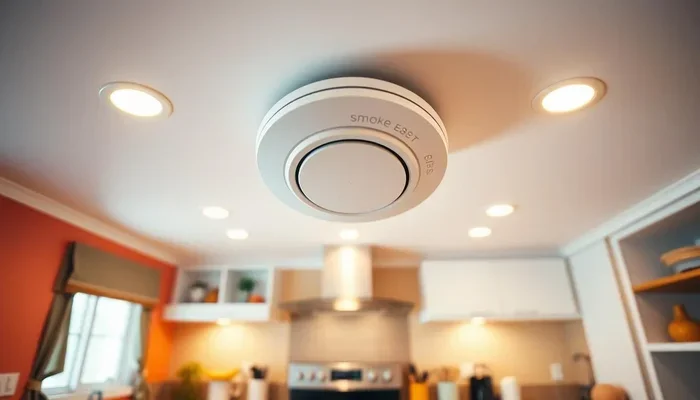
Yes, you absolutely need a smoke detector in the kitchen because cooking is the leading cause of home fires. A properly placed kitchen smoke detector can save lives, protect your family, and catch fires before they spread. This guide covers everything you need to know about smoke detector placement, types, and kitchen fire safety.
Key Takeaways
- Cooking is the #1 cause of home fires, making a kitchen smoke detector essential for every household.
- Photoelectric smoke detectors work best in kitchens because they are less prone to false alarms from cooking smoke.
- Proper placement matters — install your detector at least 10 feet away from cooking appliances to reduce false alerts.
- Hardwired detectors with battery backup offer the most reliable protection for your kitchen and home.
- Regular maintenance like testing and cleaning your detector keeps it working when you need it most.
- Combining a smoke detector with a fire extinguisher gives you layered kitchen fire safety.
- NFPA recommends smoke detectors in every bedroom, outside sleeping areas, and on every level of your home, including the kitchen.
📑 Table of Contents
- Do You Really Need a Smoke Detector in the Kitchen?
- Why Kitchen Fire Safety Matters So Much
- Types of Smoke Detectors for the Kitchen
- Where to Place a Smoke Detector in Your Kitchen
- Common Challenges with Kitchen Smoke Detectors
- Tips to Prevent Kitchen Fires Before They Start
- Expert Insights on Kitchen Smoke Detector Safety
- Key Takeaways
- Conclusion
Do You Really Need a Smoke Detector in the Kitchen?
Let us start with a simple truth. The kitchen is the most dangerous room in your house when it comes to fire risk. Every day, thousands of home fires start right at the stove, the oven, or the toaster. A kitchen smoke detector is not just a nice-to-have. It is a life-saving device that every home should have.
Yet many people hesitate. They worry about false alarms. They wonder if the detector will go off every time they sear a steak or burn a piece of toast. These concerns are real. But the answer is still clear. You need a smoke detector in the kitchen. The key is choosing the right type and placing it correctly.
According to the National Fire Protection Association (NFPA), cooking equipment causes nearly half of all reported home fires. That number alone should make you take this seriously. A smoke detector in the kitchen gives you early warning. It gives your family time to escape. It gives you peace of mind every single time you cook.
In this guide, we will walk through everything you need to know. From the different types of detectors to placement tips, we have you covered. We will also share practical advice on preventing kitchen fires and keeping your home safe. Whether you are a home cook or someone who just heats up leftovers, this article is for you.
Think of it this way. You wear a seatbelt every time you get in the car. A smoke detector in the kitchen works the same way. You hope you never need it. But if something goes wrong, it could save everything.
Why Kitchen Fire Safety Matters So Much
Let us talk numbers for a moment. The NFPA reports that U.S. fire departments respond to over 170,000 home cooking fires each year. These fires cause hundreds of deaths, thousands of injuries, and billions of dollars in property damage. The kitchen is the room where fires start most often. Period.
Most of these fires happen when someone leaves cooking unattended. A pot of oil heats up past its smoke point. A towel catches fire near the stove. A grease flare-up spreads faster than anyone can react. In these moments, every second counts. A working smoke detector can mean the difference between a small incident and a tragedy.
The Hidden Danger of Cooking Smoke
Here is something many people do not think about. It is not just open flames you need to worry about. Cooking smoke itself can be dangerous. Smoke from burning oil, overheated grease, or even scorched food releases toxic gases. These gases can cause breathing problems, disorientation, and even unconsciousness.
A kitchen smoke detector catches these dangers early. It alerts you before the situation escalates. Even if the fire is small, the smoke can spread quickly through your home. Without a detector, you might not know there is a problem until it is too late.
Some people think a fire extinguisher alone is enough. But extinguishers only work if you are right there and ready to act. A smoke detector works around the clock. It watches while you sleep, while you are at work, and while you are on vacation. It is your first line of defense.
Who Is Most at Risk?
Children and older adults face the highest risk in kitchen fires. Kids may not recognize the danger. Older adults may have slower reaction times or mobility challenges. If you have children, grandparents, or anyone with limited mobility living with you, a smoke detector in the kitchen becomes even more critical.
People who live alone also face greater risk. Without someone else present to notice smoke or flames, a fire can grow unnoticed for hours. A detector acts as your backup. It calls attention to danger even when you are not paying attention.
Types of Smoke Detectors for the Kitchen
Not all smoke detectors are the same. In fact, choosing the wrong type for your kitchen can lead to constant false alarms or, worse, no alarm at all when you need it. Let us break down the main types so you can make an informed decision.
Ionization Smoke Detectors
Ionization detectors use a small amount of radioactive material to ionize the air inside the sensing chamber. When smoke enters the chamber, it disrupts the ionization process and triggers the alarm. These detectors are excellent at detecting fast-flaming fires.
However, they have a big drawback for kitchens. Ionization detectors are very sensitive to small particles. That means they can go off when you are simply grilling, broiling, or even making toast. If you have ever burned a pan of eggs in purgatory and had your alarm scream, you have felt this frustration firsthand.
For this reason, most fire safety experts do not recommend ionization detectors as your primary detector in the kitchen. They work better in bedrooms and hallways where false alarms are less likely.
Photoelectric Smoke Detectors
Photoelectric detectors use a light beam and a light sensor. When smoke enters the chamber, it scatters the light beam. The scattered light hits the sensor, which then triggers the alarm. These detectors are better at detecting slow, smoldering fires.
The biggest advantage? Photoelectric detectors are much less sensitive to cooking smoke and steam. This makes them the best smoke detector for kitchen use. You will still get an alarm in a real emergency, but you will not have false alarms every time you cook a meal.
If you can only have one detector in your kitchen, choose a photoelectric model. Many modern units combine both ionization and photoelectric sensors for comprehensive protection.
Dual-Sensor Smoke Detectors
Dual-sensor detectors combine both ionization and photoelectric technology in one unit. They offer the best of both worlds. You get fast detection for flaming fires and reliable smoldering fire detection without as many false alarms.
These are an excellent choice for kitchens where you want strong protection without the constant nuisance alarms. They cost a bit more, but the added safety is worth every penny.
Hardwired vs. Battery-Operated Detectors
Hardwired detectors connect directly to your home’s electrical system. They often come with battery backup in case of a power outage. Battery-operated detectors run solely on batteries and are easier to install.
For kitchen fire detection systems, hardwired detectors are generally preferred. They are more reliable, they never need battery replacements, and they can be interconnected with other detectors in your home. When one alarm sounds, they all sound. That gives you maximum coverage.
However, if hardwiring is not an option, a high-quality battery-operated detector is still far better than having no detector at all. Just remember to check and replace the batteries regularly.
| Detector Type | Best For | False Alarm Risk | Price Range |
|---|---|---|---|
| Ionization | Fast-flaming fires | High in kitchens | $10 – $25 |
| Photoelectric | Smoldering fires, kitchens | Low | $15 – $40 |
| Dual-Sensor | All fire types, kitchens | Moderate | $25 – $60 |
| Hardwired | Whole-home protection | Low (with proper placement) | $30 – $80 (plus installation) |
Where to Place a Smoke Detector in Your Kitchen
Placement is just as important as the type of detector you choose. A poorly placed detector will either miss real fires or go off every time you cook dinner. Let us look at the best practices for smoke detector placement in the kitchen.
The 10-Foot Rule
The general rule of thumb is to install your smoke detector at least 10 feet away from any cooking appliance. This distance helps prevent false alarms from normal cooking smoke and steam. If your detector is too close to the stove or oven, it will go off every time you sear chicken or boil pasta.
Mount the detector on the ceiling if possible. If you must mount it on a wall, place it between 4 inches and 12 inches below the ceiling. Avoid placing it near windows, vents, or ceiling fans. Air currents can push smoke away from the detector and delay the alarm.
Avoid These Common Placement Mistakes
There are a few mistakes that many homeowners make when installing kitchen detectors:
- Placing it too close to the stove. This is the number one cause of kitchen false alarms. Keep it at least 10 feet away.
- Mounting it directly above the stove. Heat and steam will damage the detector and cause frequent false triggers.
- Hiding it behind cabinets or shelves. Smoke needs to reach the detector. Obstructions reduce its effectiveness.
- Placing it near the refrigerator. The compressor can create vibrations that interfere with the sensor.
- Forgetting to test it regularly. Even a perfectly placed detector will not protect you if it is not working.
Multiple Detectors for Maximum Safety
One detector in the kitchen is good. But for complete residential fire safety, you need detectors throughout your home. The NFPA recommends installing detectors in every bedroom, outside each sleeping area, and on every level of the house.
Your kitchen smoke detector should be part of a larger network. Interconnected detectors ensure that if one goes off, they all go off. This is especially important if your bedrooms are far from the kitchen or on a different floor.
Some people also place a detector just outside the kitchen door. This catches smoke that escapes from the kitchen before it spreads to the rest of the house. It is a smart addition to your fire detection system.
Common Challenges with Kitchen Smoke Detectors
Let us be honest. Kitchen smoke detectors come with challenges. Understanding these challenges helps you manage them effectively.
False Alarms from Cooking
Nothing ruins a dinner party faster than a blaring smoke alarm. False alarms are the most common complaint about kitchen detectors. They happen because of steam, smoke from cooking, and even burnt food. While they are annoying, they serve a purpose. Better a false alarm than a missed real fire.
You can reduce false alarms by choosing a photoelectric detector and placing it at least 10 feet from cooking sources. You should also use your range hood fan while cooking to vent smoke away from the detector.
Steam and Humidity Issues
Boiling water, steaming vegetables, and running a dishwasher all produce steam. Steam can trigger a smoke detector the same way smoke does. This is especially common in smaller kitchens with poor ventilation.
If you notice your detector going off when you steam vegetables, try moving it a few feet away or improving your kitchen ventilation. A simple range hood can make a big difference in reducing false alarms.
Dust and Grease Buildup
Over time, dust and cooking grease can build up inside your smoke detector. This buildup can cause the detector to become less sensitive or trigger false alarms. That is why regular cleaning is so important.
Gently vacuum your detector with a soft brush attachment every few months. Wipe the exterior with a damp cloth. This simple maintenance step keeps your detector working properly and extends its lifespan.
Tips to Prevent Kitchen Fires Before They Start
A smoke detector is your safety net. But prevention is always better than reaction. Here are practical tips to reduce your risk of a kitchen fire.
Never Leave Cooking Unattended
This is the single most important fire prevention tip. Unattended cooking causes the vast majority of kitchen fires. If you are frying, grilling, or broiling, stay in the kitchen. If you need to step away, turn off the heat first.
Set a timer to remind yourself. Keep a pot holder near the stove as a visual cue. These small habits can prevent disasters.
Keep Flammable Items Away from Heat
Towels, paper towels, wooden utensils, and oven mitts should all stay away from the stove. Even a small spark can ignite these materials. Keep your cooking area clear and organized.
Store flammable liquids like cooking oil and alcohol well away from the stove. A cabinet near the stove might seem convenient, but it is a fire hazard waiting to happen.
Clean Up Grease Buildup
Grease buildup on stovetops, in ovens, and on range hoods is a serious fire risk. A small grease fire can ignite a large grease-coated surface in seconds. Clean up spills and splatters after every cooking session.
Deep clean your oven and range hood regularly. A clean kitchen is a safer kitchen.
Have a Fire Extinguisher Within Reach
A smoke detector alerts you to a fire. A fire extinguisher gives you the tool to fight it. Keep a Class B or Class K fire extinguisher in your kitchen. Make sure everyone in your household knows how to use it.
Remember the P.A.S.S. technique: Pull the pin, Aim at the base of the fire, Squeeze the handle, and Sweep from side to side. Practice this so it becomes second nature.
Expert Insights on Kitchen Smoke Detector Safety
Fire safety professionals consistently emphasize one message. Every home needs working smoke detectors, and the kitchen is no exception. The International Association of Fire Chiefs recommends replacing your smoke detectors every 10 years, regardless of whether they still seem to work.
Many fire departments offer free or low-cost smoke detector installation programs. If you cannot afford a detector, reach out to your local fire station. They want to help keep your home safe.
Some people also ask about smart smoke detectors. Smart detectors connect to your home Wi-Fi and send alerts to your phone. They can even be silenced remotely. While they are more expensive, they offer excellent convenience and added safety features. Brands like Nest and Kidde offer smart options that work well in kitchens.
One thing to keep in mind. Even the best smoke detector in the kitchen will not save you if it is not maintained. Test your detector monthly. Replace batteries at least once a year. Replace the entire unit every 10 years. These simple steps ensure your detector is always ready when you need it.
Key Takeaways
- A smoke detector in the kitchen is essential because cooking is the leading cause of home fires.
- Photoelectric detectors are the best choice for kitchens because they are less likely to trigger false alarms from cooking smoke.
- Install your detector at least 10 feet from cooking appliances to reduce false alerts while maintaining safety.
- Hardwired detectors with battery backup provide the most reliable and consistent protection.
- Regular maintenance including testing, cleaning, and timely replacement keeps your detector effective.
- Combine your smoke detector with a fire extinguisher for a complete kitchen fire safety plan.
- Prevention matters just as much as detection — never leave cooking unattended and keep your kitchen clean.
Conclusion
The answer to the question “do you need a smoke detector in the kitchen” is a resounding yes. Cooking fires are the most common type of home fire, and they can happen to anyone. Whether you are a gourmet cook who loves making greek salad in a jar for meal prep or someone who simply reheats leftovers, a kitchen smoke detector is a must-have safety device.
Choose the right type of detector. Place it correctly. Maintain it regularly. These three steps give you reliable protection for your family and your home. Do not wait until a fire happens to realize how important this device is. Install a smoke detector in the kitchen today. It is one of the simplest and most effective things you can do to keep your household safe.
Take a few minutes right now to check your current detector. Is it working? Is it the right type? Is it placed correctly? If you answered no to any of these questions, it is time for an upgrade. Your kitchen is where you create meals and make memories. Keep it safe with the right fire detection system in place.
Small steps lead to big results. A single smoke detector can be the difference between a minor incident and a devastating loss. Do not skip this important home safety measure. Protect your kitchen, protect your family, and protect your peace of mind.
Frequently Asked Questions
What type of smoke detector is best for the kitchen?
A photoelectric smoke detector is the best choice for kitchens because it is less sensitive to cooking smoke and steam. It detects smoldering fires effectively without triggering false alarms every time you cook. Dual-sensor detectors that combine photoelectric and ionization technology are also an excellent option.
How far should a smoke detector be from the stove?
Install your smoke detector at least 10 feet away from any cooking appliance. This distance helps prevent false alarms from normal cooking smoke and steam while still providing effective fire detection. Mount it on the ceiling or high on the wall for optimal performance.
Can I use a regular smoke detector in the kitchen?
Yes, but it is not ideal. Standard ionization detectors are very sensitive to cooking smoke and will likely cause frequent false alarms. If you must use one, place it at least 10 feet from the stove. Photoelectric or dual-sensor detectors are better suited for kitchen environments.
How often should I test my kitchen smoke detector?
Test your kitchen smoke detector at least once a month. Press the test button on the device and listen for the alarm to sound. Also clean the detector regularly to remove dust and grease buildup that can reduce its sensitivity over time.
Do I need a smoke detector if I have a fire extinguisher in the kitchen?
Yes, absolutely. A fire extinguisher and a smoke detector serve different but complementary purposes. The detector alerts you to the presence of fire or smoke early, giving you time to react. The extinguisher allows you to fight a small fire. Together, they provide layered protection that is far more effective than either one alone.
How long does a kitchen smoke detector last?
Most smoke detectors last between 8 and 10 years. After that, the sensors become less reliable and should be replaced. Check the manufacture date on the back of your detector. If it is more than 10 years old, replace it even if it still seems to work. Replace batteries in battery-operated models at least once a year.

