
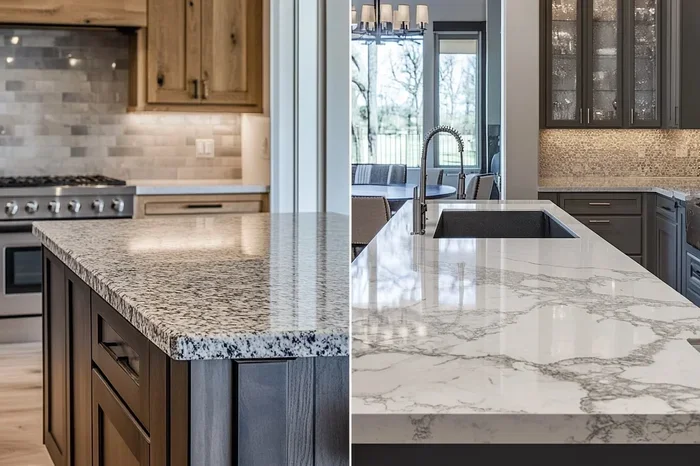
Choosing between granite and quartz for your kitchen countertops depends on budget, style, and lifestyle. Both materials offer unique benefits, but they differ in cost, maintenance, and durability. This guide breaks down everything you need to know to make the right choice for your home.
When it comes to kitchen countertops, two names dominate the conversation: granite or quartz. Homeowners everywhere face this same question during kitchen renovations. You want a surface that looks great, lasts long, and fits your budget. But with so much information out there, the decision can feel overwhelming.
Both materials have strong followings. Granite brings natural beauty and timeless elegance. Quartz offers consistency and easy care. This guide walks you through everything you need to know. By the end, you will feel confident choosing the right countertop for your kitchen.
Let us dive into the details. We will cover costs, durability, maintenance, and style. You will also find practical tips to help you decide.
Key Takeaways
- Granite is a natural stone: Each slab is unique, offering one-of-a-kind patterns and real stone character.
- Quartz is engineered: Made from crushed stone and resin, it delivers consistent color and low maintenance.
- Granite needs sealing: It requires regular upkeep to resist stains and bacteria.
- Quartz is non-porous: It resists stains and needs minimal maintenance compared to natural stone.
- Cost varies: Both materials fall in a similar price range, but installation costs can differ.
- Heat resistance favors granite: It handles hot pots better than quartz.
- Resale value is strong for both: Either material can boost your home’s appeal and market value.
📑 Table of Contents
What Is Granite and Why Do People Love It?
Understanding Natural Stone Granite
Granite is a natural igneous rock formed deep within the earth. It is quarried from mountains and cut into slabs for countertop use. Every granite slab has unique patterns, colors, and veining. No two pieces are exactly alike. This natural variation is part of what makes granite so appealing.
People love granite for its real stone look. It adds a touch of luxury to any kitchen. The speckled patterns and rich colors create a focal point. Whether your style is modern or traditional, granite fits in beautifully.
The Pros of Granite Countertops
- Unique appearance: Natural patterns give each countertop a one-of-a-kind look.
- Heat resistance: Granite handles hot pots and pans without damage.
- High durability: It resists scratches and dents better than most materials.
- Increases home value: Buyers love natural stone countertops in kitchens.
- Wide color range: From black granite to white granite, options are endless.
The Cons of Granite Countertops
- Porous surface: Granite needs sealing to prevent stains and bacteria.
- Higher maintenance: Re-sealing every one to two years is recommended.
- Price variability: Exotic slabs can be very expensive.
- Prone to chipping: Sharp impacts can cause chips at the edges.
- Heavy weight: Installation requires strong cabinetry and support.
What Is Quartz and What Makes It Special?
The Engineered Stone Explained
Quartz countertops are not entirely natural. They are engineered stone products made in factories. Manufacturers mix crushed quartz with resin and pigments. The result is a hard, non-porous surface that looks like natural stone. Brands like Cambria, Silestone, and Caesarstone lead the quartz market.
Quartz has gained massive popularity in recent years. Its uniform appearance appeals to many homeowners. You get the look of natural stone without the unpredictability. The consistency of color and pattern makes design easier.
The Pros of Quartz Countertops
- Low maintenance: No sealing required. Quartz is naturally non-porous.
- Stain resistant: Liquids do not easily penetrate the surface.
- Consistent appearance: Every slab looks the same, making design simpler.
- Bacteria resistant: The non-porous surface inhibits microbial growth.
- Flexible design: Manufacturers can create almost any color or pattern.
The Cons of Quartz Countertops
- Heat sensitivity: Direct contact with hot pans can cause damage.
- Visible seams: Large kitchens may show seams between slabs.
- Not fully natural: Some homeowners prefer the authenticity of real stone.
- Difficult to repair: Chips and cracks are harder to fix than with granite.
- Limited outdoor use: UV exposure can cause discoloration over time.
Granite or Quartz: Head-to-Head Comparison
Now let us compare granite or quartz side by side. This table breaks down the key factors that matter most to homeowners.
| Feature | Granite | Quartz |
|---|---|---|
| Material Type | Natural stone | Engineered stone |
| Durability | Very high | Very high |
| Heat Resistance | Excellent | Moderate |
| Stain Resistance | Good (when sealed) | Excellent |
| Maintenance Level | Medium to high | Low |
| Sealing Required | Yes, every 1-2 years | No |
| Price Range (per sq ft) | $40 – $200+ | $40 – $100 |
| Installation Complexity | Moderate | Moderate |
| Unique Patterns | Yes, every slab differs | No, consistent throughout |
| Scratch Resistance | Excellent | Excellent |
| Resale Value Impact | High | High |
As you can see, both materials perform well in most categories. The differences come down to maintenance, heat tolerance, and personal preference. Let us explore these in more detail.
Durability: Which One Lasts Longer?
Both granite and quartz are incredibly durable. They rank among the hardest countertop materials available. Granite scores high on the Mohs hardness scale. Quartz is also very hard, often ranking around 7 on the same scale.
In everyday kitchen use, both materials hold up well. They resist scratches from knives and utensils. They handle the daily wear and tear of cooking and cleaning. Neither material will easily crack under normal use.
The real difference appears in extreme situations. Granite can withstand higher temperatures. A hot skillet placed directly on granite will not cause damage. Quartz needs a trivet or hot pad. Prolonged heat exposure can discolor or crack quartz surfaces.
Cost Breakdown: Granite vs Quartz Pricing
Budget plays a big role in the granite or quartz debate. Let us look at what you can expect to spend.
Granite costs: Material prices range from $40 to $200 per square foot. Installation adds another $35 to $60 per square foot. Total cost typically falls between $75 and $260 per square foot. Exotic or rare slabs push prices higher.
Quartz costs: Material prices range from $40 to $100 per square foot. Installation adds $35 to $60 per square foot. Total cost typically falls between $75 and $160 per square foot. Popular brands may cost slightly more.
Overall, quartz tends to be more affordable. However, high-end granite and premium quartz can cost about the same. Your local stone supplier can give you exact pricing.
Maintenance: How Much Work Does Each Need?
This is where granite and quartz differ the most. Maintenance requirements can make or break your countertop experience.
Granite is porous. This means liquids can seep into the surface. Without proper sealing, stains from oil, wine, and coffee can set in. You should seal your granite countertops when you first install them. Then re-seal them every one to two years. The sealing process is simple. You apply a sealant, let it sit, and wipe off the excess.
Quartz is non-porous. It does not absorb liquids. Stains from common kitchen spills simply sit on the surface and wipe away. You never need to seal quartz. This makes it a favorite for busy families and low-maintenance homeowners.
Cleaning is also easier for quartz. Mild soap and water work perfectly. Granite requires pH-neutral cleaners. Harsh chemicals can damage the sealant and the stone itself.
Which Countertop Fits Your Kitchen Best?
Choosing between granite or quartz comes down to your personal needs. Consider these factors before making your final decision.
Choose Granite If…
- You love the natural beauty of real stone.
- You cook with very hot pans frequently.
- You enjoy the ritual of maintaining natural surfaces.
- You want a unique, one-of-a-kind countertop.
- You are willing to invest in regular sealing.
Choose Quartz If…
- You want a low-maintenance countertop option.
- You prefer consistent color and pattern.
- You have a busy household with kids.
- You want the best stain resistance possible.
- You prefer a more budget-friendly option.
Consider Your Kitchen Style
Your kitchen design also matters. Granite works beautifully in traditional and rustic kitchens. Its natural patterns add warmth and character. White granite pairs well with wood cabinets and vintage fixtures.
Quartz fits well in modern and contemporary kitchens. Its clean, uniform look supports minimalist design. Gray quartz with subtle veining creates a sleek, polished feel.
Both materials work in transitional kitchens. The key is choosing the right color and finish. Visit a stone showroom and see slabs in person. Natural light and your cabinet colors will affect how the stone looks.
Expert Tips for Choosing Your Kitchen Countertop
Get Multiple Quotes
Do not settle on the first price you receive. Contact at least three stone suppliers and installers. Compare material costs, installation fees, and warranty terms. Sometimes a small difference in price can mean a lot over the total project.
Request Slab Samples
Always ask for samples before committing. Take a slab home and place it in your kitchen. See how it looks in your actual lighting. Check how it feels under your hands. This small step can prevent costly regrets.
Think About Long-Term Value
Countertops are a long-term investment. Both granite and quartz can last 20 to 30 years with proper care. Think about resale value too. Kitchen upgrades are among the top home improvement projects for increasing property value.
Don’t Forget About Edge Profiles
The edge profile affects both look and cost. Simple edges like bullnose are affordable. More complex edges like ogee or waterfall add elegance but increase the price. Choose an edge that complements your kitchen cabinets and overall design.
Ask About Warranties
Reputable manufacturers and installers offer warranties. Quartz companies often provide lifetime warranties. Granite warranties vary by supplier. Ask about coverage for chips, cracks, and staining before you sign any contract.
Common Mistakes to Avoid
Avoid these common pitfalls when choosing your countertop:
- Skipping the sealing schedule for granite: Forgetting to re-seal leads to permanent stains.
- Placing hot pans on quartz: Heat damage voids warranties and ruins the surface.
- Ignoring seam placement: Poor seam placement creates weak spots and visible lines.
- Choosing based on price alone: The cheapest option may not offer the best long-term value.
- Not checking slab thickness: Thinner slabs are more prone to cracking and breakage.
- Forgetting about cabinetry support: Both materials are heavy and need proper support.
Final Verdict: Granite or Quartz?
So, which is the winner in the granite or quartz debate? The honest answer is both. Each material has clear strengths. The right choice depends on your priorities.
If you value natural beauty and heat resistance, choose granite. If you prefer low maintenance and consistent appearance, choose quartz. Both materials elevate your kitchen’s look and function.
Take your time making this decision. Visit showrooms. Compare samples. Talk to professionals. Your countertop is a centerpiece of your kitchen. It deserves careful thought and consideration.
Whichever material you choose, proper care will keep it looking stunning for decades. Invest in quality installation. Follow the maintenance guidelines. Your kitchen will thank you every day.
The debate between granite or quartz will continue for years to come. Both materials have earned their place in modern kitchens. You cannot go wrong with either choice. Trust your instincts, consider your lifestyle, and enjoy your beautiful new countertop.
Frequently Asked Questions
Is granite more expensive than quartz?
Granite and quartz often fall in similar price ranges. However, exotic granite slabs can cost more than standard quartz. On average, quartz tends to be slightly more affordable. Your final cost depends on the specific stone, installation complexity, and your location.
Does quartz or granite scratch easier?
Both materials are highly scratch resistant. Granite and quartz rank very high on hardness scales. You can place knives directly on either surface without causing damage. However, using a cutting board is always recommended for blade longevity.
Can you put a hot pan on quartz?
It is not recommended. Quartz has a resin component that can discolor or crack under high heat. Always use a trivet or hot pad with quartz countertops. Granite handles direct heat much better without any protection.
Which is easier to clean, granite or quartz?
Quartz is easier to clean. It is non-porous, so spills do not penetrate the surface. Granite requires a proper sealant to resist stains. Both materials respond well to mild soap and warm water for daily cleaning.
How long do granite and quartz countertops last?
Both materials can last 20 to 30 years or more with proper care. Granite benefits from regular sealing. Quartz requires minimal maintenance. The lifespan depends on usage, care habits, and installation quality.
Which adds more value to a home, granite or quartz?
Both materials add significant resale value to a home. Buyers appreciate natural stone and engineered stone in kitchens. The specific impact depends on the overall kitchen design and local market preferences. Either choice is a smart investment for your property.

