A unique kitchen backsplash can completely change how your kitchen looks and feels. Whether you prefer bold patterns, natural stone, or colorful glass tiles, there is a backsplash style for every taste and budget. This guide covers the best materials, trending designs, and practical tips to help you choose the perfect backsplash. You will learn how to mix textures, play with colors, and even tackle a DIY installation with confidence.
Your kitchen backsplash does more than just protect the wall from splashes. It serves as the focal point that ties the whole room together. A unique kitchen backsplash gives your space personality, charm, and a sense of style that guests will notice the moment they walk in.
Whether you are planning a full kitchen renovation or just looking for a simple kitchen upgrade, the right backsplash makes a huge difference. It is one of the most affordable ways to refresh your cooking area without a complete remodel. And the best part? You have endless options to choose from.
In this guide, we will walk you through everything you need to know about backsplash design. We will cover materials, styles, colors, and practical tips to help you make the best choice. By the end, you will feel confident picking a unique kitchen backsplash that matches your taste and budget.
Key Takeaways
- Backsplash Material Matters: Choosing the right material sets the tone for your entire kitchen design.
- Trendy Styles Boost Value: Geometric patterns, hand-painted tiles, and natural stone are hot trends in 2024.
- Color Can Transform a Small Space: Light shades open up tight kitchens, while bold hues add drama.
- Mixing Textures Creates Depth: Combining matte and glossy finishes makes your wall visually interesting.
- DIY Is Possible on a Budget: With the right tools and guidance, you can install a unique kitchen backsplash yourself.
- Avoid Common Pitfalls: Skipping proper measurements and using the wrong adhesive leads to costly mistakes.
- Lighting Enhances Any Backsplash: Under-cabinet lights make tile patterns and textures pop beautifully.
📑 Table of Contents
- Why a Unique Kitchen Backsplash Matters
- Best Materials for a Unique Kitchen Backsplash
- Trending Unique Kitchen Backsplash Styles
- How to Choose the Right Backsplash for Your Kitchen
- DIY Tips for Installing a Unique Kitchen Backsplash
- Common Mistakes to Avoid with Your Backsplash
- Expert Insights on Choosing a Unique Kitchen Backsplash
- Key Takeaways
- Frequently Asked Questions
- Conclusion
Why a Unique Kitchen Backsplash Matters
Many homeowners underestimate the power of a backsplash. But think about it. Your backsplash sits right behind the stove and sink. Every time you cook, clean, or prepare food, your eyes land on it. So why settle for something plain when you can make a statement?
A unique kitchen backsplash does several important things:
- Protects your walls from grease, steam, and water damage.
- Adds visual interest to an otherwise plain kitchen wall.
- Boosts your home’s resale value with a stylish, updated look.
- Reflects your personal style and makes the space truly yours.
- Creates a seamless flow between your countertops, cabinets, and flooring.
When you invest time in choosing the right backsplash design, the entire kitchen feels more polished. Even small changes in tile shape, color, or pattern can completely shift the mood of the room.
Backsplash Trends to Watch in 2024
Design trends come and go, but some ideas stand out this year. Here are the top backsplash trends that homeowners and designers love right now:
- Hand-painted ceramic tiles that add artisan charm to any kitchen.
- Geometric patterns using hexagonal or herringbone layouts.
- Natural stone slabs like marble and travertine for a luxurious feel.
- Mixed material designs combining wood, metal, and glass.
- Bold, saturated colors like deep navy, forest green, and terracotta.
- Textured finishes that catch light and add dimension.
These trends prove that a unique kitchen backsplash does not have to be expensive. Even simple choices like switching tile shapes or adding a contrasting grout color can make a big impact.
Best Materials for a Unique Kitchen Backsplash
The material you choose shapes the look, feel, and durability of your backsplash. Each option comes with its own benefits and price range. Let us explore the most popular materials for backsplash ideas that stand out.
Glass Tiles
Glass backsplash tiles bring a bright, reflective quality to any kitchen. They come in frosted, translucent, and opaque finishes. You can find them in solid colors or beautiful blends that shift in the light.
Glass tiles are easy to clean and resist moisture very well. They work beautifully in both modern and traditional kitchen wall design setups. If you want a shimmering, eye-catching surface, glass is a fantastic choice.
Natural Stone
Natural stone like marble, granite, and travertine gives a backsplash an elegant, timeless feel. Each slab has unique veining and patterns, so no two installations look exactly the same.
Marble is a favorite for its classic beauty. Travertine offers a warm, earthy vibe. Granite is incredibly durable and handles heat well. Just keep in mind that natural stone needs sealing to prevent stains.
Hand-Painted and Artisan Tiles
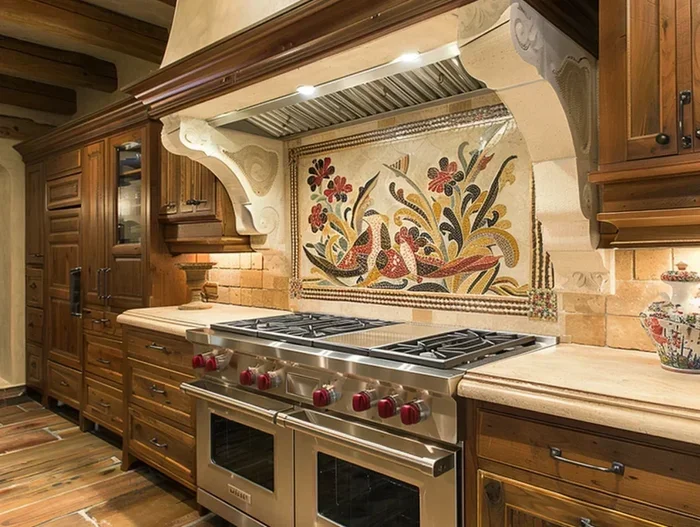
If you want a truly one-of-a-kind look, hand-painted tiles are hard to beat. These mosaic backsplash pieces often feature floral patterns, abstract designs, or cultural motifs. They turn a plain wall into a work of art.
Artisan tiles come from many traditions around the world. Spanish encaustic tiles, Moroccan zellige, and Mexican Talavera are just a few examples. Each style carries its own story and character.
Metal and Stainless Steel
A metal backsplash gives your kitchen a sleek, industrial look. Stainless steel is the most common choice because it is durable and easy to wipe down. Copper and brass options add warmth and a touch of luxury.
Metal backsplashes reflect light, which makes small kitchens feel more open. They pair especially well with modern and minimalist kitchen decor styles.
Wood and Bamboo
Yes, you can use wood behind your stove! A wooden backsplash adds warmth and natural texture to the kitchen. It works best in rustic, farmhouse, or Scandinavian-style spaces.
Bamboo is a sustainable alternative that looks beautiful and resists moisture when properly sealed. Just remember that wood needs more maintenance than tile or stone. Regular oiling keeps it looking fresh and protected.
Ceramic and Porcelain
Ceramic tile backsplash options are incredibly versatile. You can find them in every color, pattern, size, and finish imaginable. Porcelain is a denser, more water-resistant version that handles high-moisture areas well.
The classic subway tile backsplash is a type of ceramic tile that never goes out of style. But today, you can also find ceramic tiles in bold shapes, handmade textures, and custom prints. The possibilities are truly endless.
Trending Unique Kitchen Backsplash Styles
Now that you know your material options, let us talk about styles. The right style brings your vision to life and makes your kitchen feel cohesive.
Geometric and Patterned Backsplashes
Geometric backsplash designs are incredibly popular right now. Hexagonal grids, chevron patterns, and Moroccan star shapes add movement and visual depth to your wall. You can use one color for a subtle look or mix several colors for a bold statement.
Patterned tiles work best when you let them be the star of the room. Keep your cabinets and countertops simple so the backsplash gets the attention it deserves.
Rustic and Farmhouse Styles
A rustic backsplash brings warmth and coziness to the kitchen. Think natural stone, reclaimed wood, or handmade clay tiles. Earthy tones like warm beige, olive green, and terracotta fit this style perfectly.
Farmhouse kitchens love open shelving paired with a simple yet charming backsplash. A mix of exposed brick and painted wood creates a relaxed, inviting atmosphere.
Modern and Minimalist Designs
If you prefer clean lines and a clutter-free look, a modern backsplash is the way to go. Large-format tiles with minimal grout lines create a sleek, seamless appearance. Matte black, pure white, and soft gray are popular color choices.
Concrete-look tiles and smooth porcelain panels also fit the modern aesthetic. The key is simplicity. Let the material and finish speak for itself.
Bold and Colorful Statement Pieces
Do not be afraid of color! A statement backsplash in deep blue, rich green, or vibrant yellow can energize your entire kitchen. Colorful tiles behind the stove create a focal point that draws the eye.
You can also try a gradient effect, where tiles shift from light to dark across the wall. This technique adds drama without feeling overwhelming.
Mixed and Layered Materials
One of the most exciting trends is combining different materials in one backsplash design. For example, you might pair a wooden lower section with glass tiles above. Or mix metal strips with hand-painted ceramic pieces.
Layering materials adds texture and dimension. It also lets you highlight different zones in your kitchen, like the cooking area and the prep space.
How to Choose the Right Backsplash for Your Kitchen
With so many options, choosing the right unique kitchen backsplash can feel overwhelming. But a few simple guidelines make the decision much easier.
Consider Your Kitchen Size
Small kitchens benefit from light-colored tiles and glossy finishes. These reflect light and make the space feel larger. Subway tile in white or soft cream is a timeless choice for compact kitchens.
Large kitchens can handle bold, dark, or heavily patterned backsplashes. You have more wall space to work with, so feel free to experiment with bigger tiles or intricate designs.
Match Your Countertops and Cabinets
Your backsplash should complement what surrounds it. Look at the colors and materials of your countertops and cabinets first. Then choose a backsplash that either matches or provides a pleasing contrast.
For example, white marble countertops pair beautifully with a dark gray or black backsplash. Warm wood cabinets look stunning with a cool-toned glass tile backdrop.
Think About Maintenance
Some materials require more care than others. Natural stone needs regular sealing. Wood needs oiling. Glass and porcelain are generally low-maintenance and easy to wipe clean.
If you have a busy household with kids and pets, choose a durable, stain-resistant material. Porcelain and glazed ceramic are excellent choices for high-traffic kitchens.
Set a Realistic Budget
A budget backsplash does not mean settling for less. Many affordable materials like ceramic tile and laminate look stunning when installed well. Set a clear budget before you shop so you can narrow down your options.
Remember to factor in the cost of materials, adhesive, grout, and any tools you might need. If you hire a professional, labor costs will add to the total.
DIY Tips for Installing a Unique Kitchen Backsplash
Installing a unique kitchen backsplash yourself is totally doable with the right preparation. Many homeowners save money by tackling this project on their own.
Gather Your Tools and Materials
Before you start, make sure you have everything you need:
- Tile spacers and level
- Notched trowel and adhesive
- Tile cutter or wet saw
- Grout and grout float
- Sealer (if using natural stone or unglazed tile)
- Measuring tape and pencil
- Sponges and buckets for cleanup
Measure and Plan Your Layout
Start by measuring the wall area you want to cover. Calculate the square footage and add about 10 percent for cuts and waste. Sketch a layout on paper or use a tile planning app to visualize the pattern.
Always start from the center of the wall and work outward. This ensures that the tiles look balanced on both sides. Use a level to draw a straight reference line before you begin tiling.
Apply Adhesive and Set Tiles
Spread adhesive onto the wall using a notched trowel. Work in small sections so the adhesive does not dry out. Press each tile firmly into place and use spacers to keep even gaps between them.
Check your level frequently. Adjust tiles quickly before the adhesive sets. Take your time and enjoy the process.
Grout and Seal
Wait at least 24 hours for the adhesive to cure before grouting. Apply grout with a float, pressing it into the gaps between tiles. Wipe away excess grout with a damp sponge.
Once the grout dries, apply a sealer if your tiles require it. This protects the surface from stains and makes cleaning much easier.
Common Mistakes to Avoid with Your Backsplash
Even the best backsplash ideas can go wrong if you skip important steps. Here are common mistakes homeowners make and how to avoid them.
- Skipping proper measurements. Measure twice, cut once. Wrong measurements lead to wasted tiles and extra costs.
- Using the wrong adhesive. Different materials need different adhesives. Check the manufacturer’s recommendations.
- Forgetting to seal natural stone. Unsealed stone absorbs stains and moisture quickly.
- Ignoring expansion gaps. Tiles expand and contract with temperature changes. Leave small gaps near edges and outlets.
- Choosing a style that does not match the kitchen. A stunning tile looks out of place if it clashes with the rest of the room.
- Rushing the installation. Take your time. Rushed work leads to uneven tiles, crooked lines, and poor grout coverage.
Expert Insights on Choosing a Unique Kitchen Backsplash
We spoke with interior designers and kitchen remodelers to get their top advice. Here is what the professionals want you to know.
Start with a sample. Always order a few sample tiles before committing. Place them on your wall and look at them in different lighting throughout the day. Natural light, overhead lights, and evening lamps all change how a tile looks.
Think long-term. Trends fade, but a well-chosen backsplash lasts for years. Pick a design you will still love five years from now. Neutral tones and classic patterns tend to age better than bold, trendy choices.
Use lighting to your advantage. Adding under-cabinet LED lights transforms your backsplash completely. The light highlights textures, brings out colors, and makes geometric patterns glow beautifully at night.
Do not forget the edges. The edges of your backsplash matter just as much as the tiles themselves. Choose a finished edge, bullnose trim, or leave a clean gap depending on your style.
Mix function with fashion. Your backsplash should look great, but it also needs to handle daily kitchen life. Choose materials that resist heat, grease, and moisture so your unique kitchen backsplash stays beautiful for years.
Key Takeaways
- Your backsplash sets the tone for the entire kitchen, so choose wisely.
- Material choice is critical for both aesthetics and durability.
- Trendy styles like geometric patterns and hand-painted tiles add personality and value.
- Color and lighting work together to create the mood you want.
- DIY installation saves money but requires careful planning and patience.
- Avoid common mistakes like wrong adhesive, skipping sealant, and rushing the process.
- A unique kitchen backsplash is one of the smartest investments you can make for your home.
Frequently Asked Questions
What is the most popular backsplash material right now?
Glass tiles and natural stone are among the most popular choices for a unique kitchen backsplash in 2024. Glass brings brightness and reflectivity, while stone adds texture and elegance. Both materials work well in a variety of kitchen styles.
How much does it cost to install a unique backsplash?
Costs vary depending on the material and kitchen size. Ceramic tile backsplashes typically range from $5 to $15 per square foot. Natural stone can cost $20 to $50 per square foot. Glass tiles fall somewhere in between. DIY installation saves on labor costs.
Can I install a backsplash over existing tile?
Yes, in many cases you can install a new backsplash design over existing tile. However, the surface must be clean, smooth, and free of loose tiles. Using a bond-enhancing primer helps the new adhesive stick properly. Always test a small area first.
What size backsplash should I install?
A standard backsplash covers the area between your countertop and upper cabinets, usually about 12 to 18 inches tall. Some homeowners extend the tile all the way to the ceiling for a dramatic, gallery-like effect. The size depends on your kitchen layout and personal preference.
How do I clean and maintain my backsplash?
Most backsplashes clean easily with warm water and mild soap. Natural stone and grout benefit from a sealer that repels stains. Glass and porcelain are the lowest-maintenance options. Wipe up spills promptly to prevent discoloration.
What colors make a small kitchen look bigger?
Light and neutral colors like white, soft gray, and pale blue make a small kitchen feel more open. Glossy tiles reflect light and add the illusion of space. Avoid dark, busy patterns in tight kitchens, as they can make the room feel smaller.
Conclusion
A unique kitchen backsplash is one of the simplest and most impactful ways to refresh your cooking space. From glass tiles to hand-painted ceramics, from bold geometric patterns to rustic reclaimed wood, the options are truly endless. The right backsplash protects your walls, adds value to your home, and expresses your personal style every single day.
Take your time exploring different materials, styles, and color palettes. Plan your layout carefully, and do not be afraid to mix textures or play with bold hues. Whether you hire a professional or tackle the project yourself, the results will be worth the effort.
Your kitchen is the heart of your home. Make it shine with a unique kitchen backsplash that you will love for years to come. Start gathering inspiration today, and turn your kitchen into the space you have always dreamed of.