
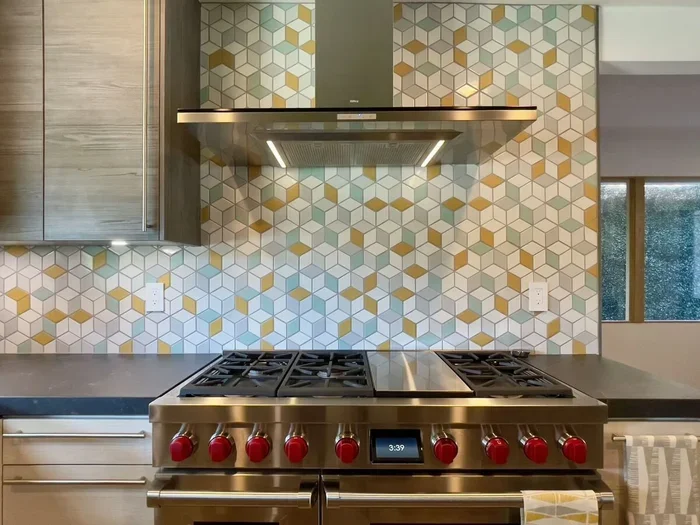
A kitchen backsplash protects your walls from grease, splatters, and moisture while elevating the look of your cooking space. Whether you choose tile, glass, or stainless steel, the right backsplash adds style and easy-to-clean surfaces. Learn why many homeowners consider it a kitchen essential — and when you might skip it.
Let’s be honest — when you’re standing at the stove flipping eggs in purgatory or tossing together a greek salad in a jar for lunch prep, the last thing on your mind is the wall behind the counter. But here’s the truth: that wall takes a beating. Grease sprays. Water splashes. Sauce splatters. Over time, your drywall turns into a sticky, stained mess that’s a real pain to clean.
A backsplash is the strip of material that runs along the wall behind your stove and sink. It acts as a shield for your kitchen walls. But is a backsplash necessary in a kitchen for every home? The short answer is: it depends. The longer answer is what we’re diving into today.
Whether you’re planning a full kitchen renovation or just updating a single feature, understanding the role of a backsplash helps you make a smart decision. This guide covers everything — from protection benefits to design options to costs. Let’s get into it.
Key Takeaways
- Wall Protection: A backsplash shields walls from grease, moisture, and cooking splatter that causes lasting damage.
- Easy Cleaning: Smooth backsplash materials make wiping down kitchen surfaces quick and effortless.
- Style Boost: The right backsplash ties your kitchen design together and adds visual interest.
- Cost Considerations: Installation costs vary widely depending on materials, ranging from budget-friendly to premium.
- Not Always Required: Some kitchens function well without a backsplash, especially with alternative wall protections.
- Material Options Abound: Tile, glass, metal, and stone each offer unique benefits for different kitchen styles.
- Resale Value: A well-chosen backsplash can increase your home’s appeal to future buyers.
📑 Table of Contents
- What Exactly Does a Backsplash Do?
- Do You Legally Need a Backsplash?
- Types of Backsplash Materials and Their Benefits
- Pros and Cons of Having a Backsplash
- When You Can Skip the Backsplash
- How to Choose the Right Backsplash for Your Kitchen
- How a Backsplash Boosts Your Kitchen’s Resale Value
- Common Backsplash Mistakes to Avoid
- Quick Tips for a Stunning Backsplash
- Final Thoughts: Is a Backsplash Necessary in a Kitchen?
What Exactly Does a Backsplash Do?
A backsplash serves two main jobs. First, it protects your walls. Second, it boosts the look of your kitchen. These two roles work together to make your cooking space better in both function and style.
Protecting Your Walls from Kitchen Mess
When you cook, things fly. Oil droplets pop off the pan. Water splashes from the sink. Steam settles on surfaces. Without a backsplash, all of that lands directly on your drywall or plaster. Over weeks and months, this causes stains, peeling paint, and even mold growth in damp areas.
A backsplash creates a waterproof barrier. Materials like tile, glass, or metal don’t absorb moisture or grease. That means your wall stays clean and dry behind the stove and sink. This is especially important in small kitchens where the cooking zone is close to the wall.
Think about it this way. You wouldn’t cook without a pan. So why would you cook without protecting the wall behind the stove? A backsplash is like armor for your kitchen surfaces.
Adding Visual Appeal to Your Kitchen
Beyond protection, a backsplash is one of the easiest ways to upgrade your kitchen’s look. It creates a focal point behind the counter. It adds color, texture, and pattern to an otherwise plain wall.
Imagine your kitchen with plain white walls. Now imagine the same kitchen with a bold blue tile backsplash behind the stove. The difference is dramatic. A backsplash ties together your countertops, cabinets, and flooring into one cohesive design.
Even a simple subway tile backsplash can make a kitchen feel polished and finished. It’s one of those kitchen upgrades that gives big results for the effort.
Do You Legally Need a Backsplash?
Here’s a question many homeowners ask: is a backsplash required by building codes? The answer is usually no. Most local building codes do not mandate a backsplash in residential kitchens.
However, there are exceptions. Some commercial kitchen regulations require splash guards. If you’re converting a home kitchen into a commercial space, check your local codes. For standard residential homes, a backsplash is a choice, not a legal requirement.
That said, insurance companies and home inspectors may note the absence of a backsplash during evaluations. Without wall protection, moisture damage can lead to bigger problems. These issues might affect your home inspection report or insurance claims down the road.
When a Backsplash Might Be Required
Even if codes don’t require it, certain situations make a backsplash strongly recommended:
- Rental properties: Landlords often require wall protection to minimize damage between tenants.
- Homes with young children: Cooking areas need extra protection from frequent spills and splashes.
- High-humidity climates: Moisture from cooking combined with humid air increases the risk of wall damage.
- Older homes with drywall: Older walls are more vulnerable to moisture and grease absorption.
Types of Backsplash Materials and Their Benefits
Choosing a backsplash material is one of the most fun parts of the process. There are tons of options, and each one brings something different to the table. Let’s break down the most popular choices.
| Material | Durability | Cost Range | Best For |
|---|---|---|---|
| Ceramic Tile | High | $5–$30 per sq ft | Budget-friendly, classic looks |
| Glass Tile | Very High | $10–$40 per sq ft | Modern kitchens, easy cleaning |
| Stainless Steel | Very High | $20–$50 per sq ft | Industrial or minimalist designs |
| Natural Stone | High | $15–$60 per sq ft | Luxury kitchens, unique textures |
| Acrylic/Panels | Medium | $5–$20 per sq ft | Budget upgrades, DIY projects |
| Solid Surface | High | $15–$35 per sq ft | Seamless, integrated look |
Ceramic and Porcelain Tile
Ceramic tile is the most popular backsplash material for good reason. It’s affordable, durable, and comes in endless colors and patterns. Porcelain tile is a step up — it’s denser, less porous, and handles moisture better.
Both materials are easy to clean. A quick wipe with a damp cloth removes most grease and food splatter. You can also find backsplash tiles in sizes ranging from tiny mosaics to large-format slabs. This flexibility means you can match any kitchen style.
Glass Tile
Glass tile backsplashes have a gorgeous, reflective quality. They make small kitchens feel brighter and more open. Glass is non-porous, which means it won’t absorb stains or odors.
The downside? Glass tile can be more expensive and trickier to install. But the result is stunning. A glass backsplash adds a touch of elegance that few other materials can match.
Stainless Steel
If you love a sleek, modern look, stainless steel is a great choice. It’s heat-resistant, waterproof, and super easy to wipe clean. Many professional kitchens use stainless steel backsplashes for exactly these reasons.
The one thing to watch for is fingerprints. Stainless steel shows smudges easily, so you’ll need to wipe it down regularly. But for a clean, industrial aesthetic, nothing beats it.
Natural Stone and Marble
Natural stone backsplashes bring luxury and warmth to a kitchen. Marble, granite, and slate each have unique patterns that no two pieces share. This makes every stone backsplash one-of-a-kind.
Stone does require more maintenance, though. Marble is porous and needs sealing to resist stains. Granite is more durable but still benefits from regular sealing. If you’re willing to put in the care, a stone backsplash can truly elevate your kitchen.
Pros and Cons of Having a Backsplash
Every home improvement decision has trade-offs. Let’s look at the real pros and cons of installing a backsplash in your kitchen.
The Pros
- Wall protection: A backsplash prevents grease, moisture, and stains from damaging your walls.
- Easy maintenance: Smooth backsplash surfaces wipe clean in seconds, saving you time and effort.
- Design upgrade: A backsplash instantly improves the visual appeal of your kitchen.
- Moisture resistance: Backsplash materials prevent water damage behind the sink area.
- Resale value: A well-designed backsplash makes your kitchen more attractive to buyers.
- Versatility: You can change the look of your kitchen just by swapping out the backsplash.
The Cons
- Cost: Materials and installation can add up, especially for premium options.
- Installation time: Tiling a backsplash takes planning, precision, and patience.
- Maintenance for certain materials: Stone and grout need regular sealing and cleaning.
- Dust and disruption: Installation creates dust, noise, and temporary inconvenience.
- Style lock-in: Once installed, changing a backsplash means redoing the work.
When You Can Skip the Backsplash
Here’s something not everyone talks about — you don’t always need a backsplash. There are valid reasons to skip it, and some kitchens work just fine without one.
Open-concept kitchens with a large island sometimes use a different approach. Some homeowners install waterproof wall panels or use paintable wall surfaces that are easy to wash. Others rely on a careful cooking technique — using splatter screens and keeping the stove area clean.
If you’re a light cook who rarely splatters, a backsplash might feel like an unnecessary expense. The same goes for renters who can’t make permanent changes. In these cases, a removable backsplash panel or a coat of kitchen-safe paint can offer light protection without a full installation.
Sometimes the best choice is the simplest one. A backsplash should serve your lifestyle, not the other way around.
Alternative Wall Protection Options
If a traditional backsplash doesn’t appeal to you, consider these alternatives:
- Painted wall panels: Use semi-gloss or satin paint that wipes clean easily.
- Magnetic stainless panels: These attach to walls without adhesive and look sleek.
- Acrylic panels: Affordable, easy to cut, and simple to install yourself.
- Penny tile accents: A small accent strip gives partial protection with minimal effort.
These options work well for kitchens where full wall coverage isn’t needed. They’re especially popular in apartments and rental homes where permanence isn’t an option.
How to Choose the Right Backsplash for Your Kitchen
Not sure where to start? Choosing the right backsplash comes down to a few key factors. Think about your budget, your kitchen style, and how much maintenance you’re willing to handle.
Match Your Kitchen Style
Your backsplash should complement your overall kitchen design. For a farmhouse kitchen, consider subway tile in a warm white. For a modern kitchen, go with large-format glass or sleek metal panels. For a rustic look, natural stone or brick-style tile works beautifully.
Take a cue from your countertops and cabinets. If your cabinets are warm wood tones, a cool-toned backsplash creates a nice contrast. If your kitchen is all white, a patterned tile backsplash adds just the right pop of personality.
Consider Your Budget
Budget plays a big role in backsplash selection. Ceramic tile is the most budget-friendly option and still looks fantastic. Glass tile costs more but offers a premium finish. Stainless steel and natural stone sit at the higher end but deliver a luxury feel.
Remember to factor in installation costs too. If you’re handy with a tile cutter, a DIY backsplash can save you hundreds of dollars. But for complex patterns or unusual materials, hiring a professional is worth the investment.
Think About Long-Term Maintenance
Some backsplash materials require more care than others. Grout between tiles needs sealing every one to two years. Natural stone needs regular resealing. Glass and stainless steel, on the other hand, need little more than a quick wipe.
Be honest with yourself about how much maintenance you’re willing to do. If you want a backsplash that looks great with minimal effort, choose non-porous materials like glass, porcelain, or metal.
How a Backsplash Boosts Your Kitchen’s Resale Value
One reason homeowners invest in a backsplash is the return on investment. Kitchens are one of the top rooms buyers evaluate when purchasing a home. A clean, attractive backsplash signals that the kitchen is well-maintained and updated.
According to real estate experts, kitchen upgrades consistently deliver strong ROI. A backsplash is one of the more affordable kitchen improvements with visible impact. Buyers notice a polished backsplash because it shows attention to detail.
Even if you’re not planning to sell anytime soon, a backsplash makes your kitchen a more enjoyable space to cook and gather. That daily enjoyment is its own kind of return.
Common Backsplash Mistakes to Avoid
Installing a backsplash is straightforward, but mistakes happen. Here are some common pitfalls to watch out for:
- Skipping waterproofing: Always apply a waterproof membrane behind your backsplash, especially behind the sink.
- Choosing the wrong grout: Use grout rated for wet areas to prevent moisture damage and staining.
- Ignoring expansion gaps: Materials expand and contract with temperature changes. Leave small gaps to prevent cracking.
- Mismatching tile sizes: Inconsistent tile sizes create an uneven, unprofessional look.
- Forgetting about lighting: A backsplash looks best with proper lighting. Consider under-cabinet lights to highlight the material.
- Buying too little material: Always order 10–15% extra tile to account for cuts, breaks, and future repairs.
Avoiding these mistakes saves time, money, and frustration. A little planning goes a long way toward a beautiful, lasting backsplash.
Quick Tips for a Stunning Backsplash
Want your backsplash to look amazing? Follow these quick tips:
- Use a bold accent color behind the stove to create a focal point.
- Mix materials — for example, glass behind the sink and tile behind the stove.
- Add a backsplash even in a galley kitchen; the narrow space benefits most from wall protection.
- Choose a tile size that matches your kitchen scale — larger tiles for big kitchens, smaller for cozy ones.
- Keep your backsplash style consistent with your countertops for a unified look.
These small decisions make a big difference. A well-planned backsplash transforms your kitchen from ordinary to extraordinary.
Final Thoughts: Is a Backsplash Necessary in a Kitchen?
So, is a backsplash necessary in a kitchen? The honest answer is: for most homes, yes. A backsplash protects your walls, simplifies cleaning, and adds lasting style to your cooking space. It’s one of those kitchen features that delivers real value every single day.
But it’s not a one-size-fits-all answer. If you’re a renter, a light cook, or on a tight budget, there are alternatives that offer partial protection without a full installation. The key is to evaluate your kitchen, your cooking habits, and your goals.
Whether you go with a classic tile backsplash, a sleek glass panel, or a bold stone accent, the right choice makes your kitchen better. It protects your walls. It enhances your design. And it gives you a space that feels complete and polished.
A backsplash might not be the flashiest kitchen upgrade. But it’s one of the most practical and rewarding. Your kitchen walls work hard every day. Give them the protection they deserve.
And while you’re at it, don’t forget the joy of cooking in a beautiful space. Whether you’re preparing a colorful frozen watermelon on a stick snack for the kids or crafting a rich eggs in purgatory dinner on a quiet Tuesday night, a well-protected and beautifully designed kitchen makes every meal feel special.
Frequently Asked Questions
Can I install a backsplash myself?
Yes, many homeowners successfully install a backsplash as a DIY project. Ceramic and acrylic tiles are the most beginner-friendly options. You’ll need basic tools like a tile cutter, spacers, and tile adhesive. If you’re comfortable with precise measuring and grouting, a DIY backsplash can save you a significant amount of money.
How much does a kitchen backsplash cost to install?
The cost depends on the material you choose. Ceramic tile is the most affordable, typically ranging from $5 to $30 per square foot. Glass and natural stone run higher, from $15 to $60 per square foot. Installation labor adds another $10 to $30 per square foot for most materials. Overall, a typical backsplash project costs between $500 and $2,500 for an average kitchen.
What is the best backsplash material for a small kitchen?
Glass tile and large-format porcelain tile work best in small kitchens. Glass reflects light and makes the space feel larger. Large-format porcelain reduces grout lines, creating a cleaner, more open look. Both options are easy to clean and highly durable for a busy backsplash in a compact space.
Do I need a backsplash behind the sink?
Yes, a backsplash behind the sink is highly recommended. The sink area generates the most moisture in a kitchen. Without protection, water splashes can seep behind the counter and cause wall damage or mold. A waterproof backsplash material like glass, porcelain, or stainless steel is ideal for this area.
Can I have a backsplash without tile?
Absolutely. There are many non-tile backsplash options. Stainless steel panels, acrylic sheets, and even painted semi-gloss wall panels work well. Some homeowners use reclaimed wood or metal sheets for a unique look. The key is choosing a material that resists moisture and wipes clean easily.
How do I clean and maintain a backsplash?
Most backsplash materials are easy to maintain. A gentle cleaner and a soft cloth handle daily splatters. For tile with grout, seal the grout annually to prevent staining. Glass and stainless steel backsplashes need only a quick wipe with a microfiber cloth. Natural stone requires a pH-neutral cleaner to avoid damaging the surface.
=== CONCLUSION ===
A backsplash is one of the smartest investments you can make in your kitchen. It protects your walls from daily wear, makes cleanup a breeze, and adds a design element that ties your entire space together. While it’s not legally required in most homes, the practical and aesthetic benefits are hard to ignore.
Whether you choose a classic subway tile, a modern glass panel, or a bold stone accent, the right backsplash transforms your kitchen. It’s a small upgrade with a big impact. Take the time to explore your options, set a realistic budget, and pick a material that fits your lifestyle. Your kitchen walls will thank you — and your guests will notice the difference the moment they walk in.

