
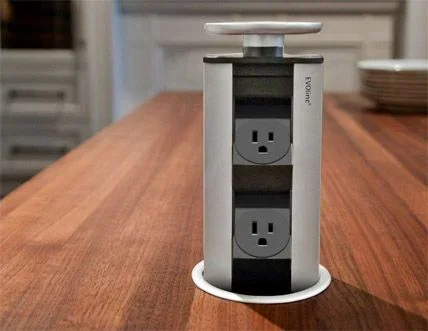
A pop up power outlet kitchen upgrade is one of the simplest ways to add convenience, safety, and style to your cooking space. These retractable outlets keep countertops clutter-free while giving you easy access to power right where you need it. Whether you charge devices, run small appliances, or want a cleaner look, a pop up power outlet solves real kitchen problems. In this guide, we cover everything from types and benefits to installation steps and top product picks. Read on to find out why homeowners are swapping traditional outlets for these clever kitchen upgrades.
Your kitchen counter is probably loaded with gadgets. Phone chargers, blenders, toasters, coffee makers — the list goes on. Every one of those devices needs power. But traditional wall outlets often sit far from where you actually work. That is where a pop up power outlet kitchen solution changes everything.
A pop up power outlet is a flush-mounted, retractable socket that rises from your countertop when you need it and tucks back away when you do not. It is one of the most practical kitchen outlet upgrades you can make. And the best part? It does not require a full renovation or a huge budget.
In this article, we will walk you through everything you need to know about pop up power outlet kitchen installations. From the different types available to step-by-step setup tips, we have you covered. Let us dive in.
Key Takeaways
- Pop up power outlets keep your kitchen countertop clean and clutter-free by hiding outlets when not in use.
- They offer a modern, sleek look that enhances the overall design of your kitchen.
- Installation is manageable for DIYers but hiring a pro ensures safety and code compliance.
- Multiple types exist, including single outlet, dual outlet, and USB-equipped models.
- Top brands like Legrand, Hubbell, and Home Depot brands offer reliable options at various price points.
- Common mistakes include wrong box sizing and skipping GFCI protection, both of which can cause safety issues.
- Pop up outlets add real home value, making them a smart investment for kitchen renovations.
📑 Table of Contents
- What Exactly Is a Pop Up Power Outlet for Kitchens?
- Why a Pop Up Power Outlet Kitchen Upgrade Makes Sense
- Types of Pop Up Power Outlets You Can Choose From
- How to Install a Pop Up Power Outlet in Your Kitchen
- Best Pop Up Power Outlet Brands for Kitchen Upgrades
- Common Mistakes to Avoid When Installing a Pop Up Outlet
- Expert Insights on Pop Up Kitchen Outlets
- Key Takeaways
- Conclusion
What Exactly Is a Pop Up Power Outlet for Kitchens?
A pop up power outlet is an electrical receptacle that sits inside a recessed box in your countertop. When you press a button or flip a switch, the outlet pops up and becomes usable. When you are done, it retracts back into the surface, leaving a smooth, clean countertop.
Think of it like a pop-up toaster — but for electricity. Instead of bending a toaster down, the outlet rises up. It is a simple concept that delivers big results.
These outlets come in different shapes and sizes. Some fit single countertops. Others work on kitchen islands or peninsulas. You can even find models with USB ports built in, which makes them even more versatile for modern kitchens.
The key idea behind a pop up kitchen outlet is convenience. You get power exactly where you need it — right on the counter surface — without cords running across your workspace or outlets hidden behind cabinets.
How Does a Pop Up Outlet Work?
Inside the recessed box, you will find a spring-loaded mechanism. When you activate the outlet, the spring pushes it up to counter level. A cover or lid seals it when it is in the down position. This keeps dust, crumbs, and liquids out, which also adds a layer of safety.
Most models connect to standard household wiring. That means they work with your existing electrical system. You just need the right cutout in your countertop and a qualified electrician to handle the wiring.
Why a Pop Up Power Outlet Kitchen Upgrade Makes Sense
You might wonder if a pop up power outlet kitchen upgrade is worth the effort. The answer is a clear yes for most homeowners. Here is why.
1. Countertop Clutter Reduction
One of the biggest complaints about modern kitchens is clutter. Power strips crawl across counters. Extension cords dangle from behind appliances. A retractable kitchen outlet eliminates all of that. When the outlet is down, your counter looks clean and open.
You can place your blender, mixer, or toaster right over the outlet without a cord stretching across the kitchen. That small change makes a huge difference in how your kitchen looks and feels.
2. Improved Safety
Cords running across countertops are a tripping hazard. They can also catch on loose clothing or jewelry. A pop up power outlet keeps cords tucked away and out of the way. When the outlet is sealed in the down position, it also protects the receptacle from moisture and debris.
Many models include GFCI pop up outlet technology. GFCI stands for Ground Fault Circuit Interrupter. This safety feature shuts off power instantly if it detects a ground fault. It is especially important in kitchens where water and electricity are close together.
3. Modern Aesthetic Appeal
A clean countertop simply looks better. A pop up socket kitchen gives your space a streamlined, modern feel. Guests will notice the difference, and you will enjoy the look every time you cook.
Because the outlet disappears when not in use, it does not interrupt the visual flow of your kitchen design. It is one of those upgrades that works with your style instead of against it.
4. Added Home Value
Kitchen upgrades that improve function and appearance tend to boost home value. A built-in kitchen outlet is a feature that buyers notice. It signals a thoughtfully designed, modern kitchen. Even if you are not planning to sell soon, it is nice to know your investment adds value.
Types of Pop Up Power Outlets You Can Choose From
Not all pop up power outlet kitchen options are the same. Different models serve different needs. Here is a breakdown of the most common types.
Single Pop Up Outlet
This is the most basic option. It features one electrical receptacle that pops up from the countertop. It works great for charging a phone or plugging in a single appliance. Single outlets are usually the most affordable choice.
Dual Pop Up Outlet
A dual outlet gives you two receptacles in one unit. This is ideal if you regularly use multiple devices at the same time. For example, you might charge your phone while running the toaster. Dual outlets save space and reduce the need for extra power strips.
Pop Up Outlet with USB Ports
USB-equipped pop up kitchen outlets are becoming increasingly popular. They let you charge phones, tablets, and other USB devices directly from the outlet — no adapter needed. Some models include both USB-A and USB-C ports. This is a smart choice if your household runs on multiple devices.
Pop Up Outlet with Data Ports
Some advanced models include HDMI or Ethernet ports alongside electrical outlets. These are perfect for kitchen islands that double as entertainment or work stations. You can plug in a laptop, connect to a smart display, and charge your phone — all from one spot.
Under-Cabinet Pop Up Outlet
Not all pop up power outlet kitchen setups go in the countertop. Some models mount under upper cabinets and pop down to counter level. These are great for providing power in areas where a countertop outlet would not work, such as narrow spaces between cabinets.
| Type | Best For | Avg. Price Range | USB Included? |
|---|---|---|---|
| Single Pop Up Outlet | Basic charging, one appliance | $40 – $80 | No |
| Dual Pop Up Outlet | Multiple devices at once | $70 – $130 | Sometimes |
| USB Pop Up Outlet | Phone/tablet charging | $80 – $150 | Yes |
| Data + Power Pop Up | Kitchen island workstations | $120 – $200 | Often |
| Under-Cabinet Pop Up | Narrow spaces, cabinet areas | $50 – $100 | Rarely |
How to Install a Pop Up Power Outlet in Your Kitchen
Installing a pop up power outlet kitchen unit is a project that many DIY enthusiasts can handle. However, electrical work always comes with risks. Let us walk through the process step by step.
Step 1: Choose the Right Location
Pick a spot on your countertop where you need power the most. Common locations include kitchen islands, peninsulas, and breakfast bars. Make sure the location does not interfere with plumbing lines or structural supports underneath the counter.
Measure the cutout size required by your chosen model. Most units need a rectangular hole in the countertop. Double-check the manufacturer’s specifications before you start cutting.
Step 2: Turn Off the Power
Safety first. Always turn off the circuit breaker that supplies power to the kitchen outlet area. Use a voltage tester to confirm the power is off before you touch any wires.
This is non-negotiable. Working on live wires is dangerous and can lead to serious injury or death.
Step 3: Cut the Countertop Opening
Using a jigsaw or router, cut the opening in your countertop according to the template provided with your outlet. Go slowly and measure twice. A clean cut makes the final installation much easier.
If you are working with granite or quartz, consider having a professional handle the cutting. These materials are durable but tricky to cut without cracking.
Step 4: Run the Electrical Wiring
Feed the electrical cable through the opening and connect it to the outlet unit. This is where having basic electrical knowledge helps. If you are not comfortable with wiring, hire a licensed electrician for this step.
Make sure the wiring matches your local electrical codes. Many areas require GFCI protection for kitchen outlets. Your electrician can confirm what is needed in your area.
Step 5: Mount and Test the Outlet
Secure the outlet body into the countertop opening. Make sure it sits flush and does not wobble. Once mounted, restore power at the breaker and test the outlet. Press the button to pop it up and verify it works properly.
Test the retract mechanism too. The outlet should descend smoothly and seal flush with the countertop surface.
Quick Tips for a Smooth Installation
- Read the entire instruction manual before you start cutting anything.
- Practice the cut on scrap material if you are unsure about the process.
- Use a template if one is included with your outlet unit.
- Label your circuit breaker so others know which switch controls the outlet.
- Keep the area clean during installation to prevent debris from entering the electrical box.
Best Pop Up Power Outlet Brands for Kitchen Upgrades
Not all pop up power outlet kitchen products are created equal. Some brands stand out for quality, durability, and design. Here are a few worth considering.
Legrand
Legrand is one of the most trusted names in electrical products. Their pop up outlet line offers sleek designs and solid construction. They carry both single and dual outlet models, and many include USB charging ports. Legrand outlets are known for smooth retract mechanisms and long-lasting performance.
Hubbell
Hubbell is a professional-grade brand that electricians trust. Their pop up receptacle options are built to handle heavy use. Hubbell models tend to have robust warranty coverage and meet strict industry standards for safety and durability.
Home Depot Brands
Home Depot carries several retractable kitchen outlet brands at accessible price points. Their in-house brand options and partner brands offer good quality without breaking the bank. If you are shopping on a budget, Home Depot is a great place to start.
WAC Lighting and Specialty Brands
For premium and designer options, brands like WAC Lighting offer high-end pop up socket kitchen solutions. These units often feature stylish finishes like brushed nickel or matte black that complement modern kitchen designs.
What to Look For When Buying
- Build quality — Look for metal or durable plastic construction.
- Warranty — A longer warranty signals confidence in the product.
- GFCI protection — Essential for kitchen safety.
- USB ports — A nice bonus for charging devices without adapters.
- Flush mount design — Ensures the outlet sits level with your countertop.
- Easy retract mechanism — The outlet should pop up and down smoothly without sticking.
Common Mistakes to Avoid When Installing a Pop Up Outlet
Even with the best intentions, mistakes happen during pop up power outlet kitchen installations. Here are the most common ones and how to avoid them.
Mistake 1: Wrong Box Sizing
Every pop up outlet requires a specific cutout size. Using the wrong size box or cutting the wrong size hole will cause the unit to fit poorly. Always measure carefully and follow the manufacturer’s guidelines exactly.
Mistake 2: Skipping GFCI Protection
Kitchens are wet environments. Electrical codes in most areas require GFCI protection for kitchen outlets. Skipping this step is not only a code violation — it is a serious safety risk. A GFCI pop up outlet protects you from electrical shock in case of moisture exposure.
Mistake 3: Overloading the Outlet
Pop up outlets are convenient, but they are not designed to handle the same load as a full electrical panel circuit. Avoid plugging in high-wattage appliances like ovens or large microwaves. Stick to smaller devices like blenders, toasters, and phone chargers.
Mistake 4: Ignoring Countertop Material
Different countertop materials require different cutting approaches. Wood is forgiving. Granite and quartz are not. Using the wrong blade or cutting too aggressively can crack or chip your countertop. Take the time to learn the proper technique for your specific material.
Mistake 5: Forgetting to Seal the Edges
Water and food debris can work their way into the outlet housing if the edges are not properly sealed. Use silicone caulk around the perimeter of the cutout to keep moisture out and ensure a clean finish.
Mistake 6: Not Testing Before Finalizing
Once the countertop is installed and sealed, it is hard to go back and fix wiring issues. Always test the outlet thoroughly before you finalize the installation. Make sure the pop-up mechanism works, the outlets deliver power, and everything sits flush.
Expert Insights on Pop Up Kitchen Outlets
We spoke with licensed electricians and kitchen designers to get their take on pop up power outlet kitchen upgrades. Here is what the experts had to say.
Mike R., Licensed Electrician: “I have installed dozens of pop up outlets in kitchen remodels. Clients love them because they eliminate cord clutter instantly. My biggest tip is always to use GFCI-protected models in the kitchen. It is not optional — it is a safety must.”
Sarah T., Kitchen Designer: “Pop up outlets are one of my go-to recommendations for kitchen island designs. They give homeowners the power they need without sacrificing the clean look of the counter. I always suggest placing them near the seating area so people can charge devices while eating or working.”
James L., Home Renovation Contractor: “The cost of a pop up outlet upgrade is surprisingly low compared to the value it adds. Most of my clients say it is one of the highest-impact, lowest-cost upgrades they have made. It is a project with a great return on investment.”
Key Takeaways
- Pop up power outlets keep your kitchen countertop clean and clutter-free by hiding outlets when not in use.
- They offer a modern, sleek look that enhances the overall design of your kitchen.
- Installation is manageable for DIYers but hiring a pro ensures safety and code compliance.
- Multiple types exist, including single outlet, dual outlet, and USB-equipped models.
- Top brands like Legrand, Hubbell, and Home Depot brands offer reliable options at various price points.
- Common mistakes include wrong box sizing and skipping GFCI protection, both of which can cause safety issues.
- Pop up outlets add real home value, making them a smart investment for kitchen renovations.
Conclusion
A pop up power outlet kitchen upgrade is one of the smartest investments you can make in your home. It solves real problems — clutter, safety, and convenience — while adding a modern, polished look to your cooking space. Whether you choose a simple single outlet or a feature-rich model with USB ports, the benefits are clear and immediate.
The installation process is straightforward enough for confident DIYers, but always prioritize safety when working with electricity. If you are unsure about any step, bring in a professional. The peace of mind is worth it.
With the right product and proper installation, your kitchen will feel more organized, safer, and more functional. A pop up power outlet is a small change that makes a big difference. Start exploring your options today and give your kitchen the upgrade it deserves.
Frequently Asked Questions
What is a pop up power outlet in a kitchen?
A pop up power outlet is a flush-mounted, retractable electrical socket that rises from your countertop when you need it and tucks back away when you do not. It keeps your kitchen counter clean and clutter-free while providing convenient access to power right where you work.
How much does it cost to install a pop up kitchen outlet?
The cost of a pop up outlet unit typically ranges from $40 to $200, depending on the type and features. Installation by a licensed electrician usually adds $100 to $300 for labor. Overall, it is one of the more affordable kitchen upgrades you can make.
Can I install a pop up outlet myself?
Yes, if you have basic electrical knowledge and are comfortable working with wiring. However, electrical work carries risks, and local codes may require a licensed professional. Always turn off the power at the breaker before starting any electrical project.
Are pop up outlets safe in a wet kitchen environment?
Most quality pop up outlets include GFCI protection, which automatically shuts off power if a ground fault is detected. This makes them safe for kitchen use where moisture is present. Always choose a GFCI-protected model for your kitchen.
What countertop materials work with pop up outlets?
Pop up outlets work with most common countertop materials including butcher block, laminate, solid surface, quartz, and granite. The key is using the correct cutting tools and techniques for your specific material to avoid damage.
Do pop up outlets add value to a home?
Yes, pop up outlets are considered a desirable kitchen feature by homebuyers. They signal a modern, thoughtfully designed kitchen and add both functional and aesthetic value. This makes them a worthwhile investment for homeowners planning to sell in the future.

