
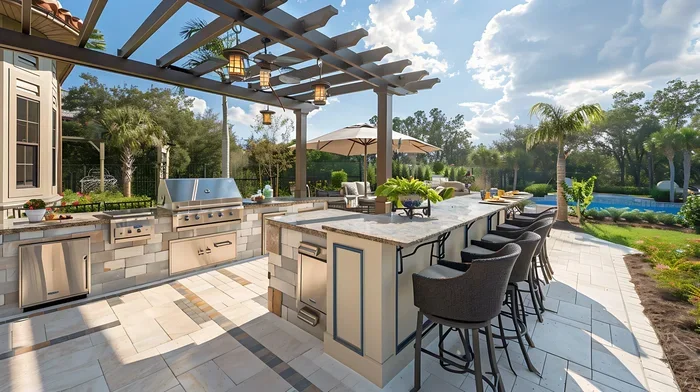
An outdoor kitchen island is the centerpiece of any backyard renovation. It gives you extra counter space, storage, and a stylish spot for cooking and entertaining. In this guide, you’ll discover the best outdoor kitchen island ideas, materials, layouts, and cost tips to help you design the perfect setup. Whether you want a simple grill station or a full outdoor kitchen island with sink and bar top, we’ve got you covered.
Backyards have changed a lot over the years. What used to be just a patch of grass is now a full outdoor living area. And at the heart of that transformation? The outdoor kitchen island. If you love cooking and hosting, you know that a great outdoor setup makes all the difference. It brings the kitchen outside and turns ordinary meals into memorable experiences.
But where do you start? There are so many outdoor kitchen island ideas out there. Different materials, sizes, layouts, and features can make choosing overwhelming. That’s exactly why we put together this guide. We’ll walk you through everything you need to know. From design inspiration to practical tips, you’ll find all the information you need right here.
Whether you’re working with a small patio or a large backyard, there’s an outdoor kitchen island that fits. Let’s dive in and explore what’s possible.
Key Takeaways
- An outdoor kitchen island boosts both function and curb appeal. It turns your backyard into a true living space for cooking and hosting.
- Material choice matters a lot. Granite, concrete, and stainless steel each offer different durability, style, and budget benefits.
- Layout is key to a great outdoor kitchen island design. Consider your space, cooking flow, and entertaining needs before planning.
- Adding features like a sink, grill, and bar top makes the island more versatile. These extras turn a simple island into a full outdoor cooking station.
- Budget planning helps you avoid overspending. Know your priorities and choose materials and features that match your lifestyle.
- Proper planning prevents common mistakes. Measure your space, check local codes, and plan for utilities before building.
📑 Table of Contents
- Why an Outdoor Kitchen Island Is a Game-Changer
- Popular Outdoor Kitchen Island Ideas
- Choosing the Right Materials for Your Island
- Outdoor Kitchen Island Layouts That Work
- Adding Features to Your Outdoor Kitchen Island
- Outdoor Kitchen Island Cost and Budget Tips
- Common Mistakes to Avoid
- Expert Insights on Designing the Perfect Outdoor Kitchen Island
- Key Takeaways
- Conclusion
Why an Outdoor Kitchen Island Is a Game-Changer
An outdoor kitchen island does more than just look good. It changes the way you use your backyard. It creates a natural gathering spot for family and friends. When you have a dedicated cooking and prep area outside, meals become more fun and relaxed.
It Expands Your Cooking Space
Indoor kitchens can feel cramped during big gatherings. An outdoor kitchen island gives you extra room to prep, cook, and serve. You can grill, chop, mix, and plate all in one spot. This means you spend less time inside and more time enjoying the fresh air.
It Boosts Your Home’s Value
Homebuyers love outdoor living spaces. A well-designed outdoor kitchen island can increase your property value. It shows that your backyard is more than just a yard. It’s an extension of your home.
It Makes Entertaining Easier
When you cook outside, the host doesn’t have to miss out on the fun. You can grill burgers while chatting with guests at the same time. An outdoor kitchen island keeps everything within arm’s reach. Drinks, plates, utensils, and condiments can all be stored right on the island.
Popular Outdoor Kitchen Island Ideas
Now let’s look at some of the best outdoor kitchen island ideas you can bring to life. Each idea offers a different vibe and level of complexity.
The Classic Grill Island
This is the most popular type of outdoor kitchen island. It centers around a built-in grill and has a spacious countertop on one or both sides. It’s perfect for families who love to grill regularly. You can add a side burner, a prep sink, and open shelving for utensils and spices.
The classic grill island keeps things simple and functional. It works great in medium to large backyards. Even a smaller version can make a big impact on your outdoor cooking station.
The Outdoor Kitchen Island Bar
Love hosting evening parties? Then a bar-style outdoor kitchen island might be your best bet. This design includes a raised bar top where guests can sit and enjoy drinks. It often features a mini fridge, wine storage, and a cocktail prep area.
The bar island creates a natural social hub in your backyard. It’s perfect for casual get-togethers and warm summer nights. Plus, it gives your outdoor kitchen design a sleek, modern feel.
The Full Outdoor Kitchen Island with Sink
If you want maximum functionality, go for a full setup. This outdoor kitchen island includes a grill, sink, prep area, and storage all in one unit. It’s like bringing your indoor kitchen outside.
Many homeowners love this option because it handles every cooking task with ease. You can wash veggies, rinse dishes, and cook protein all without going inside. This is the ultimate choice for serious outdoor cooks who take their backyard kitchen ideas seriously.
The Compact or Small-Space Island
Not everyone has a huge backyard. That’s where a compact outdoor kitchen island shines. These smaller islands focus on one or two key features. Maybe it’s just a grill with a small prep surface. Or perhaps it’s a bar-height cart with a sink.
Small islands work beautifully on patios and balconies. They take up less room but still add serious value to your outdoor entertaining area. Don’t underestimate the power of a well-designed small island.
The Dual-Zone Island
For maximum flexibility, consider a dual-zone design. One side of the outdoor kitchen island handles cooking, while the other side serves as a prep or dining area. This layout is ideal for larger backyards where space isn’t a constraint.
You could have a grill on one end and a breakfast bar on the other. This gives you the freedom to cook and eat at the same time. It also makes the island a true focal point of your backyard renovation.
Choosing the Right Materials for Your Island
The material you choose for your outdoor kitchen island affects both its look and its durability. Outdoor materials need to handle sun, rain, heat, and cold. Here are the most popular options to consider.
Granite and Natural Stone
Granite is a top choice for outdoor kitchen countertop surfaces. It’s heat-resistant, scratch-resistant, and looks stunning. Natural stone also gives your island a timeless, elegant feel. The downside is that it can be heavy and more expensive than other options.
Other natural stones like slate and marble also work well. Each one brings its own unique texture and color to your outdoor kitchen island.
Concrete
Concrete is a favorite among homeowners who want a custom look. You can mold it into any shape, size, or color. It’s incredibly durable and handles all weather conditions with ease.
Concrete outdoor kitchen island designs can be modern, rustic, or minimalist. The main downside is that it requires sealing to prevent staining and cracking over time.
Stainless Steel
Stainless steel gives your island a sleek, industrial look. It’s highly resistant to rust and corrosion. This makes it a great choice for coastal areas or humid climates.
Stainless steel is also easy to clean. However, it can show fingerprints and scratches more than other materials. It’s a popular choice for modern and minimalist outdoor kitchen designs.
Tile and Brick
Tile and brick are budget-friendly options that still look great. They come in many colors and patterns. Brick gives a warm, rustic feel, while tile offers more design variety.
Both materials are durable but may need more maintenance over time. Grout lines can collect dirt, so regular cleaning is important for your outdoor kitchen island.
Wood and Butcher Block
Wood adds warmth and a natural feel to any outdoor kitchen island. Butcher block countertops are especially popular for prep areas. They’re gentle on knives and easy on the eyes.
The catch with wood is that it requires regular maintenance. It needs to be sealed and oiled to resist moisture and sun damage. But if you’re willing to put in the care, wood creates a beautiful and inviting island.
| Material | Durability | Style | Cost | Maintenance |
|---|---|---|---|---|
| Granite | Very High | Elegant, Classic | High | Low |
| Concrete | Very High | Custom, Modern | Medium-High | Medium |
| Stainless Steel | High | Industrial, Sleek | Medium-High | Low |
| Tile and Brick | Medium-High | Rustic, Versatile | Low-Medium | Medium |
| Wood/Butcher Block | Medium | Warm, Natural | Low-Medium | High |
Outdoor Kitchen Island Layouts That Work
The layout of your outdoor kitchen island should match how you cook and entertain. A good layout improves your workflow and makes the space feel natural. Here are some proven layout ideas.
The L-Shaped Layout
An L-shaped outdoor kitchen island fits snugly into corners. It provides plenty of counter space without taking over your entire backyard. This layout works well for small to medium-sized yards.
One leg of the L can hold the grill, while the other serves as a prep or serving area. It creates a natural flow and keeps everything organized.
The U-Shaped Layout
The U-shape wraps around three sides of your cooking area. It offers maximum counter space and storage. This layout is ideal for larger backyards where you want a full outdoor kitchen setup.
With a U-shape, you can include a grill, sink, refrigerator, and ample prep space. It turns your backyard into a true outdoor kitchen.
The Linear or Single-Wall Layout
If you have limited space, a linear layout works best. This is a single row of outdoor kitchen island that runs along one wall or fence. It keeps things simple and efficient.
Even in a straight line, you can fit a grill, sink, and some storage. This layout is perfect for narrow patios or balconies.
The Island with Seating on Both Sides
For entertaining, nothing beats an island with seating on both sides. This layout encourages conversation and makes guests feel welcome. It’s perfect for a party or a family dinner.
You can add bar stools on one side and a casual dining area on the other. This turns your outdoor kitchen island into the heart of your backyard.
Adding Features to Your Outdoor Kitchen Island
The right features can turn a simple island into an extraordinary cooking and entertaining hub. Here are some popular add-ons to consider for your outdoor kitchen island.
Built-In Grill
A built-in grill is the star of most outdoor kitchen island designs. It saves space and looks more polished than a freestanding grill. You can choose gas, charcoal, or even a wood-fired option depending on your cooking style.
Make sure the grill is positioned at a comfortable height. You don’t want to hunch over while flipping burgers. A good grill station makes outdoor cooking feel effortless.
Sink and Water Supply
Adding a sink to your outdoor kitchen island is a game-changer. You can rinse produce, wash dishes, and clean up without going back inside. It also makes the island more useful for everyday tasks.
You’ll need to connect a water line and possibly a drain. This requires some plumbing work, but the convenience is well worth it. Many homeowners say the sink is the most-used feature on their island.
Storage and Shelving
Every outdoor kitchen island needs storage. Drawers, cabinets, and open shelves keep your grilling tools, plates, and ingredients organized. Open shelves are great for displaying decorative items or frequently used utensils.
Closed cabinets protect items from weather and dust. Choose weather-resistant materials and hardware to ensure your storage lasts for years.
Bar Top and Seating
A bar top adds a social element to your outdoor kitchen island. It gives guests a place to sit, drink, and snack while you cook. Bar stools or built-in benches work well with this feature.
Bar tops also provide extra prep space. You can use them for plating food, mixing drinks, or serving appetizers. It’s one of the most versatile features you can add.
Lighting and Electrical Outlets
Good lighting makes your outdoor kitchen island usable after dark. Pendant lights, under-cabinet LEDs, or string lights can create the perfect ambiance. Electrical outlets let you use blenders, radios, or small appliances outside.
Plan your electrical needs before building. Having outlets in the right spots saves you from using extension cords across your backyard entertaining area.
Quick Tips for Choosing Features
- Think about how you cook. If you grill often, invest in a quality built-in grill. If you love hosting, prioritize the bar top and seating.
- Start with essentials, then add extras. A grill and countertop are must-haves. A sink and bar top are nice-to-haves that add value.
- Plan for electricity and plumbing early. It’s much easier to install these during construction than to add them later.
Outdoor Kitchen Island Cost and Budget Tips
The cost of an outdoor kitchen island can vary widely. Your budget depends on the size, materials, features, and whether you build it yourself or hire a professional. Let’s break down what to expect.
What Drives the Cost?
Several factors influence the price of your outdoor kitchen island. Material choice is a big one. Granite and concrete cost more than wood or tile. The size of the island also matters. Larger islands require more materials and labor.
Features like a sink, grill, and electrical hookups add to the cost. Hiring a professional builder will also increase your budget. But remember, a well-built island lasts for many years and adds value to your home.
Budget-Friendly Ideas
You don’t have to break the bank to get a great outdoor kitchen island. Here are some ways to keep costs down:
- Use affordable materials. Concrete pavers, brick, and treated wood are budget-friendly options.
- Build it yourself. If you’re handy, a DIY approach can save thousands of dollars.
- Start small. A simple grill island with a small countertop can grow over time. You can always add features later.
- Repurpose materials. Reclaimed wood or secondhand countertops can give your island character without the high price tag.
When to Invest More
Some features are worth the extra investment. A high-quality grill, a durable countertop, and proper plumbing will pay off in the long run. Think about how often you’ll use the island and what features matter most to you.
A well-planned outdoor kitchen island is one of the best investments you can make for your home. It enhances your lifestyle and boosts your property value.
Common Mistakes to Avoid
Building an outdoor kitchen island is exciting, but mistakes can be costly. Here are some common pitfalls to watch out for.
Skipping the Planning Phase
Many homeowners jump into building without a clear plan. This leads to wasted materials, poor layouts, and frustration. Take time to sketch your design and think about how you’ll use the space.
Ignoring Local Building Codes
Some areas require permits for outdoor kitchen construction. Gas and electrical work may need to meet specific safety standards. Check with your local building department before you start.
Choosing the Wrong Materials
Not all materials hold up well outdoors. Using indoor materials or untreated wood can lead to quick deterioration. Always choose weather-resistant options for your outdoor kitchen island.
Forgetting About Maintenance
Every material requires some level of care. Wood needs oiling, concrete needs sealing, and grout needs cleaning. Factor maintenance into your decision before choosing materials.
Underestimating Utility Needs
Running water, gas, and electricity to your island requires planning. If you don’t account for these during construction, adding them later is expensive and difficult.
Expert Insights on Designing the Perfect Outdoor Kitchen Island
We spoke with a few outdoor kitchen designers to get their top tips for creating the best outdoor kitchen island. Here’s what they had to say.
“Start with your cooking habits,” says one designer. “If you grill three times a week, make the grill the focal point. If you love hosting, prioritize seating and bar space. Your island should match your lifestyle.”
“Don’t forget about shade,” adds another expert. “An outdoor kitchen island is only enjoyable if you can use it comfortably. Consider adding a pergola, umbrella, or shade sail above your island.”
“Think about the flow,” advises a third professional. “Your outdoor kitchen island should connect naturally to your indoor kitchen and dining area. A smooth transition between indoor and outdoor spaces makes your whole home feel bigger.”
These insights highlight the importance of designing with purpose. A great outdoor kitchen island isn’t just about looks. It’s about creating a space that works for you and your family.
Key Takeaways
- An outdoor kitchen island transforms your backyard into a functional living space. It gives you room to cook, serve, and entertain with ease.
- Choose materials based on your climate, budget, and style preferences. Granite, concrete, and stainless steel each offer unique benefits.
- Plan your layout around how you cook and host. L-shaped, U-shaped, and linear layouts each serve different needs.
- Adding features like a sink, bar top, and lighting boosts functionality. These extras make your island more versatile and enjoyable.
- Set a realistic budget and prioritize the features you’ll use most. A well-planned island delivers long-term value.
- Avoid common mistakes by planning thoroughly and choosing weather-resistant materials. Proper preparation saves time and money.
Conclusion
An outdoor kitchen island is one of the best investments you can make for your home. It brings the kitchen outside and creates a space for cooking, dining, and gathering. Whether you prefer a simple grill island or a full outdoor setup with a bar and sink, the ideas in this guide can help you get started.
Take your time planning. Choose materials that fit your style and budget. Add features that match how you live and cook. With the right design, your outdoor kitchen island will become the favorite spot in your backyard for years to come.
So grab a notebook, start sketching your ideas, and make your backyard kitchen ideas a reality. Your dream outdoor cooking space is closer than you think.
Frequently Asked Questions
What is the average cost of an outdoor kitchen island?
The cost of an outdoor kitchen island ranges from about $1,000 for a simple DIY build to $15,000 or more for a fully loaded professional installation. Your budget depends on materials, size, and features like sinks or grills.
What is the best material for an outdoor kitchen island?
Granite and concrete are among the most durable options for outdoor kitchen island surfaces. Stainless steel works well for modern looks, while wood adds warmth. Choose based on your climate, style, and maintenance preferences.
Can I build an outdoor kitchen island myself?
Yes, many homeowners build a simple outdoor kitchen island as a DIY project. Basic designs with a grill and countertop are very doable. However, if you need plumbing or electrical work, hiring a professional is recommended.
How big should an outdoor kitchen island be?
A standard outdoor kitchen island is about 6 to 8 feet long and 2.5 to 4 feet deep. This size provides enough counter space for cooking and serving without overwhelming a typical backyard. Always measure your available space before designing.
Do I need a permit to build an outdoor kitchen island?
Permit requirements vary by location. Many areas require a permit for permanent outdoor structures, especially if gas or electrical lines are involved. Check with your local building department before starting your backyard renovation.
What features make an outdoor kitchen island more useful?
A built-in grill, a sink, storage cabinets, and a bar top are the most popular features for an outdoor kitchen island. Adding lighting and electrical outlets also improves functionality. Focus on features that match how you cook and entertain.

