A BBQ kitchen island can completely change how you cook and entertain outdoors. It gives you extra counter space, storage, and a stunning centerpiece for your backyard. Whether you want a portable cart or a permanent built-in setup, there is an island idea that fits your space and budget. In this guide, we share practical tips, design inspiration, and expert advice to help you plan the perfect outdoor kitchen island. Read on to turn your backyard grilling dreams into reality.
There is something magical about cooking outdoors. The smell of charcoal, the sound of sizzling meat, and the joy of gathering friends and family around a grill — it is pure happiness. But if you have ever tried to cook on a small patio with no workspace, you know the struggle. That is where a BBQ kitchen island comes in. It is more than just a table with wheels. A well-designed island becomes the heart of your outdoor kitchen, giving you room to prep, cook, and serve all in one spot.
In this guide, we will walk you through everything you need to know about BBQ kitchen island ideas. From choosing the right materials to planning your layout and adding smart features, we have you covered. Whether you are a weekend griller or a dedicated pitmaster, you will find plenty of inspiration here. Let us dive in and explore how a kitchen island can upgrade your backyard cooking game.
Key Takeaways
- A BBQ kitchen island boosts your outdoor cooking experience by adding prep space, storage, and a social hub for gatherings.
- Material choice matters a lot — granite, concrete, butcher block, and stainless steel each offer different benefits for durability and style.
- Planning your layout early saves time and money — consider traffic flow, grill placement, and access to utilities before building.
- Smart features like built-in coolers, LED lighting, and spice racks make your island far more functional and enjoyable to use.
- Avoid common mistakes such as ignoring ventilation, choosing the wrong size, or skipping permits when needed.
- Portable and built-in options both have strong perks — your choice depends on budget, space, and how often you grill.
📑 Table of Contents
- Why a BBQ Kitchen Island Is a Game-Changer for Your Backyard
- Popular BBQ Kitchen Island Styles and Designs
- Best Materials for Your BBQ Kitchen Island
- How to Plan the Perfect BBQ Kitchen Island Layout
- Adding Smart Features to Your BBQ Kitchen Island
- Common Mistakes to Avoid When Building a BBQ Kitchen Island
- Expert Tips for Designing the Ultimate BBQ Kitchen Island
- Conclusion
Why a BBQ Kitchen Island Is a Game-Changer for Your Backyard
A BBQ kitchen island does so much more than hold your grill. It creates a dedicated outdoor cooking zone that makes the whole experience better. Think about it — when you cook inside, you have counters nearby, drawers for utensils, and shelves for spices. Why should your backyard be any different?
Here are some of the top reasons a BBQ kitchen island is worth every penny:
- Extra prep space — You can chop vegetables, marinate meats, and plate food all in one place without juggling cutting boards on your dining table.
- Built-in storage — Drawers, shelves, and cabinets keep your grilling tools, plates, and sauces organized and within arm’s reach.
- Social hub — A kitchen island invites people to gather around while you cook. Guests can chat, snack, and even help with prep.
- Increased property value — A well-built outdoor kitchen island adds curb appeal and can boost your home’s resale value.
- Weather protection — Many island designs include a roof or pergola, so you can keep cooking even when it drizzles.
The beauty of a BBQ kitchen island is that it works for every type of outdoor space. You have a tiny balcony? There are compact cart options. You have a large backyard? You can go big with a full-featured island that includes a sink, a griddle, and even a pizza oven. The possibilities are truly endless.
How a Kitchen Island Changes Your Outdoor Cooking Flow
When you cook without an island, you bounce between the grill, the house, and the table. This breaks your flow and wastes time. A BBQ kitchen island keeps everything in one zone. You step up, chop, season, grill, plate, and serve — all without walking more than a few feet. This smooth workflow makes cooking faster and far more enjoyable.
For outdoor entertaining, the island becomes the main stage. You can set up a drinks station on one side and a food prep area on the other. Guests naturally gravitate toward the island, which creates a warm and social atmosphere. It is the difference between a basic backyard cookout and a true outdoor dining experience.
Popular BBQ Kitchen Island Styles and Designs
Not all BBQ kitchen islands look the same. The right style depends on your taste, your outdoor space, and how you like to grill. Let us look at some of the most popular designs that homeowners love.
Built-In Island with Counter Seating
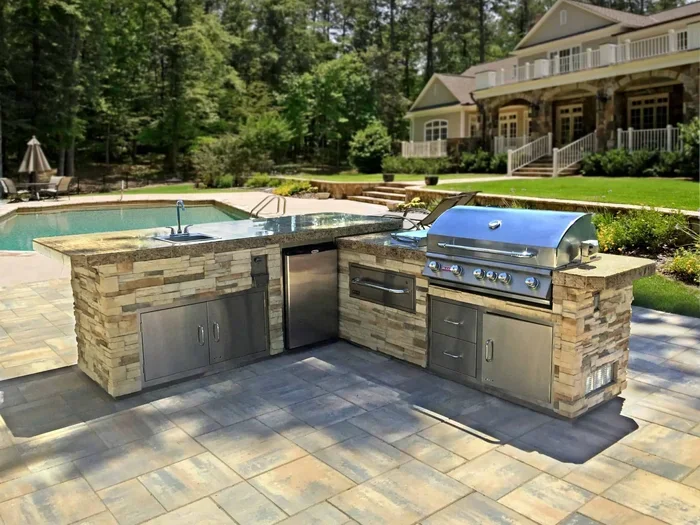
This is the most popular choice for homeowners who want a permanent outdoor kitchen island. A built-in island is anchored to a concrete slab or deck and often includes a bar top on one side. You can seat two to four people and enjoy watching the cook at work.
These islands usually feature a built-in grill, a side burner, a sink, and plenty of counter space. They look stunning with stone or brick facades and can be designed to match your home’s architecture. If you have the space and the budget, a built-in island is hard to beat.
Portable Kitchen Cart
Not ready for a permanent setup? A portable BBQ kitchen cart is a fantastic option. These carts are lightweight, easy to move, and come in many sizes. You can wheel it out for a weekend gathering and store it in the garage the rest of the time.
Most portable carts include a grill surface, a small cutting board, and a few shelves. They are perfect for small patios, apartment balconies, or renters who cannot make permanent changes. Look for carts with locking wheels so they stay put while you cook.
Freestanding Island with a Smoker
For the serious BBQ pitmaster, a freestanding island built around a smoker is a dream come true. These islands are designed to handle low-and-slow cooking for hours. They often include a firebox, a water pan, and a large cooking chamber, all with a work surface wrapped around the smoker.
These islands are bulkier and heavier, so they are not as easy to move. But if smoking meat is your passion, the dedicated workspace and storage for wood chips, rubs, and tools make it well worth the investment.
Minimalist Island for Small Spaces
Do not have a huge backyard? You can still enjoy a BBQ kitchen island. Compact minimalist islands take up very little room but still offer a grill surface, a small prep area, and a shelf or two. They fit perfectly in tight patios, courtyards, or even on a rooftop deck.
Choose a design with a clean look and neutral colors so it blends into a small space without feeling cluttered. A small outdoor kitchen island can still deliver big flavor.
Best Materials for Your BBQ Kitchen Island
Choosing the right material is one of the most important decisions you will make. The material affects durability, appearance, maintenance, and cost. Here is a closer look at the most popular options for BBQ kitchen island construction.
Granite and Natural Stone
Granite is a top choice for outdoor kitchen islands because it is incredibly durable and heat-resistant. It can handle hot pots, grill pans, and direct sunlight without fading or cracking. Granite countertops also add a luxurious, elegant look that boosts your property’s appeal.
The downside is cost. Granite kitchen island countertops can be expensive, especially for custom cuts. You will also need to seal granite periodically to prevent staining. But if you want a premium look that lasts for decades, granite is hard to beat.
Concrete
Concrete BBQ kitchen islands are incredibly strong and versatile. You can mold concrete into almost any shape, size, or style. It is also very affordable compared to natural stone. Concrete islands can be stained, textured, or stamped to mimic the look of marble, brick, or even wood.
Concrete holds up well against weather and UV rays. It does need sealing to prevent cracks and water absorption over time. If you enjoy a modern, industrial look, a concrete outdoor island is a great fit.
Butcher Block and Wood
For a warm, rustic feel, nothing beats butcher block or hardwood. Wood adds natural beauty and creates a cozy atmosphere in any backyard. It is also relatively easy to work with if you want to build a DIY BBQ kitchen island.
Wood does require more maintenance than stone or concrete. You will need to oil it regularly to protect against moisture and heat damage. Use a hardwood like teak or cedar, which naturally resist weather and insects. Always keep a wooden island covered when not in use to extend its life.
Stainless Steel
If you want a sleek, modern look, stainless steel is the way to go. It is used in commercial kitchens for good reason — it is hygienic, heat-resistant, and incredibly easy to clean. A stainless steel kitchen island looks sharp and professional.
Stainless steel can show fingerprints and scratches, though. It also conducts heat, so you will want to add a protective mat or cutting board for prep work. It is a premium choice that suits contemporary outdoor kitchen designs perfectly.
| Material | Durability | Heat Resistance | Maintenance | Cost |
|---|---|---|---|---|
| Granite | Excellent | Excellent | Low to Medium | High |
| Concrete | Excellent | Excellent | Low | Medium |
| Butcher Block | Good | Low | High | Low to Medium |
| Stainless Steel | Excellent | Excellent | Low | High |
How to Plan the Perfect BBQ Kitchen Island Layout
A great BBQ kitchen island starts with a solid plan. Jumping into construction without a layout in mind is a recipe for frustration. Here is how to plan yours the right way.
Measure Your Outdoor Space
Start by measuring the area where you want to place the island. Leave enough room for people to walk around it comfortably — at least 36 inches on all sides. If you plan to add seating, you will need even more space. A cramped island is no fun to use.
Decide on the Grill Placement
The grill should be the centerpiece of your BBQ kitchen island. Place it in a spot where smoke blows away from guests and seating areas. Consider wind direction and how close the grill is to your home, fences, and trees. Safety always comes first with any outdoor cooking setup.
Plan the Work Triangle
Professional kitchens use a “work triangle” concept — the distance between the sink, the grill, and the prep area. Apply this same idea to your kitchen island. Keep these three zones close together so you can move smoothly between them without wasting steps.
Think About Utilities
Do you want a sink on your island? Will you need a gas line for the grill or a side burner? Plan for these utilities early. Running gas or water lines during construction is much easier than adding them later. Talk to a licensed professional if you are unsure about any utility connections.
Choose Your Island Shape
Island shapes range from simple rectangles to L-shaped or even curved designs. Rectangular islands work well for narrow spaces. L-shaped islands give you more counter area and create a natural corner for seating. Curved edges add a unique visual element and make the island feel more inviting.
Pick a shape that fits your space and supports how you like to cook. If you do a lot of prep work, a longer island with more flat surface is ideal. If you mostly just grill and serve, a compact square or round island may be all you need.
Adding Smart Features to Your BBQ Kitchen Island
Once you have the basics down, you can take your BBQ kitchen island to the next level with smart features. These extras make cooking easier, entertaining better, and your island more enjoyable to use every single time.
Built-In Cooler and Ice Bin
Imagine reaching over your island and grabbing a cold drink without ever going inside. A built-in cooler or ice bin is a game-changer for outdoor entertaining. You can install a small refrigerator compartment right into the island or add a pull-out ice bin. It keeps drinks cold and frees up space inside your house.
LED Lighting Under the Counter
Cooking after sunset is one of the best parts of summer. LED strip lights under the counters or inside shelves make your outdoor kitchen island glow beautifully. They also provide practical task lighting so you can see what you are chopping, grilling, and plating. Choose waterproof LEDs rated for outdoor use.
Spice Rack and Utensil Drawers
Keep your most-used items right at hand. A spice rack mounted on the side of the island means your rubs, sauces, and seasonings are always within reach. Deep drawers for tongs, spatulas, and brushes keep tools organized and off the ground. These small details make a big difference in your cooking experience.
Sink and Prep Sink
Adding a sink to your BBQ kitchen island is incredibly convenient. You can wash vegetables, rinse plates, and clean up without walking back and forth to the kitchen. A small prep sink near the grill area is a nice bonus for quick cleanup while cooking. Just make sure you have a water line and drainage plan in place.
Griddle or Flat Top Surface
Many BBQ kitchen island designs include a flat-top griddle alongside the grill. A griddle lets you cook breakfast foods, pancakes, eggs, and bacon right on the island. It also works great for searing burgers, sautéing veggies, and warming tortillas. If you love variety in your outdoor cooking, a griddle is a must-have.
Common Mistakes to Avoid When Building a BBQ Kitchen Island
Building a BBQ kitchen island is exciting, but it is easy to make mistakes along the way. Here are the most common ones and how to avoid them.
Skipping the Permit
Depending on where you live, you may need a building permit for a permanent outdoor kitchen island. Skip this step and you could face fines or be forced to tear it down. Check with your local building department before you start any construction. It is always better to ask first.
Choosing the Wrong Size
Too small and you will run out of workspace. Too big and it overwhelms your yard. Measure carefully and plan for how you will actually use the island. Think about the number of people you cook for, the types of meals you prepare, and the amount of storage you need. A well-sized island feels spacious without dominating the yard.
Ignoring Ventilation
Smoke and grease need somewhere to go. If your outdoor kitchen island does not have proper ventilation, you and your guests will end up coughing and smelling like smoke for hours. Consider adding a range hood, a pergola with open sides, or positioning the island in a spot with good natural airflow.
Using Low-Quality Materials
Your island will be exposed to sun, rain, heat, and grease. Cheap materials will warp, stain, and deteriorate fast. Invest in weather-resistant, high-quality materials that can handle the elements. It costs more upfront but saves you money and headaches in the long run.
Forgetting About Maintenance
Every material needs some level of care. Stone needs sealing, wood needs oiling, and stainless steel needs regular cleaning. Before you choose a material, be honest about how much maintenance you are willing to do. Pick something that fits your lifestyle so your island stays beautiful for years.
Not Planning for Electrical Outlets
You will likely want to use a blender, a radio, or electric tools at some point. Having an outdoor-rated electrical outlet on or near your BBQ kitchen island is incredibly convenient. Plan for this during construction so you do not need to run extension cords across your yard.
Expert Tips for Designing the Ultimate BBQ Kitchen Island
Want your outdoor kitchen island to really stand out? Here are some expert tips that make a huge difference.
- Add a fire pit or chiminea nearby to create a cozy gathering spot after the cooking is done.
- Use matching materials between your island and any nearby pergola or patio cover for a cohesive look.
- Install a drip tray under the grill to catch grease and make cleanup a breeze.
- Include a trash and recycling bin built into the island to keep your outdoor space clean.
- Add a hanging rack for pots, pans, and utensils to save drawer space and add a rustic charm.
- Plant herbs in pots near the island so you can grab fresh basil, cilantro, or rosemary right while you cook.
- Use outdoor-rated furniture for any seating to ensure it holds up against the elements.
These small touches turn a basic BBQ kitchen island into a truly amazing outdoor kitchen that your family and friends will love. The goal is to create a space that feels complete — not just a grill with a table next to it, but a real outdoor room for cooking, dining, and making memories.
Conclusion
A BBQ kitchen island is one of the best investments you can make for your home and your lifestyle. It gives you more space to cook, more room to entertain, and more reason to spend time outdoors. From choosing the right materials to planning your layout and adding smart features, every decision you make brings you closer to the outdoor kitchen of your dreams.
Whether you go for a full built-in island with a smoker and a sink or a simple portable cart for weekend grilling, the key is to design it around how you actually cook and live. Use the tips and ideas in this guide to create a BBQ kitchen island that is functional, beautiful, and built to last. Your backyard is waiting — it is time to start building.
Start planning your BBQ kitchen island today, and soon you will be grilling, entertaining, and enjoying your outdoor space like never before. The best outdoor meals happen when the kitchen is right outside your door, and a great island makes that possible.
Frequently Asked Questions
What is the average cost of building a BBQ kitchen island?
The cost of a BBQ kitchen island can range from a few hundred dollars for a simple portable cart to several thousand dollars for a custom built-in island. The price depends on materials, size, features like sinks or burners, and whether you hire a professional or build it yourself. On average, most homeowners spend between $1,000 and $5,000 for a quality outdoor kitchen island.
Can I build a BBQ kitchen island myself?
Absolutely. Many homeowners build their own BBQ kitchen island as a DIY project, especially if they choose a simple cart design or use pre-made components. However, if you plan to add gas lines, electrical outlets, or a permanent concrete base, it is wise to hire licensed professionals for those parts. Always check local building codes before starting any construction.
What is the best material for a BBQ kitchen island countertop?
Granite and concrete are widely considered the best materials for outdoor kitchen island countertops because they are heat-resistant, durable, and weather-proof. Butcher block and stainless steel are also popular choices depending on your style preferences. The right material for you depends on your budget, aesthetic, and how much maintenance you are willing to do.
How big should a BBQ kitchen island be?
A good rule of thumb is to allow at least 36 inches of clearance on all sides for comfortable movement. The island itself should be long enough to include your grill, a prep area, and some counter space for serving. For most families, an island that is 6 to 8 feet long and 3 to 4 feet deep works well. Adjust the size based on your available space and cooking needs.
Do I need permits for a BBQ kitchen island?
This depends on your local building codes and whether the island is permanent or portable. Most jurisdictions require permits for permanent structures that include gas or electrical connections. Portable kitchen carts usually do not need permits. Always contact your local building department before starting construction to avoid any legal issues or costly mistakes.
Can I add a sink to my BBQ kitchen island?
Yes, adding a sink to your BBQ kitchen island is a great idea and very practical. You will need to connect a water supply and a drainage line, which is easiest to do during the initial construction phase. A prep sink near the grill area is especially convenient for washing hands, rinsing vegetables, and cleaning dishes while you cook outdoors.
=== META TITLE ===
BBQ Kitchen Island Ideas for an Amazing Outdoor Kitchen
=== URL SLUG ===
bbq-kitchen-island-ideas
=== SEO TITLE ===
BBQ Kitchen Island Ideas for an Amazing Outdoor Kitchen