
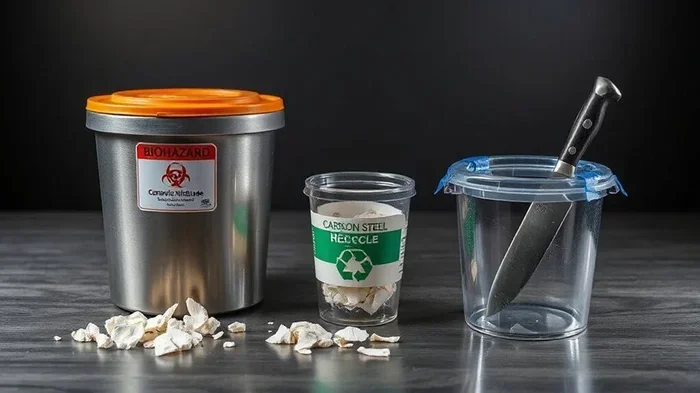
Knowing how to throw away kitchen knives properly keeps your home safe and protects waste workers from injuries. Whether you have dull blades or broken knife sets, this guide covers every method from wrapping techniques to recycling options. You will learn the safest, most responsible ways to dispose of kitchen knives without harming anyone or the environment.
Every home cook eventually faces the question of what to do with old, dull, or broken knives. Maybe your favorite chef’s knife has lost its edge after years of service. Perhaps you upgraded your knife set and now have extra blades taking up drawer space. Or maybe a knife broke and you are not sure how to get rid of it safely.
How to throw away kitchen knives is not as simple as tossing them in the garbage bin. Kitchen knives are sharp, potentially dangerous objects that require careful handling during disposal. Improper disposal can injure waste workers, damage garbage trucks, or even harm your family members. This guide walks you through every safe and responsible method for getting rid of kitchen knives.
We will cover preparation steps, disposal options, recycling paths, and common mistakes to avoid. By the end of this article, you will feel confident about disposing of your kitchen knives the right way. Let us dive in and make your kitchen safer, one knife at a time.
Key Takeaways
- Always wrap knives securely: Use bubble wrap, newspaper, or cardboard to prevent injuries during disposal.
- Check local recycling rules: Many areas accept metal knives at scrap metal recycling centers or household waste facilities.
- Donate before you discard: Still-sharp knives can find new homes through donation programs or community groups.
- Never toss loose knives in the trash: This creates serious safety hazards for sanitation workers and anyone handling your bin.
- Consider professional disposal services: Some companies specialize in safe sharp object removal for households and businesses.
- Know your knife type: Different knives (carbon steel, stainless steel, ceramic) require different disposal approaches.
- Label wrapped knives clearly: A simple “Sharp” sticker can prevent painful accidents during waste collection.
📑 Table of Contents
- Why Proper Knife Disposal Matters
- How to Prepare Kitchen Knives for Disposal
- Where and How to Throw Away Kitchen Knives
- Different Knife Types and Their Disposal Needs
- Common Mistakes to Avoid When Disposing of Knives
- Expert Tips for Safe Knife Disposal
- What Happens After You Dispose of Kitchen Knives
- Key Takeaways
Why Proper Knife Disposal Matters
You might wonder why it matters so much how you dispose of kitchen knives. After all, they are just metal objects, right? Wrong. Kitchen knives are among the most dangerous household items when handled carelessly during disposal.
Sanitation workers face serious risks when sharp objects are not properly wrapped or labeled. According to waste management associations, puncture injuries from improperly discarded sharp items are a common workplace hazard. These injuries can lead to infections, missed work, and even long-term health issues.
Beyond worker safety, proper knife disposal also matters for the environment. Many kitchen knives are made from recyclable metals like stainless steel and carbon steel. When you throw them in a regular trash bin without wrapping, they often end up in landfills where they take decades to break down. Recycling your old knives helps reduce metal waste and supports scrap metal recycling efforts.
Finally, think about your own household safety. A loose knife in a trash bag can easily cut through plastic and injure anyone who handles it later. Children, pets, and even adults sorting recycling are all at risk. Taking a few extra minutes to prepare your knives properly makes a huge difference.
The Hidden Dangers of Improper Knife Disposal
Improperly thrown-away knives cause real problems. Garbage bags can tear, sending sharp blades into the open. Waste collection trucks have compactors that can be damaged by loose knives. Recycling sorting facilities rely on workers who manually pull items from conveyor belts. A hidden knife in a recycling bin can cause a serious cut.
Even your own trash day can become dangerous. If a garbage bag breaks open, a loose knife can slice through the bag and land on the street or in your yard. This is a risk you can easily avoid with proper preparation.
How to Prepare Kitchen Knives for Disposal
Before you learn how to throw away kitchen knives, you need to know how to prepare them safely. Preparation is the most important step in the entire process. A well-prepared knife poses no risk to anyone who handles it after it leaves your home.
Step 1: Clean Your Knives Thoroughly
Start by washing every knife you plan to discard. Food residue can attract pests and create unpleasant odors in your trash. Use warm soapy water, dry the blades completely, and make sure no food particles remain. This simple step also shows respect for the people who will handle your waste.
Step 2: Wrap Each Knife Individually
Never place loose knives in a bag or box together. Each knife should be wrapped separately to prevent blades from touching each other or poking through packaging material.
Here are the best wrapping methods for knife disposal:
- Bubble wrap: Wrap the blade and handle completely in several layers of bubble wrap. Secure with tape. This is the gold standard for safe knife wrapping.
- Cardboard and tape: Place the knife flat on a piece of cardboard, fold the cardboard over the blade, and tape it shut securely. Label the outside with a “Sharp” sticker.
- Newspaper layers: Wrap the knife in 5-7 layers of newspaper, securing tightly with packing tape. This works well for dull knives but is less ideal for very sharp blades.
- Fabric wraps: Old towels or thick cloth can be wrapped around the blade and secured with rubber bands. This method works best for knives going into recycling bins.
Step 3: Label Everything Clearly
Always add a visible label to wrapped knives. Write “Sharp” or “Caution: Sharp Object” on the outside of the wrapping. This small step can prevent painful accidents and alerts anyone handling the package to exercise care.
Step 4: Place in a Rigid Container
For extra safety, place wrapped knives inside a hard plastic container or a dedicated knife block before putting them in your trash or recycling bin. A rigid container prevents accidental punctures and keeps everything secure during transport.
Where and How to Throw Away Kitchen Knives
Once your knives are properly prepared, you need to choose the right disposal method. Several options exist depending on your location, the condition of your knives, and your local waste management rules.
Option 1: Household Trash Disposal
Most areas allow you to place wrapped knives in your regular household trash. However, there are important rules to follow. The knife must be securely wrapped in multiple layers and placed in a sturdy container. Never place unwrapped knives directly in your garbage bin.
Check with your local waste management authority for specific guidelines. Some municipalities have special rules about sharp object disposal. They may require you to place wrapped knives in a designated “sharp waste” container or schedule a special pickup.
Safe knife disposal through household trash works best when you follow these steps:
- Wrap each knife individually in bubble wrap or thick cardboard.
- Secure with packing tape and label as “Sharp.”
- Place wrapped knives in a hard-sided container.
- Put the container in your regular trash bin on collection day.
Option 2: Scrap Metal Recycling
Most kitchen knives are made from metal and can be recycled. Scrap metal recycling is an excellent eco-friendly option that keeps usable materials out of landfills.
Here is how to recycle your old knives:
- Find a local scrap yard: Search online for “scrap metal recycling near me.” Most scrap yards accept kitchen knives and other metal household items.
- Visit a household waste facility: Many cities operate household waste collection centers that accept metal items including knives. These facilities often have designated bins for sharp objects.
- Check with your recycling program: Some curbside recycling programs accept metal cutlery. Call your local provider to ask about their policies.
Remember to follow the wrapping and labeling steps even when taking knives to a recycling center. Staff members at these facilities handle many items and appreciate clearly marked sharp objects.
Option 3: Donation and Repurposing
Before you decide to throw away kitchen knives, consider whether they still have life left in them. Even dull knives can be useful for certain tasks, and someone else might appreciate them.
Here are great places to donate kitchen knives:
- Local shelters and food banks: Organizations that prepare meals often need quality kitchen knives.
- Community kitchens: Many communities have shared cooking spaces that welcome donated kitchen equipment.
- Online marketplaces: Platforms like Freecycle, Buy Nothing groups, or local Facebook community groups are perfect for giving away still-usable knives.
- Second-hand stores: Some thrift stores accept kitchen knives in good condition.
If your knives are too dull for cooking but made of quality steel, consider taking them to a knife sharpening professional. A skilled sharpener can restore many knives to working condition, saving you money and reducing waste.
Option 4: Professional Disposal Services
For large quantities of knives or especially valuable antique blades, professional disposal services offer a convenient solution. These services specialize in handling sharp objects safely and responsibly.
Search for “knife disposal services” or “sharp object removal” in your area. Many junk removal companies also handle kitchen knives as part of their services. They know exactly how to package and transport sharp items safely.
This option is particularly useful if you are clearing out an entire kitchen renovation or downsizing a restaurant kitchen. The convenience often justifies the cost, especially when you consider the safety benefits.
Different Knife Types and Their Disposal Needs
Not all kitchen knives are created equal, and different materials require different disposal approaches. Understanding your knife type helps you choose the safest and most effective disposal method.
| Knife Type | Material | Best Disposal Method | Recyclable? |
|---|---|---|---|
| Stainless Steel Knives | Metal alloy | Scrap metal recycling or household trash (wrapped) | Yes |
| Carbon Steel Knives | High-carbon metal | Scrap metal recycling | Yes |
| Ceramic Knives | Zirconium oxide | Household trash (well-wrapped) | No |
| Damascus Steel Knives | Layered metal | Scrap metal recycling | Yes |
| Disposable Plastic Knives | Plastic | Household trash | Rarely |
| Vintage/Collector Knives | Various | Specialty dealers or collectors | Depends |
Ceramic Knives Require Special Care
Ceramic knives cannot be recycled through standard metal recycling programs. The material is extremely hard and requires specialized processing. Your best option for ceramic knife disposal is to wrap them thoroughly and place them in your household trash. Some specialty recycling centers may accept ceramic, so it is worth checking locally.
Vintage and Collectible Knives
If you have vintage kitchen knives with historical value, throwing them away should be your last resort. Consider reaching out to knife collectors, antique dealers, or online auction sites. Many people actively seek out vintage Damascus steel knives and other collectible blades. A quick online search might reveal that your old knife is worth more than you think.
Common Mistakes to Avoid When Disposing of Knives
Learning how to throw away kitchen knives also means knowing what not to do. Avoiding common mistakes keeps everyone safe and ensures you follow proper disposal protocols.
Mistake 1: Tossing Loose Knives in the Trash
This is the most dangerous and common mistake. A loose knife in a trash bag can easily cut through the bag and injure anyone who handles it. Waste workers, recycling sorters, and even your family members are all at risk. Always wrap and label knives before placing them in any bin.
Mistake 2: Forgetting to Label Wrapped Knives
Even well-wrapped knives should carry a visible “Sharp” warning. Without a label, someone reaching into a recycling bin or trash bag has no way of knowing a dangerous object is inside. A simple piece of tape with “Sharp” written on it takes seconds but prevents injuries.
Mistake 3: Assuming All Knives Are Recyclable
Not all knives can go into metal recycling. Ceramic knives, plastic knives, and knives with wooden handles that have been glued or painted may not be accepted by standard recycling facilities. Always check with your local recycling center before assuming your knife is recyclable.
Mistake 4: Ignoring Local Regulations
Every city and municipality has different rules about waste disposal of sharp objects. Some areas require special packaging, others mandate specific disposal locations, and some prohibit certain knife types from regular trash. A quick call to your local waste management office can save you time and potential fines.
Mistake 5: Throwing Away Still-Usable Knives
Before you discard any knife, honestly assess its condition. A knife that is simply dull can often be restored through professional sharpening. A knife with a broken handle might only need a new handle. Consider repair, donation, or resale before committing to disposal.
Expert Tips for Safe Knife Disposal
Professional waste handlers and knife experts share several practical tips that make knife disposal safer and more efficient. These insights come from years of experience handling sharp objects in various settings.
Tip 1: Use a knife guard or blade sleeve. If you have the original knife guard or blade sleeve, use it. These protective covers are designed specifically for safe storage and transport of sharp blades.
Tip 2: Double-wrap for extra security. For particularly sharp or valuable knives, wrap them once in bubble wrap and then again in cardboard. This double-layer approach provides maximum protection during handling and transport.
Tip 3: Secure loose handles. If a knife handle is wobbly or the blade is loose, tape the blade to the handle before wrapping. A loose blade inside a wrapped package can shift and poke through the packaging.
Tip 4: Transport knives upright. When carrying wrapped knives to your car or recycling center, keep them upright and secured in a hard container. This prevents them from rolling and causing accidents.
Tip 5: Dispose of knife blocks too. If you are replacing your entire knife set, do not forget about the knife block. Wooden knife blocks can sometimes be donated or repurposed. If the block has worn-out slots and cannot be reused, check if it qualifies for wood recycling in your area.
Tip 6: Consider blade disposal for businesses. Restaurants and commercial kitchens generate large volumes of used knives. Commercial sharp object disposal services can handle bulk knife disposal safely and in compliance with occupational health regulations.
What Happens After You Dispose of Kitchen Knives
Understanding the journey of your disposed knives can motivate you to choose the most responsible disposal method. When knives enter the waste stream, they follow different paths depending on how you discarded them.
Knives placed in regular household trash typically end up at a landfill. Metal knives can take 100 or more years to decompose in a landfill environment. The steel and other alloys do not break down easily, meaning your discarded knife will remain in the ground for generations.
Knives sent to scrap metal recycling facilities undergo a different journey. They are sorted by metal type, shredded, melted down, and reformed into new products. This process uses significantly less energy than mining and processing raw metal. Recycling a single kitchen knife saves enough energy to power a household appliance for several hours.
Donated knives follow yet another path. They are cleaned, sorted, and distributed to people and organizations who need them. A quality kitchen knife donated to a food bank might serve thousands of meals over its remaining lifespan.
No matter which path your knife takes, your choice of disposal method matters. Taking a few extra minutes to prepare and dispose of your knives responsibly creates a ripple effect of positive impact.
Key Takeaways
- Wrap knives securely before disposal: Bubble wrap, cardboard, or thick fabric keeps everyone safe.
- Label all wrapped knives clearly: A “Sharp” sticker prevents accidental injuries.
- Recycle metal knives whenever possible: Scrap metal recycling reduces landfill waste and conserves resources.
- Donate still-usable knives: Someone else can benefit from knives you no longer need.
- Follow local disposal regulations: Rules vary by location, so check with your waste management authority.
- Never dispose of loose knives: This creates dangerous situations for waste workers and your community.
- Consider professional services for bulk disposal: Especially useful for restaurants or large-scale kitchen cleanouts.
Frequently Asked Questions
Can I put kitchen knives in my recycling bin?
It depends on your local recycling program. Many curbside recycling programs do not accept sharp objects. However, you can usually take wrapped knives to a household waste facility or scrap metal recycling center. Always check with your local waste management provider first.
Is it illegal to throw knives in the trash?
In most areas, it is not illegal to dispose of kitchen knives in regular trash, provided they are properly wrapped and labeled. However, some municipalities have specific regulations about sharp object disposal. Contact your local waste authority to confirm the rules in your area.
Can I donate dull kitchen knives?
Yes, many donation centers accept dull kitchen knives. Even knives that are no longer sharp enough for cooking can be useful for certain tasks or can be sharpened by the recipient. Contact local shelters, food banks, or community kitchens to ask about their donation policies.
How do I dispose of ceramic kitchen knives?
Ceramic knives cannot be recycled through standard metal recycling. Wrap them thoroughly in bubble wrap or thick cardboard, label them as “Sharp,” and place them in your household trash. Check if any specialty recycling centers in your area accept ceramic materials.
What is the safest way to throw away a very sharp kitchen knife?
The safest method is to wrap the knife in multiple layers of bubble wrap, secure it with packing tape, place it in a hard plastic container, and label the container clearly with “Sharp.” Then either place it in your regular trash (following local guidelines) or take it to a scrap metal recycling center.
Are there any knives that should never be thrown away?
Vintage, antique, or collectible knives should not be thrown away if they hold value. These knives can be sold to collectors, donated to museums, or passed down to family members. Even worn-out kitchen knives can often be sharpened and reused before resorting to disposal.
=== CONCLUSION ===
Learning how to throw away kitchen knives safely and properly is an essential skill for every home cook. It protects the people who handle your waste, reduces environmental impact, and ensures your old knives find the right path after their useful life ends.
Whether you choose household trash disposal, scrap metal recycling, donation, or professional services, the key is preparation. Wrap each knife securely, label it clearly, and follow your local regulations. These simple steps make a meaningful difference in your community’s safety and environmental health.
Before you discard any knife, take a moment to consider alternatives. Can it be sharpened? Can it be donated? Can it be repurposed? Often the best disposal method is the one that keeps usable items out of landfills and puts them to work for someone else.
Now that you have all the information you need, take action. Gather your old kitchen knives, wrap them safely, and choose the disposal method that works best for your situation. Your future self, your neighbors, and your local waste workers will thank you for taking the responsible approach to knife disposal. A little extra care today creates a safer, cleaner world for everyone.

