The average cost to replace kitchen countertops ranges from $1,500 to $4,500, depending on the material you choose and the size of your kitchen. Laminate is the most budget-friendly option at $20 to $50 per square foot, while premium materials like granite and quartz can run $40 to $100+ per square foot. Labor costs typically add $500 to $2,000 to the total project price.
Kitchen countertops take a lot of daily wear and tear. They handle hot pots, sharp knives, spilled coffee, and every meal prep session you can imagine. Over time, surfaces get scratched, stained, or just look outdated. That is when most homeowners start asking the big question: how much does it cost to replace kitchen countertops?
The answer is not a single number. Your kitchen countertop replacement cost depends on the material you pick, the size of your kitchen, and whether you hire a pro or go the DIY route. This guide walks you through every cost factor so you can plan your budget with confidence. You will learn what drives prices up, which materials offer the best value, and how to avoid surprise expenses along the way.
Whether you are updating a small apartment kitchen or a large family cooking space, understanding countertop installation cost helps you make smart decisions. Let us dive into the numbers and break down everything you need to know before starting your kitchen renovation cost journey.
Key Takeaways
- Material choice is the biggest cost factor: laminate keeps costs low, while natural stone and quartz drive prices up significantly.
- Average total project cost runs $1,500 to $4,500 for most standard kitchens, including materials and labor.
- DIY installation can save you hundreds, but mistakes are expensive and some materials require professional tools.
- Additional costs like sink cutouts, edge profiles, and backsplash work can add $200 to $800 to your bill.
- Getting at least three quotes from local contractors helps you find fair pricing in your area.
- Reusing existing cabinets and fixtures can cut your total kitchen countertop replacement cost by 20-30%.
- Timing your project during off-peak seasons may help you negotiate better labor rates.
📑 Table of Contents
- Why Kitchen Countertop Replacement Costs Vary So Much
- Breakdown of Countertop Material Costs
- Cost Comparison: Materials at a Glance
- Hidden Costs That Add to Your Budget
- DIY vs. Professional Installation: Which Saves More?
- Tips to Save Money on Countertop Replacement
- How to Choose the Right Countertop for Your Budget
- Common Mistakes to Avoid When Budgeting for Countertop Replacement
- Expert Insights on Kitchen Countertop Costs
- Key Takeaways
- Conclusion
Why Kitchen Countertop Replacement Costs Vary So Much
The wide range in countertop replacement cost comes from several factors working together. No two kitchen projects are exactly alike, and that is a good thing. Your choice of countertop materials, kitchen layout, and local labor rates all play a role in the final price tag.
Material Type Drives the Biggest Price Difference
Think of countertop materials like cars. You have budget options, mid-range choices, and luxury models. Each one serves the same basic purpose, but the price gap is huge. A laminate countertop costs far less per square foot than a marble slab. And marble costs less than a custom concrete pour.
Here is a quick look at what drives material costs:
- Raw material scarcity: Natural stone like granite and marble comes from quarries around the world. Shipping adds cost.
- Manufacturing complexity: Engineered quartz is made in controlled factories, which keeps prices more stable than natural stone.
- Durability and lifespan: Premium materials last longer, which justifies the higher upfront slab countertop pricing.
- Aesthetic appeal: Exotic patterns and rare colors in natural stone command premium prices.
Kitchen Size and Layout Matter
A small galley kitchen needs far less material than an open-concept kitchen with an island. Your countertop installation cost scales with square footage. Most contractors charge per square foot for materials, and labor often follows the same pattern.
Consider these layout factors that add to your average countertop replacement cost:
- Straight runs: Simple rectangular counters are the cheapest to install.
- L-shaped and U-shaped layouts: More cuts and seams mean more labor time.
- Kitchen islands: An island adds significant material and labor hours.
- Custom cutouts: Sinks, cooktops, and faucet holes require precision work.
Labor Costs by Region
Where you live matters a lot. A contractor in a major city charges more per hour than one in a rural area. Countertop installation cost for labor typically runs $50 to $100 per hour, but rates vary widely by location. Urban areas with higher costs of living naturally push up the price of your kitchen countertop upgrade.
Here is a rough breakdown of labor costs by region:
- Northeast and West Coast: $75 to $125 per hour
- Midwest and South: $50 to $90 per hour
- Rural areas: $40 to $75 per hour
Breakdown of Countertop Material Costs
The material you choose is the single biggest factor in your how much does it cost to replace kitchen countertops calculation. Let us go through each popular option and look at real numbers. Prices below include both materials and basic installation for a typical 30 to 40 square foot kitchen.
Laminate Countertops: The Budget-Friendly Choice
Laminate countertop cost is the lowest among all options, making it the go-to choice for homeowners watching their budget. Laminate is a synthetic material made from layers of kraft paper bonded with resin. It comes in thousands of colors and patterns, including designs that mimic stone and wood.
Laminate pricing per square foot:
- Basic laminate: $20 to $40
- Mid-range laminate: $40 to $60
- Premium laminate (thicker, more designs): $60 to $80
For a standard kitchen, laminate countertop installation cost runs about $1,000 to $2,500 total. The material is easy to work with, which keeps labor costs down. Laminate also installs relatively quickly compared to stone options.
Pros of laminate: Affordable, wide design selection, easy to clean, and DIY-friendly for simple layouts. Cons: Not heat resistant, prone to water damage at seams, and cannot be refinished once damaged.
Quartz Countertops: The Popular Mid-Range Option
Quartz countertop cost has become the go-to choice for many homeowners looking for a balance between beauty and durability. Quartz is an engineered stone made from natural quartz crystals mixed with resin and pigments. It is non-porous, which means it resists stains and bacteria naturally.
Quartz pricing per square foot:
- Entry-level quartz: $40 to $60
- Mid-range quartz: $60 to $80
- Premium quartz brands: $80 to $100+
A typical quartz kitchen countertop replacement cost falls between $2,500 and $4,500 for an average kitchen. Quartz is one of the most popular choices because it looks luxurious without the marble price tag. It also requires very little maintenance compared to natural stone.
Pros of quartz: Durable, low maintenance, consistent patterns, non-porous surface, and wide color range. Cons: Higher upfront cost than laminate, limited heat tolerance due to resin content, and seams can be visible.
Granite Countertops: The Natural Stone Classic
Granite countertop price varies widely depending on the slab you choose. Granite is a natural igneous rock pulled from quarries worldwide. Each slab is unique, with its own pattern, color, and veining. This natural variation is part of what makes granite so appealing.
Granite pricing per square foot:
- Entry-level granite: $40 to $60
- Mid-range granite: $60 to $80
- Premium exotic granite: $80 to $120+
Expect a granite countertop installation cost of $2,500 to $5,000 for a standard kitchen. Granite is incredibly durable and heat resistant, which makes it ideal for cooking-heavy kitchens. It adds real value to your home as well.
Pros of granite: Extremely durable, heat resistant, unique natural patterns, and adds home value. Cons: Requires sealing, higher cost than laminate and quartz, heavy weight, and seams are visible.
Marble Countertops: The Luxury Option
Marble countertop price sits at the higher end of the spectrum. Marble is a metamorphic rock known for its elegant veining and timeless beauty. It is the material of choice for high-end kitchens and bakeries because it stays cool, making it ideal for pastry work.
Marble pricing per square foot:
- Entry-level marble: $50 to $75
- Mid-range marble: $75 to $100
- Premium marble (Carrara, Calacatta): $100 to $200+
A marble kitchen countertop replacement cost typically runs $3,500 to $6,000 or more. Marble requires more care than other materials. It is porous and can etch from acidic foods like lemon juice and vinegar. However, many homeowners love the classic look and do not mind the extra maintenance.
Pros of marble: Stunning beauty, stays cool for baking, adds luxury value to home. Cons: Expensive, porous and prone to etching, requires regular sealing, and difficult to repair.
Butcher Block and Wood Countertops
Butcher block countertop cost appeals to homeowners who want a warm, natural look. Wood countertops bring a rustic or farmhouse feel to kitchens. They are also gentle on knives, which is a nice bonus for cooking enthusiasts.
Butcher block pricing per square foot:
- Basic butcher block: $30 to $50
- Premium hardwood: $50 to $80
- Exotic woods and custom builds: $80 to $120+
A wood countertop project typically costs $1,500 to $3,500 installed. Wood needs regular oiling to stay protected. It can stain from water and food if not properly maintained. But many people love the character that wood develops over time.
Pros of butcher block: Warm aesthetic, gentle on knives, repairable with sanding, and adds home warmth. Cons: Requires regular maintenance, vulnerable to water damage, can harbor bacteria if not sealed, and not heat resistant.
Concrete Countertops: The Custom Option
Concrete countertop cost is higher than most people expect. Concrete is a premium custom material that allows for unique designs, integrated sinks, and seamless edges. It is poured on site or in a shop, then cured and installed.
Concrete pricing per square foot:
- Basic concrete: $65 to $100
- Custom concrete with embedded designs: $100 to $150+
A concrete kitchen countertop replacement cost runs $3,000 to $6,000 for most kitchens. Concrete is incredibly durable and fully customizable. You can choose any color, integrate a sink, or create a seamless look with your backsplash.
Pros of concrete: Fully customizable, extremely durable, seamless designs, and unique industrial aesthetic. Cons: Heavy, expensive, requires professional installation, can crack if not properly cured, and needs sealing.
Cost Comparison: Materials at a Glance
Comparing countertop materials by cost helps you understand where your budget fits best. The table below shows average costs for a 35 square foot kitchen with standard installation.
| Material | Cost Per Sq Ft | Total Cost (35 sq ft) | DIY Friendly? |
|---|---|---|---|
| Laminate | $20 – $60 | $1,000 – $2,500 | Yes |
| Butcher Block | $30 – $80 | $1,500 – $3,500 | Moderate |
| Quartz | $40 – $100 | $2,500 – $4,500 | No |
| Granite | $40 – $120 | $2,500 – $5,000 | No |
| Marble | $50 – $200 | $3,500 – $6,000+ | No |
| Concrete | $65 – $150 | $3,000 – $6,000 | No |
These numbers represent a range, and your actual countertop replacement cost may fall above or below these estimates. Always get detailed quotes from at least three contractors before making a final decision.
Hidden Costs That Add to Your Budget
Most homeowners focus on the material and basic installation cost. But several hidden expenses can sneak up on you during a kitchen countertop replacement cost project. Being aware of these helps you avoid budget surprises.
Sink and Cooktop Cutouts
Cutting holes for your sink and cooktop requires precision. If your existing cutout does not match your new countertop, the installer must create a new one. Sink cutout cost typically runs $50 to $150 per cutout. Cooktop cutouts add another $50 to $100. If you are switching from a drop-in sink to an undermount sink, expect an additional $100 to $300 for the new installation method.
Edge Profile Upgrades
The edge profile of your countertop affects both the look and the cost. A simple straight edge is the cheapest option. More complex profiles like ogee, bullnose, or beveled edges require additional cutting and polishing time.
Edge profile cost breakdown:
- Standard straight edge: Included in base price
- Simple beveled edge: +$0 to $5 per linear foot
- Bullnose edge: +$5 to $15 per linear foot
- Ogee or decorative profile: +$10 to $25 per linear foot
For a typical kitchen with 25 to 30 linear feet of counter, fancy edge profiles can add $200 to $750 to your total kitchen countertop replacement cost.
Old Countertop Removal and Disposal
Removing your old countertop is a step many people forget to budget for. Countertop removal cost runs $100 to $300 depending on the material and complexity. Some contractors include removal in their installation quote, while others charge separately. Always ask for a detailed breakdown before signing a contract.
Backsplash Installation
If you are also installing a new backsplash, this adds to your overall kitchen renovation cost. Tile backsplashes are the most affordable option at $5 to $20 per square foot. Natural stone backsplashes that match your countertop can run $30 to $60 per square foot. A typical kitchen backsplash might add $300 to $1,200 to your project.
Plumbing and Electrical Adjustments
Replacing countertops sometimes means moving plumbing lines for the sink or adjusting electrical connections for the cooktop. Plumbing adjustment cost runs $100 to $300, and electrical work adds another $50 to $200. These costs are easy to overlook but can significantly impact your final bill.
DIY vs. Professional Installation: Which Saves More?
The decision between DIY and professional installation is one of the biggest cost choices you will make. Both options have pros and cons that affect your countertop installation cost and final results.
When DIY Makes Sense
Laminate and some butcher block countertops are the only truly DIY-friendly options for most homeowners. Laminate is lightweight, cuts with standard tools, and does not require specialized equipment. If you have basic carpentry skills and a helper, you can save 30 to 50 percent on labor costs with a laminate install.
DIY savings example: A 35 square foot laminate project costs $2,000 with professional installation. Doing it yourself could bring the total down to $1,200 to $1,400. That is real savings.
When You Need a Professional
Stone countertops like granite, marble, and quartz require specialized cutting tools and expertise. These materials are heavy, hard to cut cleanly, and unforgiving of measurement mistakes. A bad DIY stone install can cost you far more in repairs than you saved on labor.
Reasons to hire a pro:
- Professional-grade cutting and polishing equipment
- Experience with seam placement and leveling
- Knowledge of proper sealing and finishing techniques
- Warranty protection on both materials and workmanship
- Plumbing and electrical connections handled correctly
Cost Comparison: DIY vs. Professional
Here is a realistic cost comparison for a quartz countertop in a 35 square foot kitchen:
- Professional installation: $3,500 to $4,500
- DIY (if you rent tools and do the work): $2,200 to $2,800
- Potential savings: $1,000 to $1,700
But remember, DIY also means your time, effort, and risk of costly mistakes. For most homeowners, hiring a professional for stone and quartz installs is the smarter choice. The peace of mind is worth the extra cost.
Tips to Save Money on Countertop Replacement
Replacing your kitchen countertops does not have to break the bank. Smart planning and a few strategic choices can help you manage your kitchen countertop replacement cost without sacrificing quality.
1. Reuse Your Existing Cabinets
If your cabinets are in good condition, keep them. Replacing cabinets can easily add $2,000 to $5,000 to a kitchen project. Focus your budget on the countertops and let the cabinets stay as they are. This single decision can cut your total project cost by 20 to 30 percent.
2. Choose Standard Slab Sizes
Custom-sized slabs cost more because they require more cutting and waste more material. Sticking with standard slab sizes reduces material waste and lowers your slab countertop pricing. Most kitchens work perfectly well with standard 10-foot or 12-foot slabs.
3. Skip the Exotic Patterns
Exotic granite and marble patterns with dramatic veining cost significantly more than standard options. Choosing a simpler, more common pattern can save you 15 to 25 percent on material costs. The beauty of natural stone is that even a standard slab looks stunning.
4. Time Your Project Wisely
Contractors are busiest during spring and summer. Scheduling your kitchen countertop replacement cost project during fall or winter may help you negotiate better labor rates. Many contractors also offer discounts during their slower months to keep their schedules full.
5. Get Multiple Quotes
Always get at least three detailed quotes from different contractors. Compare not just the total price but also what is included. Some quotes include removal and disposal, while others do not. A clear, itemized quote helps you compare apples to apples.
6. Keep the Layout Simple
Complex layouts with many corners, curves, and seams cost more to install. A simple rectangular or L-shaped layout keeps both material waste and labor time low. If you are planning a kitchen remodel anyway, a simpler countertop layout is an easy way to save money.
How to Choose the Right Countertop for Your Budget
Choosing the right countertop materials comes down to balancing your budget, style preferences, and lifestyle needs. There is no single best option for everyone. The right choice depends on how you use your kitchen and what matters most to you.
Match the Material to Your Cooking Style
If you cook frequently and use high heat, granite or quartz are your best bets. Both handle hot pots and pans well. If you bake often, marble stays cool and is a joy to work with. For a low-maintenance household, quartz requires almost no special care.
Consider Your Kitchen’s Style
Your countertop should complement your kitchen’s overall design. Quartz works well in modern and contemporary kitchens. Granite fits both traditional and transitional styles. Butcher block brings warmth to farmhouse and rustic designs. Marble adds elegance to classic and luxury kitchens.
Think About Long-Term Value
Cheaper materials might save money upfront but could need replacement sooner. Laminate countertop cost is low, but laminate lasts 10 to 20 years with proper care. Granite and quartz can last 25 to 50 years or more. When you calculate the cost per year of ownership, premium materials often make more financial sense in the long run.
Common Mistakes to Avoid When Budgeting for Countertop Replacement
Even careful homeowners make mistakes when planning their kitchen countertop replacement cost. Knowing the common pitfalls helps you stay on track and avoid costly surprises.
Mistake 1: Forgetting to Measure Twice
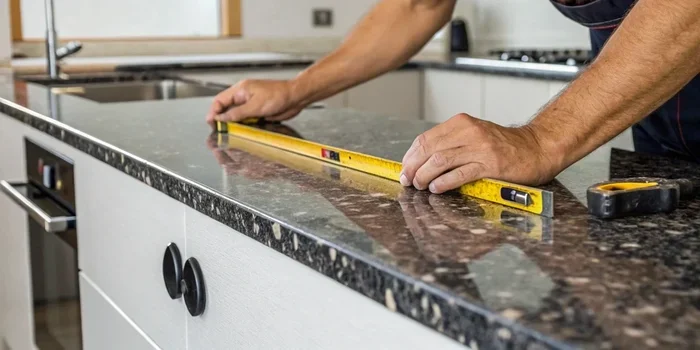
Incorrect measurements lead to wasted material and extra labor. Always double-check your kitchen dimensions before getting quotes. A measurement error of even a few inches can change your material cost significantly.
Mistake 2: Choosing Price Over Quality
The cheapest option is not always the best value. A $20 per square foot laminate that warps in two years costs more than a $50 per square foot option that lasts a decade. Consider durability and lifespan when making your choice.
Mistake 3: Not Budgeting for Extras
Sink cutouts, edge profiles, removal, and backsplash work all add up. Many homeowners budget only for the basic material and installation, then face unexpected costs when these extras come up. Add a 10 to 15 percent buffer to your budget for the unexpected.
Mistake 4: Skipping the Permit Check
Some municipalities require permits for kitchen renovations, especially when plumbing or electrical work is involved. Skipping this step can lead to fines and rework costs. Check with your local building department before starting your project.
Mistake 5: Hiring the Cheapest Bid
An unusually low bid is a red flag. The contractor may cut corners, use subpar materials, or lack proper insurance. Always check references, read reviews, and verify licensing and insurance before hiring anyone for your countertop installation cost project.
Expert Insights on Kitchen Countertop Costs
We spoke with several kitchen renovation professionals to get their take on how much does it cost to replace kitchen countertops in 2024. Here is what the experts had to say.
Mark Thompson, Kitchen Remodeler with 15 years of experience: “The biggest mistake I see is homeowners choosing materials based only on upfront cost. A $2,000 laminate counter that needs replacing in 10 years costs more than a $4,000 quartz counter that lasts 25 years. Always think about long-term value.”
Sarah Chen, Interior Designer specializing in kitchens: “Quartz has become the sweet spot for most of my clients. It looks expensive, requires very little maintenance, and fits most budgets. If you want the look of natural stone without the marble price tag, quartz is the way to go.”
David Rodriguez, General Contractor: “Get three quotes minimum, and make sure each quote breaks down materials, labor, removal, and any extras. The lowest bid is not always the best deal. Look at what is included and the contractor’s reputation.”
Key Takeaways
- Material choice drives cost: Laminate is the most affordable, while marble and concrete are the most expensive options.
- Expect to pay $1,500 to $4,500 for a typical kitchen countertop replacement project.
- Labor costs add $500 to $2,000 depending on your location and the complexity of the job.
- Hidden costs like sink cutouts, edge profiles, and removal can add $300 to $1,000 or more.
- DIY works for laminate and some butcher block, but stone and quartz need professional installation.
- Getting multiple quotes and keeping your layout simple are the best ways to control costs.
- Investing in durability pays off long-term, even if the upfront cost is higher.
Conclusion
Understanding how much does it cost to replace kitchen countertops empowers you to make confident decisions about your kitchen upgrade. The right countertop material balances your budget, style, and daily needs. Whether you choose affordable laminate or luxurious marble, knowing the real costs helps you plan effectively.
Remember that your kitchen countertop replacement cost is an investment in your home’s functionality and beauty. A new countertop transforms the heart of your kitchen. It improves your cooking experience, boosts your home’s value, and gives you a surface you can enjoy for years to come.
Start by measuring your kitchen, choosing your preferred material, and gathering quotes from local contractors. With the right planning and realistic expectations, your countertop replacement project can stay within budget and deliver stunning results. The key is to do your homework, plan for the extras, and trust the process. Your dream kitchen countertop is closer than you think.
Frequently Asked Questions
What is the average cost to replace kitchen countertops?
The average kitchen countertop replacement cost ranges from $1,500 to $4,500 for most standard kitchens. This includes both materials and labor for a typical 30 to 40 square foot kitchen. Your actual cost will depend on the material you choose, your kitchen size, and local labor rates.
Can I save money by installing countertops myself?
DIY installation can save you $500 to $2,000 on labor costs, but it only works well for laminate and some butcher block countertops. Stone materials like granite, quartz, and marble require specialized tools and professional skills. A DIY mistake on stone can end up costing more than hiring a pro from the start.
How long does countertop replacement take?
A typical countertop replacement project takes one to three days from start to finish. The first day usually involves removing the old countertop and preparing the surface. Installation and sealing happen on the second day. Some materials like concrete need additional curing time, which can extend the timeline.
Which countertop material lasts the longest?
Granite and quartz are the most durable options, lasting 25 to 50 years or more with proper care. Marble is beautiful but requires more maintenance and can etch over time. Laminate has the shortest lifespan at 10 to 20 years but is the most affordable option upfront.
Do I need to replace my cabinets when I replace countertops?
No, you do not need to replace cabinets unless they are damaged or you want a different style. Keeping your existing cabinets can save you $2,000 to $5,000 on your total project cost. Just make sure your cabinets are in good structural condition before installing new countertops.
What adds the most to countertop replacement cost?
The material choice is the single biggest cost factor. Premium natural stone like marble and exotic granite drives prices up significantly. Additional costs come from complex edge profiles, sink and cooktop cutouts, backsplash installation, and plumbing or electrical adjustments. A custom kitchen island also adds substantial cost.