
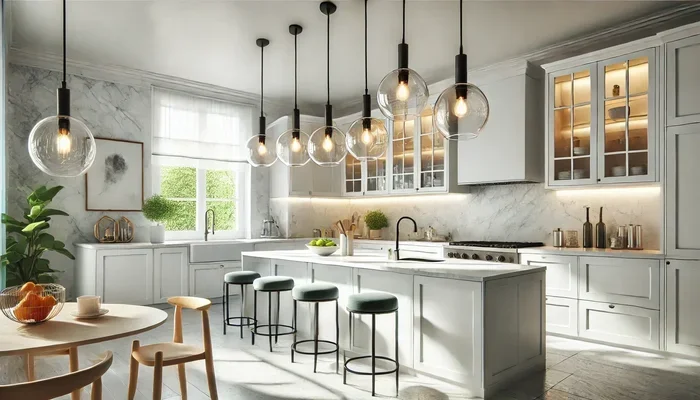
This guide walks you through everything you need to know about pendant size for kitchen island selection. You will learn how to measure diameter, set the right height, and choose the perfect number of fixtures. By the end, you will have the confidence to light your island like a pro.
Choosing the right pendant size for kitchen island is one of the most important decisions you will make in kitchen design. The wrong size can throw off the entire look and feel of your space. A fixture that is too small gets lost on a long island. One that is too large can make the room feel cramped and awkward.
Getting the pendant size for kitchen island right means balancing three key factors: diameter, height, and quantity. Each one plays a big role in how your kitchen looks and functions. In this guide, we will walk you through every step of the process. You will learn simple formulas, practical tips, and common mistakes to avoid. By the end, you will know exactly how to light your island with confidence.
Whether you are designing a new kitchen or updating an existing one, this guide has you covered. We will break everything down into easy-to-follow steps. No guesswork. No confusion. Just clear advice that delivers real results. Let us get started.
Key Takeaways
- Measure your island length first: This determines how many pendants you need and their ideal diameter.
- Use the 12-inch rule for spacing: Keep pendants at least 12 inches apart for balanced light and visual appeal.
- Mount pendants 30 to 36 inches above the counter: This is the sweet spot for task lighting and headroom.
- Match fixture size to island width: A wider island needs larger or multiple pendants to maintain proper scale.
- Avoid common sizing mistakes: Choosing fixtures that are too small or too large ruins the kitchen’s look and function.
- Consider your ceiling height: Taller ceilings allow for longer pendant drops and more dramatic fixtures.
- Style matters as much as size: The right pendant design ties your whole kitchen together.
📑 Table of Contents
- Why Pendant Size Matters for Your Kitchen Island
- How to Measure Pendant Size for Kitchen Island
- Choosing the Right Pendant Height Above Your Island
- How Many Pendants Do You Need for Your Kitchen Island
- Pendant Style and Design Considerations
- Common Mistakes to Avoid When Sizing Pendants
- Final Thoughts on Sizing Pendants for Your Kitchen Island
Why Pendant Size Matters for Your Kitchen Island
The size of your pendant lights directly affects both the look and function of your kitchen. A well-sized fixture creates balance and visual harmony. It draws the eye to the island where food prep and socializing happen. An oversized or undersized pendant, on the other hand, can throw off the entire room.
Think of your kitchen island as the centerpiece of the space. The kitchen island lighting above it should complement that centerpiece, not compete with it. When the pendant size for kitchen island is just right, everything else in the room feels more cohesive. The fixtures frame the island beautifully and provide the light you need for daily tasks.
The Impact of Wrong-Sized Fixtures
Using a fixture that is too small is one of the most common mistakes homeowners make. A tiny pendant on a long island looks lost and insignificant. The space above the island feels bare and uninviting. You end up with poor task lighting and a disjointed appearance.
On the flip side, a fixture that is too large creates a different set of problems. An oversized hanging pendant lights piece can dominate the room. It may make the ceiling feel lower and the kitchen feel crowded. People might even bump their heads on the fixture. Both extremes take away from the beauty of your kitchen design.
How Scale Affects Your Kitchen’s Look
Scale refers to how well a fixture matches the size of the space around it. When it comes to kitchen island lighting, the scale of your pendant must match the island’s dimensions. A large island needs larger fixtures or a cluster of pendants. A small island works best with a single, proportionate fixture.
The goal is fixture scale that feels natural and balanced. You should not have to squint to see the light, and you should not feel overwhelmed by the fixture. Good scale makes the kitchen feel intentional and well-designed. It is one of those details that separates a good kitchen from a great one.
How to Measure Pendant Size for Kitchen Island
Measuring the right pendant size for kitchen island starts with two key dimensions: the island’s length and its width. These measurements tell you everything you need to know about diameter and quantity. The process is simpler than most people think, and a few basic formulas make it foolproof.
Determining the Right Diameter
The diameter of your pendant should be proportional to the width of your island. A common rule of thumb is to add 2 to 3 inches to the island width for every foot of island length. However, a simpler approach works well for most kitchens.
For a single pendant, aim for a fixture that is about one-third to one-half the width of the island. If your island is 36 inches wide, look for a pendant with a diameter between 12 and 18 inches. For a 48-inch-wide island, target a diameter of 16 to 24 inches. These ranges give you a starting point that you can adjust based on your style preferences.
When choosing pendant lamp size, always check the fixture’s stated diameter on the product listing. This number is usually listed in inches and makes comparison easy. If you are shopping online, keep a note of your island measurements so you can quickly filter options that fit.
Using the Island Length Formula
The length of your island is the single most important factor in determining how many pendants you need. Here is a simple formula that interior designers use:
- Island length under 48 inches: One pendant is usually enough.
- Island length between 48 and 72 inches: Two pendants work well.
- Island length between 72 and 96 inches: Three pendants create balanced coverage.
- Island length over 96 inches: Four or more pendants may be needed.
This formula gives you a solid baseline. You can adjust based on personal preference and the size of the fixtures you choose. The key is to maintain even pendant spacing across the length of the island.
| Island Length | Recommended Pendant Count | Suggested Diameter Range |
|---|---|---|
| Under 48 inches | 1 pendant | 10–16 inches |
| 48–72 inches | 2 pendants | 12–18 inches each |
| 72–96 inches | 3 pendants | 12–16 inches each |
| Over 96 inches | 4+ pendants | 10–14 inches each |
Use this table as a starting point. Every kitchen is different, and your ideal setup may vary based on ceiling height, fixture style, and personal taste. The numbers above give you a reliable framework to build on.
Choosing the Right Pendant Height Above Your Island
The pendant height is just as important as the diameter. A fixture hung too high wastes light and looks disconnected from the island. One hung too low creates a hazard and feels oppressive. Finding the right height ensures your lighting works hard and looks great.
Standard Mounting Height Guidelines
The most widely accepted guideline for over island pendants is to hang them 30 to 36 inches above the countertop surface. This range provides excellent task lighting for food preparation while keeping the fixtures out of the way. It also allows people to move comfortably around the island without bumping their heads.
If your kitchen has a standard 8-foot ceiling, aim for about 30 inches of drop from the countertop. For 9-foot ceilings, 34 to 36 inches works well. With vaulted or cathedral ceilings, you have more flexibility. You can hang the fixture a bit higher to maintain visual balance with the taller space.
The bottom of the pendant shade or globe should not hang lower than 66 inches from the floor. This keeps the fixture accessible and prevents it from becoming a traffic hazard. Measure from the floor to the bottom of the fixture to double-check your setup.
Adjusting Height for Different Ceiling Types
Ceiling height changes everything when it comes to island lighting height. In rooms with standard 8-foot ceilings, shorter pendant drops look best. The fixture should feel close to the island without pressing down on the space.
For kitchens with 10-foot or higher ceilings, you can use longer pendant chains or rods. This prevents the fixture from feeling disconnected from the counter surface. A general rule is to add 3 inches of drop for every extra foot of ceiling height beyond 8 feet.
If you have a soffit or an upper cabinet that reduces the effective ceiling height, measure from the countertop to the bottom of the soffit. Leave at least 30 inches of clearance between the countertop and the fixture. This ensures the light reaches the work surface without being blocked.
How Many Pendants Do You Need for Your Kitchen Island
The number of pendants you choose depends on the island length, the fixture size, and how much light you need. A single large pendant can work beautifully on a short island. A long island, on the other hand, usually benefits from multiple fixtures arranged in a row.
The Spacing Rule of Thumb
When hanging multiple pendant cluster fixtures, spacing matters just as much as size. The standard rule is to keep pendants at least 12 inches apart from each other. This gives each fixture room to breathe and prevents the lights from feeling cramped.
For even better results, center the first and last pendant about 12 inches from each end of the island. This creates a balanced look and ensures light reaches the full length of the counter. Use a tape measure and a pencil to mark the positions on the ceiling before drilling any holes.
If your island is 8 feet long and you are using three pendants, divide the island into three equal sections. Each fixture should sit above the center of its section. This creates a clean, symmetrical layout that looks intentional and polished.
Single vs. Multiple Pendants
A single pendant works well for islands under 48 inches long. It creates a clean, minimalist look that suits modern and contemporary kitchens. Choose a fixture with enough visual weight to fill the space above the island without overwhelming it.
Multiple pendants are ideal for longer islands. They provide even light distribution and create a decorative focal point. You can use matching fixtures for a uniform look or mix different sizes for a more dynamic design. Just make sure the fixtures share a common style or color palette to keep the look cohesive.
For kitchen pendant layout ideas, consider these popular arrangements:
- Linear row: Pendants evenly spaced in a straight line. Best for rectangular islands.
- Staggered layout: Pendants offset in two rows. Works well for wider islands that need more light.
- Cluster grouping: Three or more fixtures grouped together over a specific zone, like a sink or cooktop area.
Pendant Style and Design Considerations
Size is only one part of the equation. The style of your pendants also plays a big role in the overall kitchen design. The right style enhances the room’s aesthetic and ties all the elements together. The wrong style can clash with your cabinets, countertops, and hardware.
Matching Fixture Style to Your Kitchen
Start by looking at the style of your kitchen. Do you have modern cabinets with clean lines? Choose sleek, minimalist pendants in metals like brushed nickel or matte black. Do you have a farmhouse-style kitchen with warm wood tones? Rustic iron or woven rattan pendants fit right in.
The pendant shade size also matters for style. Large drum shades give a bold, architectural look. Small globe shades create a softer, more relaxed feel. Cone-shaped shades add a touch of drama and work well in traditional kitchens.
When in doubt, stick with a neutral finish. Brushed brass, matte black, and polished chrome are versatile choices that work with almost any kitchen style. They also age well and resist looking dated over time.
Bulb Type and Light Temperature
The bulb you choose affects both the light quality and the energy efficiency of your island pendant fixtures. LED bulbs are the most popular choice today. They last longer, use less energy, and come in a range of color temperatures.
For kitchen task lighting, choose bulbs with a color temperature between 3000K and 4000K. This range produces a bright, neutral white light that makes food prep easier and keeps the kitchen feeling welcoming. Avoid bulbs below 2700K for task areas, as they produce a warm yellow light that can make it harder to see details.
Consider whether you want exposed bulbs or enclosed shades. Exposed bulbs give a more decorative, industrial look. They also cast light in multiple directions, which can reduce the need for additional overhead fixtures. Enclosed shades direct light downward, which is better for focused task lighting over the counter.
Common Mistakes to Avoid When Sizing Pendants
Even with the best intentions, it is easy to make mistakes when selecting pendant size for kitchen island fixtures. Knowing what to avoid can save you time, money, and frustration. Here are the most common errors homeowners make and how to prevent them.
Choosing Fixtures That Are Too Small
This is the number one mistake people make with kitchen island lighting. A small pendant on a large island looks like an afterthought. The fixtures get lost in the space, and the lighting falls short of what you need for food preparation.
To avoid this, always base your fixture size on the island dimensions. If you are between two sizes, go with the larger option. It is much easier to tone down an oversized fixture with dimmer settings than to make a tiny fixture look proportional.
Ignoring Ceiling Height
Ceiling height affects everything about how a pendant looks and functions. A fixture that looks perfect on paper can hang too low or too high in your actual kitchen if you do not account for ceiling height.
Always measure the distance from your countertop to the ceiling before purchasing pendants. Then compare that measurement to the fixture’s drop length. If the fixture drops too low for your ceiling, look for adjustable chains or shorter rods. If it hangs too high, you can always add an extension rod.
Forgetting About Clearance
Clearance is the space between the bottom of the pendant and the countertop or the heads of people standing at the island. Most building codes require at least 30 inches of clearance above the counter. In practice, 34 to 36 inches feels more comfortable and prevents head bumps.
Also consider clearance over the front edge of the island. If the pendant hangs too far forward, it can block access to the counter. Make sure the fixture hangs directly over the center of the island or slightly behind the front edge for comfortable use.
Skipping the Dimmer Switch
A dimmer switch is one of the easiest ways to get more flexibility from your kitchen island lighting. It lets you adjust the brightness for different tasks and moods. Bright light for cooking, softer light for entertaining, and a warm glow for evening meals.
Make sure the bulbs you choose are dimmable, and install a compatible dimmer switch. This small addition makes a big difference in how functional and comfortable your kitchen feels throughout the day.
Final Thoughts on Sizing Pendants for Your Kitchen Island
Getting the pendant size for kitchen island right comes down to three things: measuring carefully, following proven guidelines, and trusting your instincts. Start with your island dimensions, use the formulas and tables in this guide, and adjust based on your kitchen’s unique features.
The right pendants do more than provide light. They anchor the island, define the space, and add a layer of style that ties your whole kitchen together. Take your time choosing the fixtures. Measure twice, shop with confidence, and install with care. The result will be a kitchen that looks stunning and works beautifully for years to come.
Remember, there is no single perfect answer for every kitchen. Your island, your ceiling, and your personal style all play a role. Use the guidelines in this article as a starting point, and then make adjustments that feel right for your space. The best kitchen lighting is the lighting that makes you feel comfortable, confident, and inspired every time you walk into the room.
Frequently Asked Questions
What is the best pendant size for a 6-foot kitchen island?
For a 6-foot (72-inch) island, two pendants with diameters of 12 to 16 inches each work well. Space them evenly across the island, leaving about 12 inches of clearance from each end. This creates balanced light coverage and a visually appealing layout.
How far should pendant lights hang above a kitchen island?
Hang pendants 30 to 36 inches above the countertop surface. This range provides excellent task lighting while keeping the fixtures safely out of the way. Adjust slightly higher for taller ceilings or lower if the fixture has a very short drop.
Can I use one large pendant instead of multiple smaller ones?
Yes, a single large pendant can work on shorter islands under 48 inches long. Make sure the fixture has enough visual weight to fill the space. For longer islands, multiple pendants provide more even light distribution and a more balanced look.
What is the formula for calculating pendant size based on island length?
A simple formula is to divide the island length by the number of pendants you plan to use. Each pendant should be spaced at least 12 inches apart. The diameter of each fixture should be roughly one-third to one-half the island width for a single pendant, or slightly smaller for multiple fixtures.
Should all pendants over a kitchen island be the same size?
Matching pendants create a clean, uniform look that works well in most kitchens. However, you can mix sizes for a more dynamic design, especially on wider islands. Just make sure the fixtures share a common style, color, or finish to keep the look cohesive.
What type of bulb is best for kitchen island pendants?
LED bulbs with a color temperature of 3000K to 4000K are the best choice for kitchen island pendants. They produce bright, neutral white light that is ideal for food preparation. Look for bulbs rated at 300 to 400 lumens per fixture and make sure they are dimmable for added flexibility.

