
A mouse in your kitchen is more than a nuisance — it is a health risk. This guide covers everything you need to know about how to get rid of mouse in kitchen, from quick traps to long-term prevention. You will learn step-by-step methods, natural repellents, and expert tips that actually work.
Nothing ruins your morning quite like spotting a mouse in kitchen scurrying across the countertop. You are trying to make breakfast, maybe whipping up something simple like Eggs In Purgatory, and suddenly there it is — a tiny, unwelcome guest. Mice in the kitchen are not just disgusting. They carry bacteria, contaminate food, and can cause real damage to your home.
Dealing with a mouse infestation feels overwhelming, but it does not have to be. With the right approach, you can eliminate these pests quickly and keep them from returning. This guide walks you through every step of pest removal — from identifying the problem to sealing your kitchen for good. Whether you are dealing with one brave mouse or a whole family of rodents, you will find practical solutions that work.
Mouse control is not just about killing the mice you see. It is about understanding why they came, removing what attracts them, and making sure they never come back. Let us dive in.
Key Takeaways
- Spot the signs early: Mouse droppings, gnaw marks, and strange noises are clear indicators of a mouse in kitchen.
- Use the right traps: Snap traps, glue traps, and electronic traps each have their place in effective rodent control.
- Seal entry points: Mice can squeeze through gaps as small as a pencil, so thorough mouse proofing is essential.
- Try natural repellents: Peppermint oil, vinegar, and cloves can deter mice without harsh chemicals.
- Keep your kitchen clean: Proper food storage and regular cleaning remove the reasons mice visit your kitchen in the first place.
- Prevent future infestations: Ongoing maintenance and regular inspections keep mice from coming back.
📑 Table of Contents
- Why Mice Love Your Kitchen
- Signs You Have a Mouse in Kitchen
- How to Get Rid of Mouse in Kitchen Step by Step
- Natural Mouse Repellents That Actually Work
- How to Mouse-Proof Your Kitchen for Good
- Common Mistakes People Make When Fighting Kitchen Mice
- Expert Insights on Kitchen Mouse Control
- Key Takeaways
Why Mice Love Your Kitchen
Your kitchen is basically a five-star restaurant for mice. They have everything they need — food, water, warmth, and shelter. Understanding what draws them in is the first step toward effective kitchen pest control.
Food Sources That Attract Mice
Mice are not picky eaters. They will nibble on almost anything you have in your pantry. Here is what they love most:
- Grains and cereals — bread, pasta, rice, and flour are mouse favorites.
- Sweet foods — sugar, honey, syrup, and dried fruits draw them in fast.
- Pet food — left-out kibble is an open invitation for mice in house.
- Grease and crumbs — even tiny bits of food on counters or floors attract them.
- Unsealed containers — if you store leftovers in loose bowls, mice can smell them from far away.
Think about it. When you store your Greek Salad In A Jar or meal prep for the week, those sealed jars keep your food fresh. But if even one container is left open, a mouse can detect the scent from several feet away. Their sense of smell is incredibly powerful, which is why proper food storage matters so much.
Water and Shelter
Mice need very little water to survive, but a dripping faucet or a leaky pipe under the sink gives them a reliable source. Kitchens also offer warm, hidden spaces for nesting. Behind the refrigerator, inside wall cavities, under the stove — these are all prime mouse nesting spots. If your kitchen has clutter, cardboard boxes, or piles of paper, mice see these as perfect building materials for their nests.
Signs You Have a Mouse in Kitchen
Catching a mouse infestation early makes the whole process of rodent control much easier. The longer you wait, the worse it gets. Here are the most common signs to watch for:
- Mouse droppings — small, dark pellets found near food sources, in drawers, or along baseboards.
- Gnaw marks — teeth marks on food packaging, wood, wires, or plastic containers.
- Strange noises — scratching or scurrying sounds at night, especially in walls or ceilings.
- Nests — shredded paper, fabric, or insulation gathered in hidden corners.
- Unusual smell — a musty, ammonia-like odor from urine in enclosed spaces.
- Tracks and grease marks — dark smudges along walls where mice travel frequently.
If you notice even one or two of these signs, act quickly. A single pair of mice can produce dozens of offspring in a single year. What starts as a mouse in kitchen problem can become a full-blown infestation within weeks.
How to Get Rid of Mouse in Kitchen Step by Step
Getting rid of a mouse problem requires a combination of methods. No single trick works every time. Here is a proven, step-by-step approach to pest removal that delivers real results.
Step 1: Remove the Food Supply
Before you set a single trap, eliminate what is attracting the mice. This is the foundation of effective mouse prevention.
- Store all dry goods in airtight containers — glass or thick plastic with tight lids.
- Wipe down countertops and sweep floors every evening before bed.
- Take out the trash daily and use bins with secure lids.
- Do not leave pet food out overnight.
- Clean under and behind appliances where crumbs collect.
When you remove the food supply, you make your kitchen far less appealing. This is one of the simplest yet most powerful steps in kitchen pest control.
Step 2: Set Traps Strategically
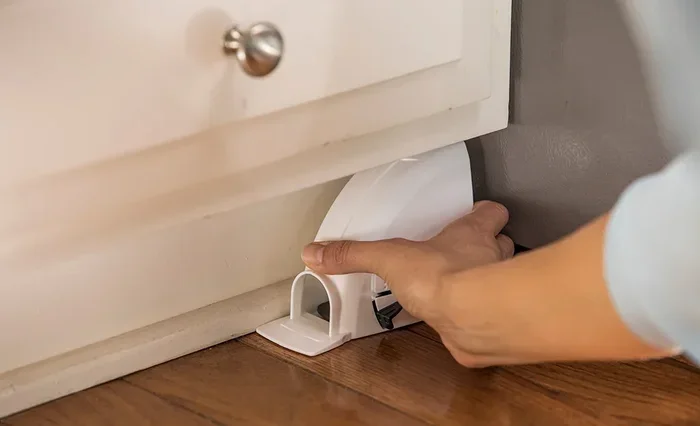
Traps are the most direct way to get rid of mice. Place them along walls, in dark corners, and near evidence of mouse activity such as droppings or gnaw marks. Here are the best options:
| Trap Type | Pros | Cons |
|---|---|---|
| Snap Traps | Fast, effective, inexpensive | Requires handling dead mice |
| Glue Traps | Easy to use, no setup needed | Less humane, can miss active mice |
| Electronic Traps | Humane, quick kill, reusable | Higher cost upfront |
| Live Catch Traps | Humane, releases mouse alive | Must relocate mouse far from home |
Pro tip: Use peanut butter or chocolate as mouse bait. These are far more effective than cheese, contrary to popular belief. Place traps perpendicular to walls with the bait side closest to the wall.
Step 3: Seal Entry Points
Mice can squeeze through gaps as tiny as a quarter of an inch. That is about the width of a pencil. To truly mouse proof your kitchen, you must find and seal every possible entry point.
- Check gaps around pipes, vents, and cables that enter the kitchen.
- Inspect the area where the walls meet the floor.
- Look for gaps around windows, doors, and the foundation.
- Examine the space behind and beneath the stove and refrigerator.
- Use steel wool, caulk, or metal flashing to seal openings — mice cannot chew through these materials.
This step is critical for rodent prevention. If you trap and remove mice but do not seal entry points, new mice will simply replace them.
Step 4: Clean and Declutter
A cluttered kitchen gives mice plenty of places to hide and nest. Go through your kitchen and remove unnecessary items. Get rid of cardboard boxes and replace them with plastic or glass storage containers. Decluttering also makes it easier to spot signs of mice early.
Pay special attention to areas that are hard to reach — behind the refrigerator, under the oven, inside cabinets on lower shelves. These spots are prime mouse nesting locations because they are dark and undisturbed.
Natural Mouse Repellents That Actually Work
If you prefer to avoid chemicals and traps, several natural mouse repellent options can help deter mice from your kitchen.
Peppermint Oil
Peppermint oil is one of the most popular home remedies for mice, and for good reason. Mice absolutely hate the strong scent. Soak cotton balls in pure peppermint oil and place them near entry points, along baseboards, and in cabinets. Refresh them every few days for best results.
Vinegar Spray
A mixture of white vinegar and water makes a great natural cleaner that also repels mice. Spray it on countertops, around garbage bins, and along kitchen edges. The sharp smell deters mice while also keeping your kitchen hygienic.
Cloves and Bay Leaves
Whole cloves and bay leaves placed in pantry shelves and drawers work as gentle natural mouse repellent options. The strong aroma confuses mice and discourages them from settling in your kitchen.
Ultrasonic Repellent Devices
These small devices emit high-frequency sounds that are unpleasant to mice but inaudible to humans. Plug them into outlets around your kitchen for continuous rodent prevention. Results vary, but many homeowners find them helpful as part of a broader strategy.
Quick Tip: No single natural method works on its own. Combine two or more approaches for the best results in mouse control.
How to Mouse-Proof Your Kitchen for Good
Eliminating the mice you see is only half the battle. The real goal is long-term mouse prevention so you never have to deal with this problem again.
Maintain a Clean Kitchen Routine
Consistency is everything when it comes to keeping mice away. Build these habits into your daily routine:
- Wash dishes immediately after meals — do not leave them in the sink overnight.
- Wipe down all surfaces before going to bed.
- Store food in sealed containers at all times.
- Take out the trash every evening.
- Sweep and mop the kitchen floor regularly.
Inspect Your Kitchen Regularly
Set a reminder to inspect your kitchen once a month. Look for new gaps, cracks, or signs of mouse activity. Early detection is the key to preventing a small problem from becoming a major mouse infestation. Check areas you might overlook, such as inside cabinet tops, behind picture frames on kitchen walls, and inside the pantry.
Manage Outdoor Conditions
Mice often enter kitchens from outside. Keep shrubs and tree branches trimmed away from your house. Store firewood at least 20 feet from the exterior walls. Make sure outdoor garbage bins have tight-fitting lids. These outdoor pest control steps reduce the chance of mice finding their way inside.
When to Call a Professional
Sometimes, despite your best efforts, a mouse in kitchen problem persists. If you have tried traps and prevention methods but still see signs of mice, it is time to call a professional pest control service. This is especially important if:
- You see mouse droppings in multiple areas of the kitchen.
- You hear scratching noises in walls during the day.
- You notice a strong, persistent ammonia smell.
- You have pets or small children and want a safe, expert solution.
Professional exterminators have access to tools and treatments that are not available over the counter. They can also identify hidden entry points that you might miss. Investing in professional help is worth it when a DIY approach is not enough.
Common Mistakes People Make When Fighting Kitchen Mice
Avoid these common errors that make rodent control harder than it needs to be:
- Using only one method: Traps alone will not solve the problem if food sources and entry points remain.
- Placing traps in the wrong spots: Mice travel along walls, not through open spaces. Place traps perpendicular to walls for the best results.
- Ignoring the smell: A dead mouse trapped inside a wall will cause a terrible odor. Check traps regularly and dispose of caught mice promptly.
- Leaving pet food out: This is one of the most overlooked causes of mice in house problems.
- Skipping the sealing step: Without sealing entry points, you are essentially setting a revolving door for new mice.
Learning from these mistakes saves you time, money, and frustration. A thoughtful, multi-step approach to mouse in kitchen control is always more effective than a single quick fix.
Expert Insights on Kitchen Mouse Control
Pest control professionals emphasize that the most effective strategy combines elimination, exclusion, and sanitation. According to experts in pest removal, the key is to make your kitchen inhospitable to mice at every level — removing food, blocking entry, and using traps or repellents to address the current population.
One expert tip that many homeowners overlook is the importance of checking your kitchen plumbing. Mice are excellent climbers and can enter through drain pipes and ventilation openings. Installing mesh screens over vents and checking the condition of pipe seals can make a significant difference in mouse prevention.
Another valuable insight is that mice are creatures of habit. They follow the same pathways every night. Once you identify these routes — often marked by grease marks or droppings — you can place traps and repellents directly in their path for maximum effectiveness.
Key Takeaways
- Act fast at the first sign: Mouse droppings, gnaw marks, or nighttime sounds mean you need to start pest removal immediately.
- Remove food and water sources: This is the single most important step in kitchen pest control.
- Use multiple methods together: Combine traps, repellents, and sealing for the best results.
- Seal every entry point: Mice enter through tiny gaps, so thorough mouse proofing is non-negotiable.
- Maintain a clean routine: Consistent kitchen hygiene prevents future mouse infestations.
- Call a pro if needed: Professional help is a smart choice when DIY methods fail.
Dealing with a mouse in kitchen is stressful, but it is a problem you can solve. With the right combination of traps, repellents, sealing, and cleanliness, you can eliminate mice and keep them from coming back. Start today, stay consistent, and enjoy a kitchen that is truly mouse-free.
Frequently Asked Questions
How do I know if I have a mouse in kitchen or just a one-time visitor?
A single sighting might be an accidental visitor, but if you notice mouse droppings, gnaw marks, or multiple sightings within a few days, you likely have a mouse infestation. Look for nests, listen for nighttime scratching sounds, and check for grease marks along walls to confirm the problem.
What is the fastest way to get rid of mice in the kitchen?
The fastest method is combining snap traps with peanut butter bait and sealing all entry points immediately. This approach removes mice quickly while preventing new ones from entering. For serious infestations, professional pest control services can deliver rapid results.
Are natural repellents effective for mouse control?
Natural mouse repellents like peppermint oil and vinegar can deter mice, especially in mild cases. However, they work best as part of a broader strategy that includes traps and sealing entry points. For heavy infestations, natural methods alone are usually not enough.
How do mice get into a sealed kitchen?
Mice can squeeze through gaps as small as a quarter of an inch. They enter through cracks in walls, gaps around pipes, openings near vents, and even through spaces around cabinets and baseboards. Thorough mouse proofing requires inspecting every inch of your kitchen for potential entry points.
Can mice contaminate food in the kitchen?
Yes, absolutely. Mice carry bacteria, parasites, and diseases that can contaminate food surfaces and packaging. Even food that looks untouched may be unsafe if mice have had access to it. Always discard any food that shows signs of being gnawed on or stored near mouse activity.
How long does it take to fully eliminate a mouse problem?
With a consistent, multi-step approach, most homeowners see significant results within one to two weeks. However, complete rodent prevention takes longer and requires ongoing maintenance. Sealing entry points and maintaining cleanliness are the keys to keeping mice from returning for good.
=== CONCLUSION ===
A mouse in kitchen is a problem you can and should tackle head-on. From removing food sources and setting effective traps to sealing entry points and using natural mouse repellents, every step you take brings you closer to a mouse-free home. The key to lasting kitchen pest control is combining immediate action with long-term mouse prevention. Stay consistent, stay vigilant, and do not let these unwelcome guests take over your kitchen again.

