
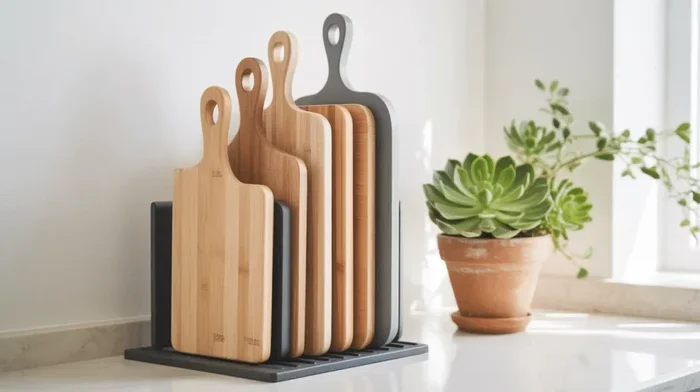
Knowing how to store cutting boards in kitchen spaces can transform your countertop organization and keep your boards lasting for years. This guide covers the best storage solutions, from wall-mounted racks to drawer organizers, so you can find the perfect fit for any kitchen size. You will also learn simple maintenance tips that keep your boards hygienic and ready to use every single day.
Every home cook knows the frustration of a cluttered kitchen. Cutting boards pile up. They end up stacked in awkward piles or leaning against cabinets. The question of how to store cutting boards in kitchen spaces comes up more often than you might think. A smart storage setup does more than just look good. It keeps your boards clean, extends their life, and makes meal prep faster.
Whether you have one trusty board or a whole collection of wood, bamboo, and plastic options, storage matters. A cutting board storage solution that works for your space can make a real difference. In this guide, we will walk you through every option, every tip, and every mistake to avoid. By the end, you will know exactly how to organize your boards the smart way.
Key Takeaways
- Proper storage extends the life of your cutting boards and keeps them free from bacteria and warping.
- Wall-mounted racks and under-cabinet solutions save valuable counter space in small kitchens.
- Different board materials need different care when it comes to storage and maintenance.
- Vertical storage is the gold standard for air drying and easy access.
- Avoid common mistakes like stacking boards without protection to prevent scratches and odors.
📑 Table of Contents
Why Proper Cutting Board Storage Matters
You might wonder why anyone would write a whole article about storing cutting boards. The truth is, how you store them affects everything from hygiene to the lifespan of the board itself. A cutting board that sits wet in a pile can grow bacteria. A board that leans against a wall can warp over time. Proper storage solves both problems.
Hygiene and Food Safety
Food safety starts with how you treat your cutting boards after use. When boards stay wet or are stacked while still damp, bacteria can build up fast. Storing them upright allows air to circulate. This helps them dry completely between uses. A board that dries properly is a board that stays sanitary.
Think about it this way. You would not store a wet sponge in a closed container. The same logic applies here. Airflow is your best friend when it comes to kitchen hygiene. A clean kitchen organization routine starts with how you dry and store each board.
Extending the Life of Your Boards
Cutting boards are an investment. A good wooden or bamboo board can last for years with proper care. But poor storage habits can shorten that life dramatically. Boards that lean on their edges can warp. Boards that stack without protection can scratch. Scratches create grooves where bacteria hide and knives dull faster.
By choosing the right cutting board storage method, you protect your investment. You also keep your boards performing at their best. A well-stored board is easier to clean, safer to use, and lasts much longer.
Best Storage Solutions for Cutting Boards
Not every kitchen has the same layout or amount of space. That is why there are so many storage options available. Let us explore the most popular and effective solutions for how to store cutting boards in kitchen environments of all sizes.
Wall-Mounted Racks
Wall-mounted racks are a game changer for small kitchens. They free up counter space and keep your boards within arm’s reach. You can mount a simple pegboard or a dedicated cutting board rack on the wall. Some racks hold multiple boards vertically, making it easy to grab the one you need.
Here is why wall-mounted racks work so well:
- They save counter space in tight kitchens.
- They allow boards to air dry fully between uses.
- They look stylish and add a decorative touch to your kitchen.
- They make boards easy to access without digging through a pile.
If you love cooking and often chop vegetables for a fresh Greek Salad In A Jar or slice ingredients for other recipes, a wall rack keeps everything at your fingertips. It is one of the most practical solutions for any home cook.
Knife Blocks with Cutting Board Slots
Some knife blocks come with slots or compartments designed to hold a cutting board. This is a great two-in-one solution. You get your knife storage and your board storage in one place. It keeps your most-used items grouped together and easy to grab.
These combo units work best in kitchens where counter space is limited. They also keep the board upright, which promotes drying. Just make sure the slot size fits your board. A tight fit can cause warping over time.
Under-Cabinet Storage
Under-cabinet storage is another excellent option for kitchen organization. You can install a small shelf or rack beneath a cabinet to hold your cutting board. This keeps the board hidden from view but still easy to reach. It is a perfect choice for kitchens where counter space is at a premium.
Look for racks that are specifically designed for under-cabinet use. They usually screw right into the cabinet frame and hold the board horizontally or at a slight angle. This setup also allows for some air circulation, which helps with drying.
Drawer Organizers
If you prefer to keep your boards out of sight, drawer organizers are a solid choice. You can find or build a custom tray that fits inside a kitchen drawer. The board slides in neatly and stays protected from dust and damage.
Drawer storage works well for smaller boards or when you have several boards to organize. The key is to make sure the board can dry fully before you put it away. A damp board in a closed drawer can develop mildew and unpleasant odors over time.
Comparison of Storage Options
| Storage Option | Best For | Space Needed | Drying Ability |
|---|---|---|---|
| Wall-Mounted Rack | Small kitchens, quick access | Wall space | Excellent |
| Knife Block Combo | Counter organization | Counter space | Good |
| Under-Cabinet Shelf | Hidden storage | Under cabinet | Fair |
| Drawer Organizer | Hidden, protected storage | Drawer space | Poor unless dried first |
| Freestanding Rack | Large kitchens, multiple boards | Counter or floor | Excellent |
Storing Different Types of Cutting Boards
Not all cutting boards are the same. The material matters a lot when it comes to storage. Each type has its own needs and quirks. Understanding these differences helps you choose the right storage method for each board in your collection.
Wooden Cutting Boards
Wooden boards are beautiful and durable, but they need special care. Wood can warp if it sits wet for too long. It can also crack if it dries out completely. When you store wooden boards, keep them upright and in a dry area. Never store them flat where water can pool on the surface.
Wooden boards also benefit from regular oiling. A light coat of food-safe mineral oil keeps the wood hydrated and prevents cracking. Store them away from direct heat and sunlight, which can dry out the wood and cause splitting.
Bamboo Cutting Boards
Bamboo is a popular choice because it is eco-friendly and naturally resistant to moisture. However, bamboo can still warp if stored improperly. Keep bamboo boards upright and allow them to air dry fully before putting them away.
Bamboo is slightly harder than wood, which means it holds up well to knife marks. But it can still benefit from a light application of oil every few months. Proper cutting board maintenance keeps bamboo looking great for years.
Plastic and Glass Cutting Boards
Plastic boards are lightweight and easy to clean. They do not warp as easily as wood, but they can scratch and retain odors over time. Glass boards are durable and easy to sanitize, but they are hard on knives and can slip if not stored carefully.
For plastic boards, a drawer organizer or a stack with a protective layer between each board works well. For glass boards, vertical storage is best to prevent sliding and scratching. Always make sure glass boards are completely dry before storing them to avoid moisture damage to the kitchen surface.
Quick Tips for Cutting Board Storage
Here are some fast and easy tips you can start using today:
- Always dry boards upright before storing them. This prevents moisture buildup and keeps boards sanitary.
- Use a board guide or separator when stacking boards to prevent scratches.
- Store boards near where you use them to make meal prep more efficient.
- Rotate your boards regularly so wear is distributed evenly.
- Keep boards away from heat sources like ovens and dishwashers to prevent warping.
- Label your boards if you use them for different types of food, such as raw meat versus vegetables.
These simple habits make a big difference. They keep your kitchen organized and your boards in great shape. A little effort goes a long way when it comes to proper storage.
Common Mistakes to Avoid
Even the best cutting boards can suffer from poor storage habits. Here are the most common mistakes people make and how to fix them.
Stacking Boards Without Protection
Stacking boards directly on top of each other creates scratches and dents over time. The surfaces rub against each other, leaving marks that can trap bacteria. Always use a cloth, paper towel, or soft mat between boards if you must stack them.
Storing Boards While Still Wet
This is one of the biggest mistakes people make. A wet board stored in a closed space can develop mold and mildew. Always dry your board thoroughly with a towel and then let it air dry upright before putting it away. This simple step keeps boards fresh and safe.
Storing Boards in Humid Areas
Storing boards near the dishwasher or sink exposes them to excess moisture. Over time, this can cause warping and splitting. Keep your boards in a dry area of the kitchen, away from direct steam and splashes.
Ignoring Board Condition
A board with deep knife grooves or cracks is a breeding ground for bacteria. Check your boards regularly for damage. If a board is beyond cleaning, it is time to replace it. Proper storage helps prevent damage, but it cannot fix a worn-out board.
Expert Insights on Cutting Board Organization
Professional chefs and kitchen designers agree on a few key principles when it comes to how to store cutting boards in kitchen spaces. First, they always prioritize vertical storage. Standing boards upright allows for maximum airflow and quick access. Second, they recommend keeping boards near the prep area, not buried in a cabinet.
Chef Maria Santos, a professional chef with over 15 years of experience, shares this advice: “Your cutting board is your workspace. Keep it close, keep it dry, and keep it clean. A well-organized prep area makes cooking faster and safer.” This mindset applies whether you are prepping ingredients for a simple weeknight dinner or chopping fresh herbs for a dish like Eggs In Purgatory that needs precise ingredient prep.
Interior designers also suggest treating your cutting board storage as part of your overall kitchen design. A stylish rack or a well-planned drawer organizer adds both function and beauty to the space. When storage looks good, you are more likely to keep it organized.
Key Takeaways
- Store boards upright whenever possible to promote airflow and prevent warping.
- Choose a storage solution that fits your kitchen size, whether it is a wall rack, drawer organizer, or under-cabinet shelf.
- Different materials need different care when it comes to storage and maintenance.
- Always dry boards completely before storing to prevent bacteria growth and odors.
- Avoid common mistakes like stacking without protection or storing near heat and moisture sources.
- Rotate and inspect your boards regularly to catch damage early and extend their lifespan.
- Good storage is part of good kitchen hygiene and makes your cooking experience better every day.
Conclusion
Learning how to store cutting boards in kitchen spaces is one of the simplest ways to improve your kitchen organization. It keeps your boards clean, extends their life, and makes your daily cooking routine smoother. Whether you choose a wall-mounted rack, a knife block combo, or a drawer organizer, the key is to store boards upright and dry.
Take a few minutes today to assess your current setup. Are your boards stored properly? Do they dry fully between uses? Small changes can lead to big improvements. A well-organized kitchen starts with the details, and cutting board storage is one of those details that really matters.
Start applying these tips today. Your kitchen will look better, your boards will last longer, and your meal prep will feel easier. Smart storage is a simple step with lasting results.
Frequently Asked Questions
What is the best way to store cutting boards in a small kitchen?
Wall-mounted racks and under-cabinet shelves are the best options for small kitchens. They free up counter and drawer space while keeping boards accessible. Vertical storage also helps boards dry properly between uses.
Can I stack cutting boards on top of each other?
Yes, but only if you place a protective layer like a cloth or soft mat between each board. Stacking without protection causes scratches and can trap moisture, leading to odors and bacteria buildup.
How often should I oil my wooden cutting board?
Oil your wooden cutting board every three to four weeks, or whenever it starts to look dry. Regular oiling prevents cracking and keeps the wood hydrated. Always use food-safe mineral oil for the best results.
Should I store my cutting board vertically or horizontally?
Vertical storage is the best option in most cases. It allows air to circulate around the board, promoting faster and more thorough drying. Horizontal storage is fine for drawer organizers, but only if the board is completely dry first.
What causes cutting boards to warp?
Warping is usually caused by exposure to excess moisture or heat. Storing a wet board flat, placing it near a dishwasher, or leaving it in direct sunlight can all cause warping. Always dry boards upright and store them in a cool, dry place.
How do I keep my cutting boards odor-free?
To keep boards odor-free, always dry them thoroughly after washing and store them in a well-ventilated area. You can also rub the board with a mixture of lemon and salt to neutralize lingering smells. Proper storage prevents moisture buildup, which is the main cause of odors.

