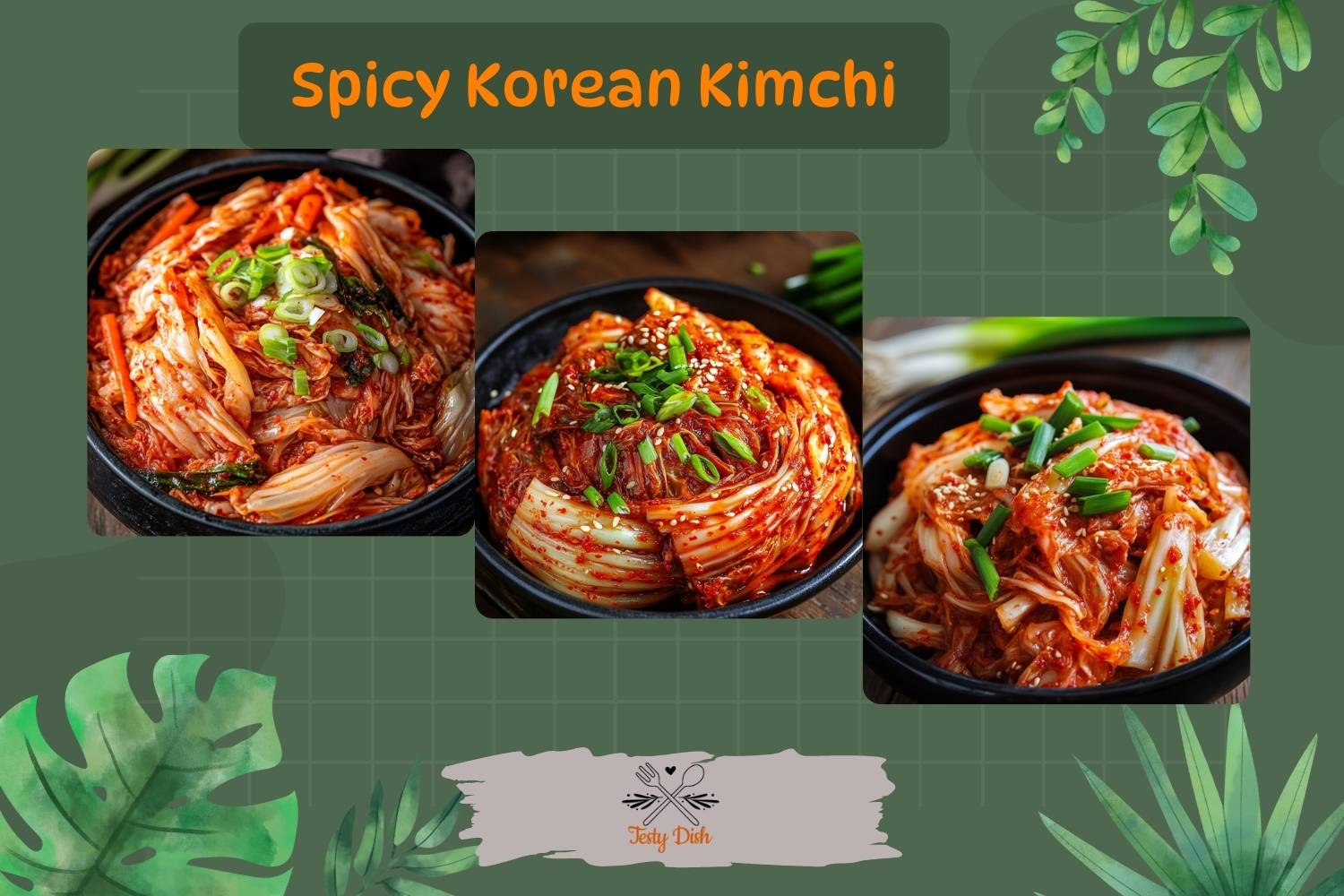
If you’ve never made Spicy Korean kimchi before, you’re in for a spicy treat! of my took a tangy turn with this bold, fiery, and gut-friendly Korean classic. I’ve always loved the sharp flavor of kimchi, and this time, I made it from scratch and let me tell you, it was so worth it.
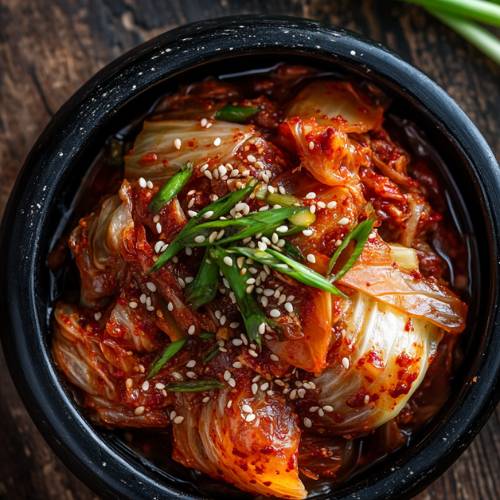
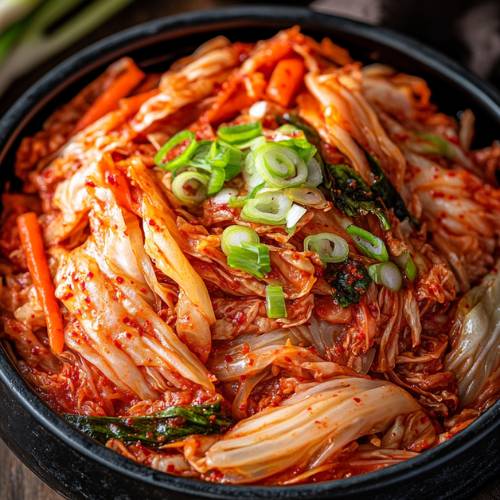
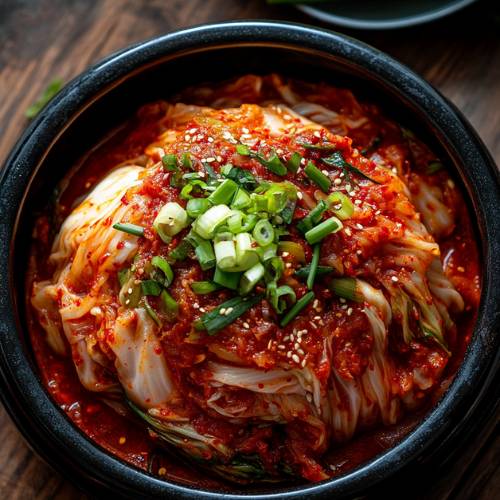
Kimchi is a type of fermented cabbage, packed with spice and a little bit of magic. It’s crunchy, zingy, and super good for your belly. Once you try it, you’ll want to eat it with everything (especially my kimchi fried rice!). Bonus: it keeps for weeks in the fridge if you don’t eat it all first.
Method (In Detail)
Chop & Salt the Cabbage
Start by preparing your Chinese (Napa) cabbage. Slice it lengthwise into quarters, then cut each quarter into 2cm strips. Place all the strips into a large mixing bowl. Sprinkle in the 5 tablespoons of salt and use your hands to massage the salt into the cabbage. You’ll notice the cabbage begins to soften and release some water as you do this, this is exactly what you want! The salt helps draw out the moisture and starts the fermentation process. Once the cabbage feels nicely wilted, cover the bowl and let it sit for 1 to 2 hours at room temperature.
Rinse & Squeeze
After the resting time, you’ll need to rinse the cabbage to remove the excess salt. Pour it into a sieve or colander and run cold water over it, tossing it around with your hands to make sure it’s well-rinsed. Then, take handfuls of cabbage and squeeze them gently but firmly to remove as much water as you can. This step is super important. Wet cabbage can make your kimchi too soggy and dilute the flavor.
Prep the Veggies
Now it’s time to prep the rest of your ingredients. Peel the muli (daikon radish) and cut it into thin matchstick-sized strips. Slice the spring onions into thin pieces, both the white and green parts. Then peel and finely chop your garlic cloves and ginger. These aromatic veggies will give your kimchi that punchy, flavorful kick!
Mix the Spicy Paste
In a small bowl, make your flavor bomb: mix together the gochujang (Korean chili paste), brown caster sugar, chopped garlic, chopped ginger, and about 3 tablespoons of water. Stir well until you have a smooth, slightly thick paste. This mixture brings the heat, sweetness, and depth that make kimchi so delicious. If you like it extra spicy, you can always add an extra teaspoon of gochujang.
Combine Everything
In a clean, large bowl, place the squeezed cabbage along with the chopped radish and spring onions. Pour in the spicy gochujang paste and get ready to mix. This part can be a little messy, so wearing kitchen gloves is a great idea to protect your hands (and avoid chili burn!). Use your hands or a spatula to thoroughly mix everything together, making sure all the veggies are coated evenly in the spicy paste. Take your time here, it’s worth it.
Jar It Up
Next, get your sterilized Kilner jar or airtight glass jar ready. Carefully transfer the kimchi mixture into the jar, pressing it down firmly with a spoon or spatula as you go. The goal is to pack the veggies tightly so that the natural brine (liquid) rises to cover the surface. This liquid helps protect your kimchi during fermentation. Don’t fill the jar all the way to the top, leave a little space to let the gases escape. Close the lid loosely or use a fermentation lid if you have one.
Ferment & Wait
Now the magic begins! Store your jar in a cool, dark place like a cupboard or pantry for 2 to 3 days. Each day, open the jar once to release any built-up gas and give it a gentle press to keep everything submerged. Start tasting after day two when it reaches your preferred level of tanginess, it’s ready! Once you’re happy with the flavor, tighten the lid and move the jar to the fridge. It will continue to ferment slowly in the cold and stay good for several weeks just get ready to crave it with every meal!
Necessary Tools
- Large mixing bowl
- Sharp knife and chopping board
- Sieve or colander
- Kilner jar or airtight glass jar
- Spoon or spatula
- Gloves (optional but helpful when mixing)
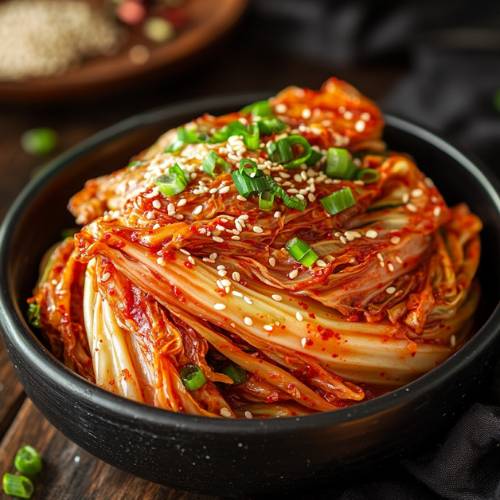
How to Make Spicy Korean Kimchi at Home (Easy Traditional Napa Cabbage Recipe)
Cuisine: KoreanDifficulty: Easy10
servings1
hour30
minutes48
hours49
hours30
minutesIngredients
1 medium Chinese (Napa) cabbage
5 tbsp salt
1 muli (daikon radish)
3 spring onions
3 tsp gochujang (Korean chili paste)
1 tsp brown caster sugar
4 garlic cloves
2 cm knob of fresh ginger
3 tbsp water (to mix the paste)
Directions
- Chop & Salt the Cabbage Cut the cabbage into quarters lengthwise, then slice it into 2cm strips. Toss it in a bowl with the salt. Use your hands to massage the salt into the cabbage it will start to soften. Let it sit for 1–2 hours.
- Rinse & Squeeze Once your cabbage has rested, rinse it thoroughly in a sieve to get rid of the extra salt. Squeeze out as much water as you can.
- Prep the Veggies Cut the radish into thin matchsticks. Slice the spring onions. Finely chop the garlic and ginger.
- Mix the Spicy Paste In a small bowl, combine gochujang, sugar, chopped garlic and ginger, and the water. Stir until it forms a smooth, spicy paste.
- Combine Everything Add the cabbage, radish, and spring onions to a clean bowl. Pour in the spicy paste and mix well until everything is evenly coated. (Wearing gloves makes this part easier!)
- Jar It Up Pack your kimchi mixture into a clean jar. Press it down hard so the brine rises to cover the veggies. Seal the jar loosely to let gases escape.
- Ferment & Wait Leave your jar in a cool, dark place for 2–3 days. Open it once a day to release air and give it a little taste. Once it’s as tangy as you like, move it to the fridge. It’ll keep for a couple of months!
Notes
- Don’t skip rinsing the cabbage! Too much salt = too salty kimchi.
- Press the mixture firmly into the jar so it stays under the brine. If it’s not submerged, it won’t ferment properly.
- Use clean jars and tools to avoid bad bacteria messing with your fermentation.
- Be patient! Kimchi gets better with time, but you don’t want to leave it out too long either 3 days is a good starting point.
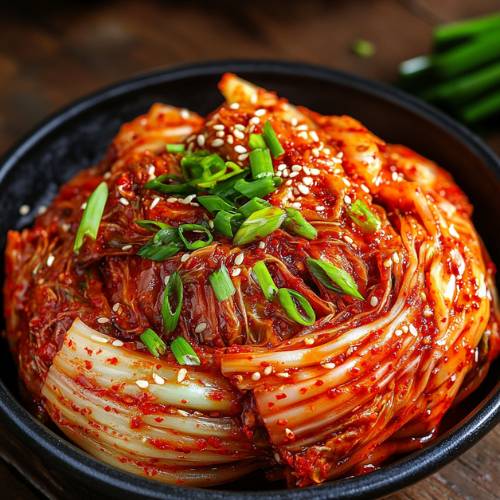

Serving Suggestions
- As a spicy side for rice or noodles
- In wraps or tacos for extra crunch
- Mixed into fried rice (my kimchi fried rice is so good!)
- Topped on salads for a zippy bite
- With eggs for a breakfast with kick!
Fun Fact
Kimchi has been a staple in Korean homes for over 1,000 years! In fact, there are hundreds of types of kimchi from cucumber to radish to pumpkin. It’s not just food, it’s part of the culture.
Conclusion
Making kimchi at home felt a little like science, a little like magic, and a lot of fun. It’s spicy, bold, and full of flavor and honestly, I couldn’t stop tasting it while it fermented! Whether you eat it on the side or mix it into your meals, this spicy Korean kimchi adds a fiery twist that’s totally addictive. Try it, tweak it, and enjoy the fermentation adventure!