
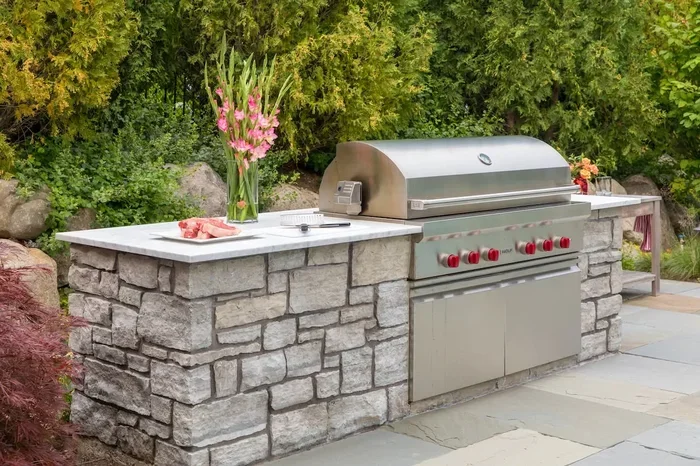
Stone veneer outdoor kitchen designs bring natural beauty and lasting value to any backyard. These ideas combine modern style with timeless charm for spaces you will love entertaining in. Whether you want a cozy fire pit area or a full cooking station, stone veneer makes it happen. Keep reading to find the perfect outdoor kitchen design for your home.
A stone veneer outdoor kitchen can completely change the way you use your backyard. It turns a plain patio into a warm, inviting space where family and friends gather. The natural texture and rich colors of stone add depth and character that no other material can match.
If you have been dreaming about upgrading your outdoor area, stone veneer is one of the best ways to do it. It looks expensive but can fit many different budgets. You get the look of real stone without the heavy weight or sky-high price tag. In this guide, we will walk you through ideas, materials, layouts, and tips to help you create the outdoor kitchen of your dreams.
Whether you are a weekend griller or someone who loves to host big dinners outside, a stone veneer design has something for you. Let us dive into the world of outdoor entertaining and explore what makes this building material so popular among homeowners today.
Key Takeaways
- Stone veneer transforms any backyard into a stunning outdoor living space that boosts home value.
- Multiple material options exist, from natural stone to faux stone veneer, fitting every budget.
- Proper planning and layout ensure your outdoor kitchen is both beautiful and functional.
- Stone veneer fireplaces and countertops add warmth and a focal point to any design.
- Regular maintenance keeps stone looking great for decades with minimal effort.
- DIY installation is possible for homeowners who want to save on labor costs.
- Lighting and decor tie the whole look together for an inviting backyard atmosphere.
📑 Table of Contents
- Why Stone Veneer Is the Top Choice for Outdoor Kitchens
- Popular Stone Veneer Outdoor Kitchen Designs
- Choosing the Right Stone Veneer Material
- Planning Your Stone Veneer Outdoor Kitchen Layout
- Budget Tips for a Stone Veneer Outdoor Kitchen
- Maintenance and Care Tips for Stone Veneer
- Common Mistakes to Avoid
- Expert Insights on Stone Veneer Outdoor Kitchens
- Key Takeaways
Why Stone Veneer Is the Top Choice for Outdoor Kitchens
Stone veneer has become the go-to choice for homeowners who want a beautiful outdoor kitchen design without the hassle. But what makes it so special compared to other materials?
Natural Beauty That Lasts
Stone veneer gives your outdoor space a timeless look. The natural variations in color and texture mean no two walls look the same. Each piece of natural stone veneer carries its own unique pattern, which adds visual interest to any outdoor kitchen layout.
Unlike synthetic materials that can fade or peel over time, real stone holds its beauty for decades. Rain, sun, and snow do little to damage properly installed stone. This durability is one reason many homeowners choose stone over wood or plastic alternatives.
Lightweight and Versatile
One big advantage of stone veneer panels is that they are much lighter than full stone blocks. This makes them easier to handle and install. You can use them on walls, fireplace surrounds, countertops, and even accent columns.
The versatility of stacked stone veneer means you can create curved walls, straight lines, or any shape in between. This flexibility opens up more creative backyard kitchen ideas that would be hard to achieve with traditional brick or concrete.
Boosts Home Value
A well-designed outdoor kitchen with stone veneer can increase your property value. Buyers love move-in ready outdoor living spaces. According to real estate experts, outdoor kitchens return a high percentage of their cost at resale. A stone veneer fireplace or cooking area makes your home stand out on the market.
Popular Stone Veneer Outdoor Kitchen Designs
Now let us look at some design ideas that show how versatile stone veneer outdoor kitchen projects can be. Each style brings a different vibe to your backyard.
Modern Minimalist with Clean Lines
If you prefer a sleek, contemporary look, consider using thin stone veneer panels in neutral tones like gray, white, or beige. Pair them with stainless steel appliances and clean countertops. The contrast between smooth surfaces and rough stone creates a modern yet warm feel.
This style works great for smaller patios because the light colors make the space feel bigger. Add outdoor kitchen lighting along the stone walls to highlight the texture at night. Simple pendant lights or recessed LEDs give a polished finish.
Rustic Farmhouse with Warm Tones
For a cozy, farmhouse feel, choose warm-toned natural stone veneer in browns, creams, and terracotta. Combine it with wood accents, a butcher block countertop, and wrought iron hardware. This design makes your outdoor kitchen feel like a charming country cottage.
A stone veneer fireplace in the center of the design adds both function and beauty. On cool evenings, you can cook over the fire and enjoy the glow of real flames. This style is perfect for families who love gathering around warmth.
Mediterranean-Inspired with Arched Details
Mediterranean-style outdoor entertaining spaces use rounded arches and earthy stone tones. Think terracotta roof tiles, wooden beams, and lush plants surrounding a stone veneer wall. The curved edges of brick veneer outdoor accents add old-world charm.
This design pairs beautifully with pizza ovens and outdoor kitchens built around a central stone structure. The warm colors and organic shapes create a relaxing retreat that feels like a vacation spot right in your yard.
Luxury Resort-Style with Full Entertainment Zones
Want to go all out? A luxury outdoor kitchen design with stone veneer can include multiple zones. Think a cooking area, a bar with a stone veneer backsplash, a dining patio, and a fire pit lounge. Each zone uses different stone textures or colors to define the space.
Use large-format stone veneer panels for a seamless, high-end look. Add a waterfall feature or a stone veneer accent wall behind the grill station. This type of design turns your backyard into a true entertainment hub.
Choosing the Right Stone Veneer Material
Not all stone veneer is the same. Picking the right material affects both the look and the outdoor kitchen cost. Here is a closer look at your options.
Natural Stone Veneer
Natural stone veneer comes from real quarried rock. It is cut into thin slices so it is lightweight but still looks like full stone. Common types include limestone, sandstone, slate, and fieldstone.
Pros of natural stone veneer include:
- Authentic, one-of-a-kind appearance
- Extremely durable and long-lasting
- Resists weather and UV damage
- Available in many colors and shapes
The downside is that natural stone veneer costs more than manufactured options. It also requires skilled stone veneer installation to achieve the best results. However, many homeowners feel the premium look is worth the investment.
Faux Stone Veneer
Faux stone veneer, also called manufactured or cultured stone, is made from concrete, cast stone, or resin. It is designed to look like real stone but at a fraction of the price. Faux stone veneer panels come in standardized sizes, which makes DIY stone veneer projects much easier.
Pros of faux stone veneer include:
- More affordable than natural stone
- Lighter weight for easier handling
- Consistent color and texture across pieces
- Easy to cut and shape for custom designs
Modern faux stone has improved a lot in recent years. High-quality manufactured stone veneer can look very realistic from a distance. It is a great choice for homeowners on a tighter outdoor kitchen budget who still want a stunning look.
Brick Veneer Outdoor Options
Brick veneer is another popular choice for outdoor kitchen ideas. It gives a classic, timeless appearance that works with many architectural styles. Red brick, white brick, and charcoal brick are among the most sought-after colors.
Brick veneer pairs well with wood, metal, and concrete elements. It is especially popular for creating a stone veneer fireplace surround with a brick accent base. This combination adds both texture and contrast to your design.
Planning Your Stone Veneer Outdoor Kitchen Layout
A good layout is the foundation of any successful outdoor kitchen. Without proper planning, even the most beautiful materials will not feel right to use every day.
Start with the Cooking Area
The grill or cooking station should be the centerpiece of your design. Position it away from walls so smoke has somewhere to go. A stone veneer wall behind the grill acts as a backdrop and protects the wall from heat and grease.
Consider the direction of the wind when placing your grill. You want smoke to blow away from seating areas. A simple rule is to set up the cooking zone on the side of your yard where the wind usually blows from.
Add a Prep and Storage Zone
Next to the cooking area, include a counter space for prepping food. Stone veneer countertops can be made from the same material as your walls for a cohesive look. Add cabinets or open shelves underneath for storing grilling tools, plates, and utensils.
Keep the prep area at a comfortable height. Most adults work best with counters between 34 and 36 inches tall. This simple detail makes a big difference in how enjoyable your outdoor cooking experience feels.
Create a Dining and Lounge Area
Your outdoor kitchen layout should flow naturally into a dining and relaxation space. Use the same stone material on a nearby accent wall to tie the zones together. A stone veneer fireplace or fire pit at one end of the dining area adds warmth and ambiance.
Place seating so guests can easily move between the cooking zone, the dining area, and the lounge. This flow makes outdoor entertaining feel effortless and fun for everyone.
Quick Tips for Layout Planning
- Sketch your space on graph paper before buying materials.
- Measure the available area carefully, including any slopes or obstacles.
- Think about how you will use the space most days of the year.
- Include enough electrical outlets for grills, lights, and speakers.
- Plan for shade with a pergola or umbrella if your yard gets full sun.
Budget Tips for a Stone Veneer Outdoor Kitchen
Cost is a big factor for most homeowners. The good news is that a stone veneer outdoor kitchen can be built at various price points.
Understanding the Cost Breakdown
The total outdoor kitchen cost depends on size, materials, and whether you hire professionals or go the DIY route. Here is a rough breakdown of where the money goes:
- Materials (stone veneer, panels, or bricks): 30-40% of total cost
- Labor (if hired): 30-40% of total cost
- Appliances and fixtures: 20-30% of total cost
- Additional features (lighting, plumbing): 10-15% of total cost
Ways to Save Money
One of the best ways to reduce cost is to tackle the stone veneer installation yourself. Many homeowners find that faux stone veneer panels are easy to cut and attach with construction adhesive. This alone can save thousands of dollars in labor fees.
Another tip is to focus your stone veneer on the most visible areas, like the fireplace surround and the accent wall behind the grill. Use less expensive materials for areas that are not as prominent. This strategy keeps the look high-end while staying within budget.
When to Splurge
Spend more on quality materials for the parts of your outdoor kitchen design that everyone sees. The stone veneer fireplace and the main accent wall are the focal points. Using premium natural stone veneer on these areas makes a big visual impact.
Also, invest in good outdoor kitchen lighting. Proper lighting highlights the texture of the stone and makes your outdoor space usable well into the evening. LED strip lights and solar-powered path lights are affordable options that add a lot of value.
Maintenance and Care Tips for Stone Veneer
One of the best things about a stone veneer outdoor kitchen is how little maintenance it needs. But a few simple habits will keep it looking its best for years.
Regular Cleaning
Sweep the stone surfaces regularly to remove dirt and debris. For deeper cleaning, use a soft brush with warm water and a mild detergent. Avoid harsh chemicals or pressure washers set too high, as they can damage the stone surface over time.
For natural stone veneer, apply a sealer once a year. This protects the stone from stains caused by grease, food spills, and weather exposure. Faux stone veneer usually does not need sealing, but check the manufacturer’s recommendations.
Dealing with Weather and Wear
Stone veneer holds up well in most weather conditions. However, in areas with freeze-thaw cycles, make sure the stone is properly sealed to prevent water absorption. Water trapped in tiny cracks can expand when it freezes and cause surface damage.
If you notice any loose or chipped stones, repair them quickly. A small amount of adhesive or mortar can fix minor issues before they become bigger problems. Regular inspections, especially after severe storms, help catch issues early.
Keeping Grout and Joints Clean
The grout or mortar between stone pieces can collect dirt over time. Use a grout brush and a mixture of baking soda and water to scrub joints clean. This simple step keeps your outdoor kitchen design looking fresh and well-maintained.
Re-grout any areas that show significant wear every few years. This small effort goes a long way in preserving the appearance of your stone veneer fireplace and wall features.
Common Mistakes to Avoid
Even with the best plans, mistakes can happen. Here are some common errors homeowners make with outdoor kitchen ideas involving stone veneer.
Skipping the Base or Support Structure
Stone veneer needs a solid base to attach to. Skipping a proper support structure can lead to cracking or shifting over time. Always build a sturdy framework of concrete or metal before applying stone panels.
Choosing the Wrong Stone Color for Your Home
It is tempting to pick a stone color based on a single photo, but it must match your home’s exterior. Hold up stone samples against your siding, brick, or stucco to see how they look together in natural light. A mismatch can make your outdoor kitchen design feel disconnected from the rest of your property.
Underestimating the Need for Drainage
Water needs somewhere to go. Without proper drainage, moisture can build up behind the stone veneer and cause damage. Include weep holes and a slight slope in your design to direct water away from the stone walls.
Overcomplicating the Design
Sometimes less is more. A simple, clean design with quality materials often looks better than a complex layout with too many competing elements. Focus on a few key features done well rather than trying to include everything at once.
Expert Insights on Stone Veneer Outdoor Kitchens
We spoke with a few landscaping and design professionals to get their take on stone veneer outdoor kitchen trends. Here is what they had to say.
Mark Thompson, Landscape Designer: “The biggest trend I am seeing is homeowners combining different stone textures in one design. A rough fieldstone fireplace next to a smooth limestone accent wall creates incredible depth and visual interest. It makes the space feel curated, not cookie-cutter.”
Sarah Lin, Outdoor Kitchen Specialist: “My number one tip is to plan for the elements. Wind, sun, and rain all affect how you use your outdoor kitchen. Stone veneer holds up beautifully, but you also need to think about overhead coverage, windbreaks, and shade to make the space comfortable year-round.”
James Rivera, General Contractor: “Faux stone veneer has come so far in the last five years. The quality is so good now that you cannot tell the difference from natural stone in most cases. For budget-conscious homeowners, it is a game-changer that still delivers a premium look.”
Key Takeaways
A stone veneer outdoor kitchen is one of the best investments you can make for your home. It combines beauty, durability, and functionality in a way that few other materials can match. From modern minimalist designs to rustic farmhouse styles, there is a stone veneer look for every taste and budget.
Choose the right material, plan your layout carefully, and maintain the stone properly, and you will enjoy your outdoor kitchen for many years to come. Whether you are hosting a summer barbecue or a cozy fall gathering around the fire pit, a stone veneer design sets the stage for unforgettable moments.
Start small if you need to. Even adding a stone veneer accent wall or a fireplace surround can transform your backyard. The key is to start and let your creativity grow from there. Your dream outdoor kitchen design is closer than you think.
Frequently Asked Questions
What is the average cost of a stone veneer outdoor kitchen?
The cost varies widely based on size, materials, and whether you hire a pro or go DIY. A basic setup using faux stone veneer can start around $3,000 to $5,000. A larger, more elaborate design with natural stone and professional installation can range from $10,000 to $25,000 or more. Always get multiple quotes before committing to a contractor.
Can I install stone veneer myself, or should I hire a professional?
Many homeowners successfully install faux stone veneer panels as a DIY project. Natural stone veneer is trickier and may require professional help for the best results. If you have basic handyman skills and are comfortable with construction adhesive and leveling, a DIY approach can save you a significant amount of money.
How long does stone veneer last on an outdoor kitchen?
High-quality stone veneer can last 30 to 50 years or more with proper care. Natural stone is extremely durable and resists weathering, fading, and cracking. Faux stone veneer also lasts a long time, though it may need replacement sooner than natural stone in harsh climates.
What is the best stone veneer for outdoor use in rainy climates?
In rainy or humid climates, choose a stone veneer with low water absorption rates. Natural limestone and slate are excellent choices because they are dense and naturally resist moisture. Always apply a waterproof sealer to natural stone and ensure your design includes proper drainage and weep holes.
Can stone veneer be used on both walls and countertops in an outdoor kitchen?
Yes, stone veneer works well on both walls and countertops. For walls, thin panels are lightweight and easy to install. For countertops, you will want a slightly thicker stone or a stone veneer slab to handle weight and heat from cooking. Seal stone countertops regularly to protect against stains from grease and food.
What lighting works best with a stone veneer outdoor kitchen?
LED strip lights installed along the top of stone walls create a beautiful uplighting effect that highlights the texture of the stone. Solar-powered path lights add ambient glow along walkways. For the cooking area, bright overhead lights help with food prep. Warm-toned lights create a cozy atmosphere for evening entertaining.
=== CONCLUSION ===
A stone veneer outdoor kitchen brings together style, strength, and endless design possibilities. The ideas in this guide show just how much you can achieve with the right materials and a solid plan. From choosing between natural and faux stone to planning your layout and staying within budget, every decision brings you closer to the backyard kitchen you have always wanted.
Remember, the best outdoor kitchen design is one that fits your lifestyle, your home, and your vision. Start with the ideas that excite you most and build from there. With proper care and a little creativity, your stone veneer outdoor kitchen will become the favorite spot in your home for years to come. Get started today, and turn your outdoor space into a place where memories are made.

