
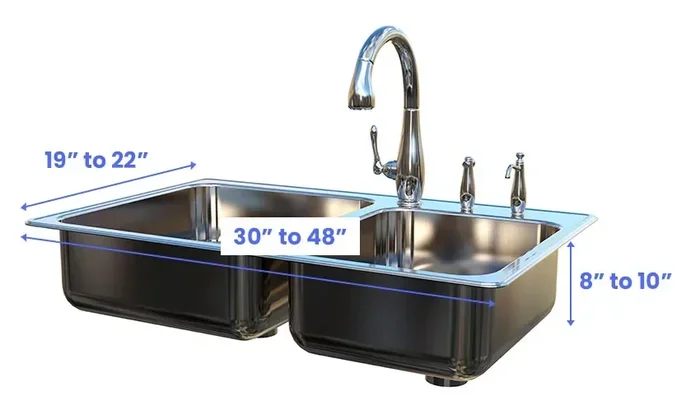
The average size of a kitchen sink typically ranges from 22 to 36 inches wide and 7 to 10 inches deep. Most standard sinks fall between 24 and 30 inches in width, making them suitable for the majority of kitchen layouts. Understanding these kitchen sink dimensions helps you choose a sink that fits your space and meets your daily needs.
When was the last time you really looked at your kitchen sink? Most of us take this everyday fixture for granted. But the average size of a kitchen sink plays a bigger role in your daily routine than you might think. Whether you are washing dishes, prepping food, or filling up a pot of water, the right sink size makes all the difference.
Choosing a sink is not just about looks. It is about function, fit, and making your kitchen work better for you. In this guide, we will walk you through everything you need to know about standard kitchen sink dimensions. You will learn about different sink types, how to measure your space, and what to look for before making a purchase.
By the end of this article, you will feel confident about picking the right sink for your kitchen. No more guessing or settling for something that does not fit. Let us dive in and explore the world of kitchen sink sizes together.
Key Takeaways
- Standard kitchen sinks range from 22 to 36 inches wide, with most falling between 24 and 30 inches.
- Sink depth matters just as much as width, with 7 to 10 inches being the most common range.
- Single bowl, double bowl, and farmhouse sinks each come with different size considerations.
- Measuring your cabinet space and countertop cutout is essential before purchasing a new sink.
- Material and installation type can affect overall sink size and compatibility.
- Common mistakes include overlooking depth and faucet clearance, which can lead to poor fit and function.
📑 Table of Contents
Understanding Kitchen Sink Dimensions
The average size of a kitchen sink can vary quite a bit depending on the type, brand, and style you choose. However, there are some general guidelines that hold true across the industry. These guidelines can help you narrow down your options and avoid buying a sink that is too big or too small for your space.
Most manufacturers follow a set of standard measurements that have become industry norms over the years. These standard sink sizes make it easier for homeowners to find replacement sinks and for designers to plan kitchen layouts. Knowing these basics gives you a solid foundation when you start shopping.
Width Standards for Kitchen Sinks
When people talk about sink size, width is usually the first thing that comes to mind. The standard sink width for most residential kitchens falls between 22 and 36 inches. Here is a quick breakdown of common width ranges:
- Small sinks: 18 to 22 inches wide. These work well in apartments or tiny kitchens where space is limited.
- Standard sinks: 24 to 30 inches wide. This is the most common range and fits most kitchen layouts.
- Large sinks: 33 to 36 inches wide. These are great for big families or kitchens where you do a lot of meal prep.
The width you choose should match your countertop space and cabinet width. A sink that is too wide can look cramped and may not fit properly. On the other hand, a sink that is too small can feel cramped when you are washing large pots and pans.
Keep in mind that the sink width also affects how you use the basin. A wider sink gives you more room to spread out while washing vegetables or rinsing produce. This is especially helpful if you like to cook with fresh ingredients and need space to work.
Depth and Height Considerations
Width is not the only measurement that matters. Kitchen sink depth is equally important. Most standard sinks have a depth of 7 to 10 inches. Deeper sinks are great because they can accommodate larger pots and reduce splashing. Shallow sinks, which are typically 5 to 6 inches deep, may be easier to reach into but can cause water to splash out more easily.
The height of a sink is usually determined by the installation. Most sinks are installed so that the rim sits at about 36 inches from the floor. This is a standard countertop height and works well for most people. However, if you are taller or shorter, you might want to adjust the installation height for better comfort.
When you are shopping for a new sink, pay attention to both the basin dimensions and the overall exterior size. The basin dimensions tell you how much actual space is inside the sink, while the exterior size tells you how much space the sink will take up on your countertop. Always compare both measurements before making a decision.
Types of Kitchen Sinks and Their Average Sizes
Not all kitchen sinks are created equal. Different types come with different size ranges and design features. Understanding these differences can help you make a more informed decision. Let us look at the most popular sink types and their typical kitchen sink measurements.
Single Bowl Sink Dimensions
A single bowl sink is one large basin without any dividers. These sinks are perfect for washing large items like baking sheets, stockpots, and mixing bowls. The average single bowl sink size ranges from 22 to 30 inches wide and 18 to 24 inches long. Depth typically falls between 7 and 10 inches.
Single bowl sinks are very popular in modern kitchens. They offer a clean, minimalist look and provide plenty of room for large items. If you do a lot of cooking or entertaining, a single bowl sink can be a game changer. You can fit an entire turkey or a large mixing bowl inside with ease.
One thing to keep in mind is that single bowl sinks do not give you the option of washing and rinsing simultaneously. Some people love this simplicity, while others prefer the two-basin setup. Think about your daily habits and choose accordingly.
Double Bowl Sink Dimensions
A double bowl sink has two separate basins, which allows you to wash and rinse at the same time. The average double bowl sink size ranges from 33 to 44 inches wide. Each basin is typically 16 to 18 inches wide, though sizes can vary. Depth is usually around 7 to 9 inches per basin.
Double bowl sinks are great for households where you like to multitask in the kitchen. You can wash dishes in one basin and rinse them in the other. They also work well for prepping food in one basin while keeping the other clean for washing.
The sink capacity of a double bowl sink is often slightly less per basin compared to a single bowl of the same width. This is because the divider takes up space. If you frequently wash very large items, a single bowl might actually give you more usable space.
Farmhouse and Apron Front Sink Sizes
Farmhouse sinks, also known as apron front sinks, have become very popular in recent years. These sinks feature a front panel that extends below the countertop, giving them a classic and rustic look. The average farmhouse sink size is typically larger than standard sinks, ranging from 30 to 39 inches wide and 19 to 24 inches long. Depth is usually 8 to 10 inches.
Farmhouse sinks are a statement piece in any kitchen. They are especially popular in farmhouse, rustic, and transitional kitchen designs. However, because they are larger, they require more cabinet space and a wider countertop cutout. Make sure your kitchen can accommodate the size before you commit to this style.
If you love the farmhouse look but have a small kitchen, look for compact farmhouse sinks. Some manufacturers offer smaller versions that still have the signature front panel but fit in tighter spaces. This way, you get the style without sacrificing too much room.
Undermount and Drop-In Sink Sizes
Undermount sinks are installed underneath the countertop, giving them a sleek, seamless look. Drop-in sinks, on the other hand, sit on top of the countertop. Both types come in a wide range of sizes, but the average undermount sink follows the same width and depth guidelines as other sink types. Drop-in sinks may have a slight size advantage because the rim can add extra stability and structure.
When choosing between these two styles, consider your countertop material and your personal preference. Undermount sinks work best with solid surface countertops like granite or quartz. Drop-in sinks are more versatile and can work with a wider range of materials including laminate and solid surface.
The drop-in sink is also easier to install, which can save you money on labor costs. However, the rim of a drop-in sink can collect debris and water over time. Undermount sinks are easier to wipe clean since there is no rim to trap grime.
How to Measure Your Current Kitchen Sink
Before you buy a new sink, you need to know the exact dimensions of your current setup. Measuring your kitchen sink is easier than you might think, but it does require a bit of care and attention to detail. Getting accurate measurements will save you time, money, and the headache of returning an ill-fitting sink.
Measuring the Width and Length
Start by measuring the width of your sink from edge to edge. Use a tape measure and measure at the widest point. For the length, measure from the front of the sink to the back. Write down both measurements in inches.
Next, measure the countertop cutout. This is the hole in your countertop where the sink sits. The cutout is usually slightly larger than the sink itself. Measure the cutout width and length to make sure any new sink will fit properly. If the cutout is smaller than the new sink, you may need to enlarge it or choose a different sink.
Pro tip: always measure your cutout twice. A small error can lead to a sink that does not fit or requires modifications to your countertop. Take your time and be precise.
Measuring Depth and Basin Volume
To measure the depth, place your tape measure at the bottom of the basin and extend it up to the rim. Do this in multiple spots because the bottom of the sink may not be perfectly flat. Some sinks have a curved bottom, which can affect the depth measurement.
To estimate the basin volume, you can fill the sink with water and measure how much it holds. This is not an exact science, but it gives you a good idea of the sink’s capacity. A standard sink holds about 8 to 12 gallons of water, while larger farmhouse sinks can hold up to 15 gallons.
When measuring depth, also check the distance from the drain to the back of the sink. This affects how far back you can push heavy pots and pans. A deeper drain placement can give you more usable space in the front of the basin.
Factors That Influence Kitchen Sink Size
Several factors come into play when you are choosing the right sink size for your kitchen. Understanding these factors can help you make a better decision and avoid common pitfalls. Let us walk through the most important considerations.
Cabinet and Counter Space
The most important factor is the space available in your kitchen. Your sink needs to fit comfortably on your countertop and inside your base cabinets. Standard kitchen cabinets are 24 inches deep, and most sinks are designed to fit within this space. If your cabinets are a different size, you may need to look for a sink with different dimensions.
Also consider the overall layout of your kitchen. If you have a galley kitchen or a very small space, a large farmhouse sink may not be practical. In these cases, a compact single bowl sink might be a better choice. The kitchen cabinet size directly impacts what sink sizes are realistic options for your home.
Think about the countertop material too. Some materials like quartz and granite allow for larger cutouts, while laminate may have limitations. Discuss your sink options with your countertop installer to make sure everything lines up properly.
Household Size and Usage Needs
Think about how you use your kitchen on a daily basis. Do you cook elaborate meals every night? Do you have a large family that generates a lot of dishes? If so, a larger sink with more depth might be a better fit. On the other hand, if you live alone or have a small household, a standard-sized sink should work just fine.
Consider your sink capacity and what you will be putting in it. If you regularly wash large baking sheets, stockpots, or mixing bowls, you will want a sink that can accommodate these items comfortably. A cramped sink makes kitchen work frustrating and slows you down.
Also think about how often you entertain guests. If you host dinner parties regularly, a larger sink makes washing dishes and glassware much easier. You can fit more items in a single wash cycle, which saves time and water.
Faucet and Hardware Compatibility
The size of your sink also affects your choice of faucet and other hardware. A single-hole faucet works best with sinks that have a single mounting hole. Centerset faucets require three holes spaced 4 inches apart. Widespread faucets need three holes spaced 6 to 16 inches apart.
Make sure the sink faucet compatibility is checked before you purchase. A beautiful faucet will not look right if the hole placement does not match. Also, consider the position of the drain. Center drains are standard, but offset drains can give you more basin space in one corner of the sink.
When you are shopping for faucets, bring your sink dimensions with you or take a photo of the sink. This helps the salesperson recommend the right faucet for your specific model. A mismatched faucet and sink can look awkward and function poorly.
Choosing the Right Kitchen Sink Size for Your Space
Now that you understand the dimensions and factors involved, it is time to think about how to choose the right sink for your specific kitchen. The goal is to find a balance between function, style, and fit. A well-chosen sink enhances your kitchen experience every single day.
Matching Sink Size to Kitchen Layout
The first step is to measure your available space. Use a tape measure to determine the width of your countertop and the depth of your cabinets. Write down these measurements and bring them with you when you shop for sinks.
As a general rule, your sink should take up no more than two-thirds of the countertop width. This leaves enough room for other kitchen activities like food prep and placing appliances. If your countertop is 48 inches wide, a sink that is 30 to 32 inches wide would be a good fit.
Think about your kitchen sink replacement goals too. Are you looking for a simple swap-out, or are you redesigning the entire kitchen? If you are doing a full renovation, you have more flexibility to change the sink size and even relocate plumbing if needed. This opens up more options for finding the perfect fit.
Material Considerations and Size Variations
Different materials can affect the overall size and feel of a sink. Stainless steel sinks are the most common and come in a wide range of sizes. They are durable, easy to clean, and budget-friendly. Composite sinks made from granite or quartz composite tend to be slightly heavier and may have slightly different size options due to the manufacturing process.
Cast iron sinks with porcelain enamel are another popular choice. They are very durable and come in classic styles. These sinks tend to be heavier and may require extra support during installation. The size options for cast iron sinks are often more limited than stainless steel, so check the standard sink sizes available in this material before you commit.
Copper sinks are a unique option that develops a patina over time. They are typically smaller and more specialty, so they may not be available in all the standard sizes. If you are set on a copper sink, be prepared to look at more specialized manufacturers and custom options.
Installation Tips for a Perfect Fit
Proper installation is key to getting the most out of your new sink. Here are a few tips to ensure a perfect fit:
- Always double-check the sink trim measurements before cutting your countertop.
- Leave a small gap between the sink rim and the countertop for expansion and contraction.
- Make sure the plumbing connections align with your existing drain and water supply lines.
- Consider the sink drain placement and make sure it will work with your plumbing setup.
- If you are replacing an existing sink, compare the new sink dimensions to the old ones to ensure compatibility.
If you are not comfortable doing the installation yourself, hire a professional plumber or kitchen contractor. A proper installation can prevent leaks, poor drainage, and other issues down the road. It is worth the investment to get it done right.
Common Mistakes When Choosing Kitchen Sink Size
Even with the best intentions, it is easy to make mistakes when choosing a kitchen sink size. Knowing what to avoid can save you time, money, and frustration. Here are some of the most common errors homeowners make.
Overlooking Depth
Many people focus only on the width and length of a sink and forget about depth. A wide but shallow sink may look nice but can be frustrating to use. Deep sinks hold more water and are better for washing large items. If you do a lot of cooking, prioritize depth over width when choosing your sink.
A shallow sink also means more splashing. Water can easily splash out when you are washing your hands or rinsing produce. A deeper basin keeps water contained and reduces mess. This is one of the most overlooked aspects of kitchen sink measurements.
Ignoring Faucet Clearance
The faucet you choose needs to fit properly with your sink. A tall faucet may not work with a shallow sink, and a short faucet may not reach the center of a deep basin. Always check the sink faucet compatibility before making a purchase. This simple step can save you from a lot of headaches later on.
Also, consider the sprayer if you plan to use one. A pull-down sprayer needs enough clearance above the sink to retract properly. Make sure there is enough space between the faucet and the rim of the sink for the sprayer hose. A cramped setup can make the sprayer difficult to use and may cause damage over time.
Forgetting About the Sink Strainer and Drain
The drain and strainer assembly can affect the overall feel and function of your sink. Some sinks come with a standard drain placement in the center, while others have an offset drain. The drain placement can affect how much usable basin space you have. Make sure the drain location works for your washing and rinsing habits.
Also, consider the sink gauge if you are buying a stainless steel sink. A higher gauge number means thinner steel, while a lower gauge number means thicker, more durable steel. For a long-lasting sink, look for 16-gauge or 18-gauge stainless steel. The gauge affects both the durability and the sound dampening of the sink.
Conclusion
The average size of a kitchen sink is an important consideration for any kitchen project or renovation. Whether you are replacing an old sink or installing a new one in a brand-new kitchen, understanding the standard dimensions and your own needs will help you make the best choice.
Most standard sinks range from 22 to 36 inches wide and 7 to 10 inches deep. The right size for you depends on your kitchen layout, household needs, and personal preferences. Take the time to measure your space, consider your usage habits, and choose a sink that fits both your kitchen and your lifestyle.
Remember, a well-chosen sink can make your daily kitchen routine more enjoyable. It can make washing dishes easier, food prep more efficient, and your kitchen feel more organized. So take your time, do your research, and find the sink that is just right for you.
Once you have your new sink installed, you will have more time for the fun stuff in the kitchen, like experimenting with new recipes. If you are looking for fresh meal ideas, try making a Greek Salad In A Jar for a quick and healthy lunch. On hot summer days, you can cool down with some Frozen Watermelon On A Stick after washing the fresh fruit in your beautifully sized new sink.
With the right sink in place, your kitchen will feel more functional and welcoming every single day. Happy sink shopping!
Frequently Asked Questions
What is the standard size of a kitchen sink?
The standard kitchen sink size ranges from 22 to 36 inches wide and 7 to 10 inches deep. Most residential sinks fall between 24 and 30 inches in width, which fits the majority of kitchen countertops and cabinets comfortably.
How do I measure my kitchen sink for a replacement?
Measure the width from edge to edge at the widest point, then measure the length from front to back. Also measure the countertop cutout and the depth from the bottom of the basin to the rim. Always measure twice to ensure accuracy before purchasing a new sink.
Does sink depth really matter?
Yes, sink depth matters a lot. Deeper sinks hold more water, reduce splashing, and can accommodate larger pots and pans. Most experts recommend a depth of at least 7 inches for comfortable daily use, with 8 to 10 inches being ideal for heavy cooking and entertaining.
What is the difference between a single bowl and double bowl sink?
A single bowl sink has one large basin and is great for washing oversized items. A double bowl sink has two separate basins, allowing you to wash and rinse simultaneously. Single bowls typically range from 22 to 30 inches, while double bowls range from 33 to 44 inches in width.
Can I install a large sink in a small kitchen?
It is possible, but you need to be careful. A large sink in a small kitchen can feel cramped and reduce your available counter space. Consider a compact single bowl sink or a smaller farmhouse sink that still gives you the style you want without overwhelming the space.
What material is best for a kitchen sink?
Stainless steel is the most popular and budget-friendly option, available in many sizes. Composite sinks offer durability and noise reduction. Cast iron with porcelain enamel is classic and long-lasting. The best material depends on your budget, style preference, and how you use your kitchen daily.

