How much are new kitchen countertops? The answer depends on the material you pick, your kitchen size, and the complexity of installation. This complete cost guide breaks down prices for every popular countertop material, from budget-friendly options to premium stone. You will learn exact pricing, installation costs, and practical tips to keep your project on budget.
If you are planning a kitchen upgrade, one of the biggest questions is: how much are new kitchen countertops? The truth is, there is no single answer. Countertop costs depend on the material, your kitchen size, the edge profile you choose, and whether you hire a professional or go the DIY route.
This guide breaks down everything you need to know about kitchen countertop costs. We will look at every popular material, compare prices side by side, and share practical tips to help you stay on budget. Whether you are updating a small apartment kitchen or remodeling a large family space, you will find the information you need right here.
Understanding the full picture of countertop installation costs helps you make smarter decisions. You will avoid surprises, choose the right surface material for your needs, and feel confident about your kitchen remodel budget. Let us dive in.
Key Takeaways
- Countertop costs vary widely: Prices range from $15 to $200+ per square foot depending on the material you choose.
- Quartz and granite lead the market: These are the most popular choices for durability and style in kitchen countertop materials.
- Installation adds significant cost: Professional countertop installation typically runs $500 to $2,500 extra on top of slab pricing.
- Laminate is the budget winner: You can get a full countertop for as low as $20 to $50 per square foot.
- Edge profiles and thickness matter: Fancy edges and thicker slabs increase the total kitchen renovation cost.
- DIY installation saves money: But it only works well for simpler materials like laminate or butcher block countertops.
📑 Table of Contents
Understanding Kitchen Countertop Costs
What Drives the Price of Countertops
Several factors influence how much you will pay for new countertops. The material is the biggest one. Natural stone like granite and marble costs more than laminate or solid surface options. The size of your kitchen also matters. A larger kitchen needs more square footage, which raises the total price.
Edge profiles add cost too. A simple straight edge is cheaper than a fancy waterfall edge or a bullnose profile. Thickness plays a role as well. Standard countertop thickness is usually 1.5 inches, but thicker slabs cost more. Backsplash installation and undermount sink cutouts can also increase the final bill.
Labor costs vary by region. In some areas, professional installers charge more per hour. The complexity of the job matters too. If your kitchen has unusual angles, curves, or multiple sink cutouts, the countertop installation will take more time and skill.
Quick Tips
- Measure your kitchen accurately before getting quotes. Count every inch of counter space.
- Decide on your edge profile early. It affects both the look and the cost.
- Factor in extra costs like sink cutouts, backsplash tiling, and countertop sealant supplies.
- Get at least three quotes from different contractors to compare slab pricing.
Cost Per Square Foot Breakdown
The most common way to price countertops is per square foot. This makes it easy to compare different countertop materials. On average, most homeowners pay between $40 and $100 per square foot for materials and installation combined. But the range is much wider when you look at individual options.
Budget materials like laminate start around $15 to $40 per square foot. Mid-range options like quartz and granite fall between $40 and $100 per square foot. Premium natural stone like marble and high-end concrete can reach $100 to $200 or more per square foot.
Here is a quick look at average cost per square foot by material type:
| Material | Price Per Square Foot | Best For |
|---|---|---|
| Laminate | $15 – $40 | Budget-friendly kitchens |
| Butcher Block | $30 – $70 | Warm, rustic looks |
| Solid Surface | $40 – $65 | Seamless, low-maintenance |
| Quartz | $50 – $120 | Durability and style |
| Granite | $40 – $100 | Natural beauty and strength |
| Marble | $75 – $200+ | Luxury and elegance |
| Concrete | $65 – $150 | Custom, modern designs |
Key Takeaways
- Know your square footage: Measure your kitchen counters carefully before shopping.
- Budget for extras: Sink cutouts, edge profiles, and backsplash work add to the total.
- Compare per-square-foot quotes: This makes it easy to see which countertop materials fit your budget.
Kitchen Countertop Material Costs Compared
Choosing the right material is the most important decision in your kitchen upgrade. Each option has its own price range, durability level, and style appeal. Let us look at the most popular choices and what you can expect to pay for each one.
Granite Countertops
Granite countertops price typically falls between $40 and $100 per square foot installed. Granite is a natural stone that offers unique patterns and colors in every slab. It is extremely durable and resistant to heat, which makes it a favorite for busy kitchens.
One thing to keep in mind with granite countertops price: natural stone varies in cost depending on the quarry and the rarity of the pattern. Exotic granite slabs with bold colors or rare veining can cost significantly more. You will also need to reseal granite periodically to keep it looking its best.
For most homeowners, granite strikes a great balance between beauty and durability. It adds real value to your home and can last for decades with proper care.
Quartz Countertops
The quartz countertop cost usually ranges from $50 to $120 per square foot. Quartz is an engineered stone made from natural quartz crystals mixed with resin. It is non-porous, which means it does not stain easily and does not need sealing.
Quartz has become one of the most popular countertop materials in recent years. It offers a consistent look across the entire slab, which many homeowners prefer. The quartz countertop cost is competitive with granite, but quartz requires less maintenance over time.
If you want a low-maintenance surface that still looks stunning, quartz is a top choice. It works well in both modern and traditional kitchen designs.
Marble Countertops
Marble countertops are the most luxurious option on the market. The price for marble countertops typically runs from $75 to $200 or more per square foot. Marble is prized for its elegant veining and classic beauty.
However, marble is a soft stone that scratches and etches easily. It requires more care than granite or quartz. You will need to seal it regularly and avoid acidic foods and cleaners that can damage the surface.
Despite the higher maintenance, many homeowners love the timeless look of marble. It is especially popular for baking stations and elegant kitchen designs.
Laminate Countertops
Laminate countertops are the most affordable option available. You can find laminate surfaces for as little as $15 to $40 per square foot. Laminate is made from layers of plastic and particleboard, which makes it lightweight and easy to install.
The downside of laminate is that it is not as durable as stone. It can chip, scratch, and stain over time. However, modern laminate has come a long way. Many brands now offer realistic stone and wood looks that look surprisingly good.
For renters or homeowners on a tight kitchen remodel budget, laminate is a smart choice. It gives you a fresh look without a big investment.
Butcher Block and Concrete Countertops
Butcher block countertops offer a warm, rustic feel. They typically cost between $30 and $70 per square foot. Butcher block is made from hardwood strips glued together. It is gentle on knives and adds a cozy touch to any kitchen.
Concrete countertops are a custom option that can cost $65 to $150 per square foot. Concrete allows for complete customization in color, shape, and texture. You can create unique designs that no other material can match.
Both butcher block and concrete require regular maintenance. Butcher block needs oiling to stay protected. Concrete needs sealing to prevent stains. But for the right kitchen, these materials offer a look you cannot get anywhere else.
Expert Insight
According to kitchen design professionals, the best countertop materials balance your lifestyle needs with your budget. If you cook frequently and need a durable surface, quartz or granite is the way to go. If you want a budget-friendly refresh, laminate or butcher block can deliver great results.
Installation Costs and What to Expect
Professional Installation vs. DIY
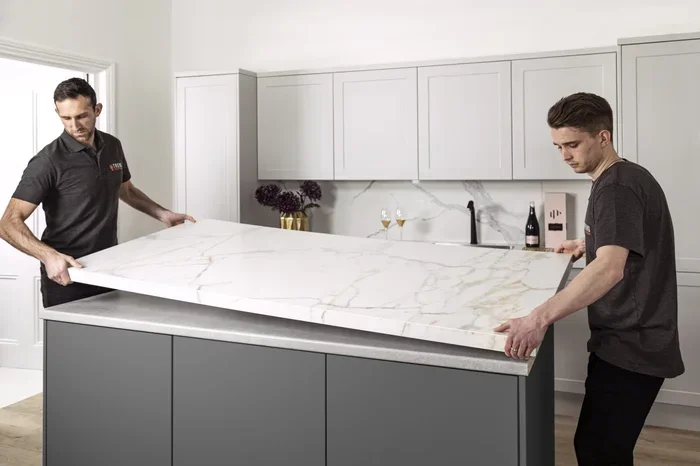
Countertop installation is not a simple job. It requires precise measurements, specialized tools, and skilled craftsmanship. Hiring a professional ensures a clean, safe install. But it also adds to the total kitchen renovation cost.
Professional installation typically costs between $500 and $2,500 depending on the complexity of the job. Simple straight runs with standard edges cost less. Complex layouts with multiple cutouts, curves, and fancy edges cost more.
Some homeowners choose a DIY countertop approach to save on labor. This works best with laminate or butcher block, which are lighter and easier to cut. Natural stone and quartz are much heavier and require specialized equipment for cutting and mounting. If you are not experienced, DIY stone installation can lead to costly mistakes.
Additional Costs to Factor In
Beyond the slab and labor, several extra costs can pop up during a countertop project. Being aware of these helps you avoid budget surprises.
- Sink cutout: If you are installing an undermount sink, the cutout adds $200 to $500 to the total.
- Backsplash installation: Adding a tile backsplash alongside new countertops can cost $200 to $1,000 depending on the material and area.
- Edge profiling: Fancy edge profiles like ogee, waterfall, or bullnose can add $10 to $30 per linear foot.
- Old countertop removal: Most installers include removal in their quote, but always confirm this before signing a contract.
- Countertop sealant: Natural stone needs periodic sealing. Budget $50 to $200 per year for sealant supplies.
- Cabinet reinforcement: Heavy stone slabs need sturdy cabinet support. If your cabinets are not up to par, reinforcement adds cost.
Common Mistakes
- Forgetting to account for the backsplash in your total budget.
- Choosing a material based only on looks without considering durability and maintenance.
- Not getting enough quotes from different contractors.
- Skipping the step of checking that your cabinets can support the weight of heavy stone.
How to Budget for Your Countertop Project
Setting a Realistic Budget
Before you start shopping, set a clear budget for your kitchen upgrade. Consider the total square footage of your counters, the material you want, and the extra features like edge profiles and sink cutouts.
A good rule of thumb is to allocate 10 to 15 percent of your total kitchen renovation cost to countertops. If your full kitchen remodel budget is $20,000, that means $2,000 to $3,000 for new surfaces. This gives you a realistic target to work toward.
Remember that countertops are a long-term investment. Choosing a slightly higher-quality material now can save you money on repairs and replacements later.
Getting Quotes from Multiple Contractors
Always get at least three detailed quotes before committing to a contractor. Each quote should break down the slab pricing, labor costs, and any additional fees. Look for quotes that include removal of the old countertop, sink cutouts, edge profiling, and backsplash work.
Do not automatically choose the lowest bid. The cheapest option may use lower-quality materials or cut corners on installation. Instead, look for a balance of fair pricing, solid craftsmanship, and good warranties.
Quick Tips
- Ask each contractor for a written timeline. This helps you plan around the disruption of the project.
- Confirm whether the quote includes delivery and installation on the same day.
- Check references and online reviews before hiring a countertop installer.
- Ask about warranties on both the material and the installation work.
Common Mistakes That Increase Countertop Costs
Skipping the Backsplash
Many homeowners focus only on the countertop surface and forget about the backsplash. But the backsplash is a visible part of your kitchen that affects the overall look. Skipping it or choosing a cheap material can make your new countertops look incomplete.
Planning the backsplash from the start helps you budget properly. It also ensures a cohesive design that ties everything together. A well-designed backsplash adds value and protects your walls from splashes and stains.
Choosing the Wrong Material
Choosing a countertop material based only on looks is a common mistake. You need to think about how you use your kitchen. If you prepare meals daily, you need a surface that can handle heat, cuts, and spills. If you mostly use your kitchen for casual dining, a budget material might work fine.
Consider durability, maintenance, and your lifestyle when choosing. A beautiful marble countertop might not be the right choice if you have young children and cook frequently. Be honest about your needs before you decide.
Not Planning for Plumbing and Electrical
If you are moving your sink or adding new outlets, you need to coordinate with plumbers and electricians before the countertop is installed. Doing this work after the countertop is in place can be expensive and complicated. Planning ahead saves time and money.
Tips to Save Money on New Countertops
Shop During Off-Season
Countertop installation tends to be slower in winter months. Many contractors offer lower rates during their off-season to keep busy. If your timeline is flexible, scheduling your project in the off-season can save you hundreds of dollars.
Consider Pre-Owned or Remnant Slabs
Stone yards often sell remnant slabs at a steep discount. These are leftover pieces from other projects that are still perfectly usable. If you have a small kitchen or a partial countertop replacement, remnants can be a great way to save money.
Choose Simple Edge Profiles
Fancy edge profiles look beautiful, but they add cost. A simple straight or eased edge is much cheaper and still looks clean and polished. If you are working within a tight kitchen remodel budget, skipping the elaborate edge can make a big difference.
Keep Your Layout Simple
Complex countertop layouts with many angles and curves cost more to fabricate and install. If possible, keep your design straightforward. Straight runs with minimal cutouts are the most affordable option and still look great.
Expert Insight
Professional installers often recommend getting the most you can afford in materials. A quality countertop lasts 15 to 30 years or more. Spending a little more upfront on durable surface material saves you money and headaches over the long run.
How to Maintain Your New Countertops
Once your new countertops are installed, proper maintenance keeps them looking great for years. Different materials require different care routines.
For granite countertops and marble, sealing is essential. Apply a quality countertop sealant every six to twelve months. This protects against stains and moisture damage.
Quartz is low maintenance and does not need sealing. Simply wipe it down with mild soap and water. Avoid harsh chemicals that can dull the surface over time.
For laminate countertops, use cutting boards to prevent scratches. Avoid soaking the surface in water, which can cause swelling at the seams. With proper care, laminate can look good for 10 to 20 years.
Butcher block countertops need regular oiling to stay protected. Apply food-safe mineral oil every few weeks. Sand out any scratches or stains with fine-grit sandpaper, then re-oil the surface.
No matter what material you choose, clean up spills promptly. Acidic liquids like lemon juice and vinegar can damage natural stone if left too long. A little quick care goes a long way in preserving your investment.
Conclusion
So, how much are new kitchen countertops? The answer depends on many factors, but now you have a clear picture of what to expect. From budget-friendly laminate at $15 per square foot to luxurious marble at $200 or more, there is an option for every kitchen remodel budget.
The key is to balance your style goals with your budget and lifestyle needs. Choose a material that looks great, stands up to daily use, and fits within your financial plan. Get multiple quotes, plan for extra costs, and do not skip the maintenance that keeps your counters looking their best.
A new countertop is one of the most impactful upgrades you can make to your kitchen. It changes the look, feel, and function of the space. With the right material, professional countertop installation, and a solid plan, you can enjoy beautiful new surfaces for decades to come.
Frequently Asked Questions
What is the average cost to replace kitchen countertops?
The average homeowner pays between $1,500 and $4,500 for a full kitchen countertop replacement. This includes materials and professional installation. The final cost depends on the material chosen, the kitchen size, and any extra features like sink cutouts or edge profiles.
Can I install countertops myself to save money?
Yes, DIY installation can save you the labor cost of $500 to $2,500. However, it works best with lightweight materials like laminate or butcher block. Natural stone and quartz are very heavy and require specialized tools and skills. A mistake during DIY stone installation can cost much more to fix.
How long do kitchen countertops last?
Durability varies by material. Laminate lasts 10 to 20 years. Quartz and granite can last 25 to 50 years or more with proper care. Marble requires more maintenance but can also last decades. Concrete countertops can last a lifetime if sealed and maintained regularly.
Do I need to replace my cabinets when I install new countertops?
Not always. New countertops can often be installed over existing cabinets if the cabinets are in good condition and sturdy enough to support the weight. However, heavy materials like granite and quartz may require cabinet reinforcement. Always have a professional assess your cabinets before installation.
What is the cheapest countertop option?
Laminate is the cheapest option, costing as little as $15 to $40 per square foot. It offers a wide range of colors and patterns at a fraction of the cost of natural stone. For a tight budget, laminate delivers the best value without sacrificing a clean, attractive look.
How much extra does an undermount sink cost?
An undermount sink cutout typically adds $200 to $500 to the total countertop cost. The sink itself is a separate expense. Undermount sinks create a sleek look by attaching underneath the counter, but they require precise cutouts and secure mounting, which adds to the labor cost.